Results by title

5 books match the query 'Zombies'
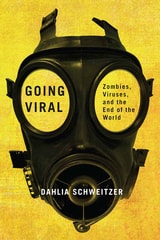
cover of Going Viral: Zombies, Viruses, and the End of the World

Going Viral

Zombies, Viruses, and the End of the World

Schweitzer, Dahlia

Rutgers University Press, 2018

Outbreak narratives have proliferated for the past quarter century, and now they have reached epidemic proportions. From 28 Days Later to 24 to The Walking Dead, movies, TV shows, and books are filled with zombie viruses, bioengineered plagues, and disease-ravaged bands of survivors. Even news reports indulge in thrilling scenarios about potential global pandemics like SARS and Ebola. Why have outbreak narratives infected our public discourse, and how have they affected the way Americans view the world?

In Going Viral, Dahlia Schweitzer probes outbreak narratives in film, television, and a variety of other media, putting them in conversation with rhetoric from government authorities and news organizations that have capitalized on public fears about our changing world. She identifies three distinct types of outbreak narrative, each corresponding to a specific contemporary anxiety: globalization, terrorism, and the end of civilization. Schweitzer considers how these fears, stoked by both fictional outbreak narratives and official sources, have influenced the ways Americans relate to their neighbors, perceive foreigners, and regard social institutions. 

Looking at everything from I Am Legend to The X Files to World War Z, this book examines how outbreak narratives both excite and horrify us, conjuring our nightmares while letting us indulge in fantasies about fighting infected Others. Going Viral thus raises provocative questions about the cost of public paranoia and the power brokers who profit from it.  

Supplemental Study Materials for "Going Viral": 
https://www.rutgersuniversitypress.org/going-viral-dahlia-schweitzer
Dahlia Schweitzer- Going Viral: https://www.youtube.com/watch?v=5xF0V7WL9ow
[more]
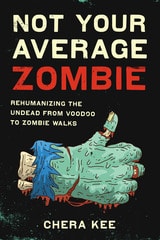
cover of Not Your Average Zombie: Rehumanizing the Undead from Voodoo to Zombie Walks

Not Your Average Zombie

Rehumanizing the Undead from Voodoo to Zombie Walks

By Chera Kee

University of Texas Press, 2017

The zombie apocalypse hasn’t happened—yet—but zombies are all over popular culture. From movies and TV shows to video games and zombie walks, the undead stalk through our collective fantasies. What is it about zombies that exerts such a powerful fascination? In Not Your Average Zombie, Chera Kee offers an innovative answer by looking at zombies that don’t conform to the stereotypes of mindless slaves or flesh-eating cannibals. Zombies who think, who speak, and who feel love can be sympathetic and even politically powerful, she asserts.

Kee analyzes zombies in popular culture from 1930s depictions of zombies in voodoo rituals to contemporary film and television, comic books, video games, and fan practices such as zombie walks. She discusses how the zombie has embodied our fears of losing the self through slavery and cannibalism and shows how “extra-ordinary” zombies defy that loss of free will by refusing to be dehumanized. By challenging their masters, falling in love, and leading rebellions, “extra-ordinary” zombies become figures of liberation and resistance. Kee also thoroughly investigates how representations of racial and gendered identities in zombie texts offer opportunities for living people to gain agency over their lives. Not Your Average Zombie thus deepens and broadens our understanding of how media producers and consumers take up and use these undead figures to make political interventions in the world of the living.
[more]
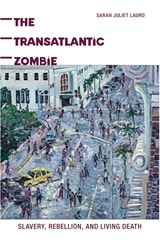
cover of The Transatlantic Zombie: Slavery, Rebellion, and Living Death

The Transatlantic Zombie

Slavery, Rebellion, and Living Death

Sarah Juliet Lauro

Rutgers University Press, 2015

Our most modern monster and perhaps our most American, the zombie that is so prevalent in popular culture today has its roots in African soul capture mythologies. The Transatlantic Zombie provides a more complete history of the zombie than has ever been told, explaining how the myth’s migration to the New World was facilitated by the transatlantic slave trade, and reveals the real-world import of storytelling, reminding us of the power of myths and mythmaking, and the high stakes of appropriation and homage. 
 
Beginning with an account of a probable ancestor of the zombie found in the Kongolese and Angolan regions of seventeenth-century Africa and ending with a description of the way, in contemporary culture, new media are used to facilitate zombie-themed events, Sarah Juliet Lauro plots the zombie’s cultural significance through Caribbean literature, Haitian folklore, and American literature, film, and the visual arts. The zombie entered US consciousness through the American occupation of Haiti, the site of an eighteenth-century slave rebellion that became a war for independence, thus making the figuration of living death inseparable from its resonances with both slavery and rebellion. Lauro bridges African mythology and US mainstream culture by articulating the ethical complications of the zombie as a cultural conquest that was rebranded for the American cinema.
 
As The Transatlantic Zombie shows, the zombie is not merely a bogeyman representing the ills of modern society, but a battleground over which a cultural war has been fought between the imperial urge to absorb exotic, threatening elements, and the originary, Afro-diasporic culture’s preservation through a strategy of mythic combat.
 
[more]
cover of Zombies in the Academy: Living Death in Higher Education

Zombies in the Academy

Living Death in Higher Education

Edited by Andrew Whelan, Ruth Walker, and Christopher Moore

Intellect Books, 2013
Zombies in the Academy taps into the current popular fascination with zombies and brings together scholars from a range of fields, including cultural and communication studies, sociology, film studies, and education, to give a critical account of the political, cultural, and pedagogical state of the university through the metaphor of zombiedom. The contributions to this volume argue that the increasing corporatization of the academy—an environment emphasizing publication, narrow research, and the vulnerability of the tenure system— is creating a crisis in higher education best understood through the language of zombie culture—the undead, contagion, and plague, among others. Zombies in the Academy presents essays from a variety of scholars and creative writers who present an engaging and entertaining appeal for serious recognition of the conditions of contemporary humanities teaching, culture, and labor practices.
[more]
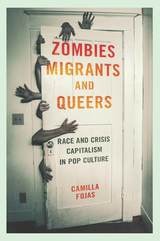
cover of Zombies, Migrants, and Queers: Race and Crisis Capitalism in Pop Culture

Zombies, Migrants, and Queers

Race and Crisis Capitalism in Pop Culture

Camilla Fojas

University of Illinois Press, 2017

The alarm and anxiety unleashed by the Great Recession found fascinating expression across popular culture. Harried survivors negotiated societal collapse in The Walking Dead. Middle-class whites crossed the literal and metaphorical Mexican border on Breaking Bad or coped with a lack of freedom among the marginalized on Orange Is the New Black. Camilla Fojas uses representations of people of color, the incarcerated, and trans/queers--vulnerable populations all--to work through the contradictions created by the economic crisis and its freefalling aftermath. Television, film, advertising, and media coverage of the crisis created a distinct kind of story about capitalism and the violence that supports it. Fojas shows how these pop culture moments reshaped social dynamics and people's economic sensibilities and connects the ways pop culture reflected economic devastation. She also examines how these artifacts illuminated parts of society usually kept off-screen or on the margins even as they defaulted to stories of white protagonists.
[more]