Results by title
3 books match the query 'Zook, Kristal Brent'
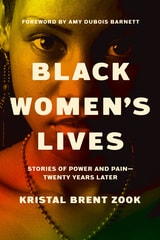
Black Women's Lives
Stories of Power and Pain — Twenty Years LaterKristal Brent Zook
Rutgers University Press, 2027
When author Kristal Brent Zook first published Black Women’s Lives: Stories of Power and Pain, nearly 20 years ago, the reality of so many Black women's lived experiences was not widely discussed in mainstream media. Two decades later, after much social change in the United States, including national media attention on Black women following the police murder of Breonna Taylor and the #SayHerName movement, the election of the first Black female vice president, Kamala Harris, and massive political and social backlash because of these gains, the timing for a refreshed look at these women's lives has never been better.
The stories in this collection invite readers into the intimate spaces of ten African American women from all walks of life, in cities and towns across the country. Twenty years later, we revisit them to learn how their lives have evolved. There are fresh new codas at the end of each chapter that illustrate how the women have fared over the last two decades. Did they achieve their dreams? What twists and turns did they meet along the way? These stories highlight the complex, nuanced, and passionate lives that Black women lead, often requiring ambition, ingenuity, and creativity to survive and thrive in the United States. This collection is a testament to the fact that the past repeats — and we remain, each of us, still, connected.
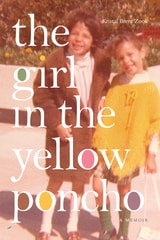
The Girl in the Yellow Poncho
A MemoirKristal Brent Zook
Duke University Press, 2023
The Girl in the Yellow Poncho is Zook’s coming-of-age tale about what it means to be biracial in America. Throughout, she grapples with in-betweenness while also facing childhood sexual assault, economic insecurity, and multigenerational alcoholism and substance abuse on both the Black and white sides of her family. Her story is one of strong Black women—herself, her cousin, her mother, and her grandmother—and the generational cycles of oppression and survival that seemingly defined their lives.
Setting out on an inner journey that takes her across oceans and continents, Zook tells the story of a little girl who never gives up on love, even long after it seems to have been destroyed. In the end she triumphs, reconciling with her father and mother to create the family of her dreams through forgiveness and sheer force of will. A testament to the power of settling into one’s authentic identity, this book tells a story of a daughter’s lifelong yearning, a mother’s rediscovery of lost love, and the profound power of atonement and faith to heal a broken family.
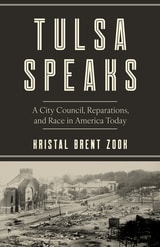
Tulsa Speaks
A City Council, Reparations, and Race in America TodayKristal Brent Zook
Rutgers University Press, 2026
In 2021, the international media descended upon Tulsa, Oklahoma, for the centennial commemoration of the May 31–June 1, 1921, massacre in which a white mob killed more than three hundred African American residents, burned homes and businesses, and decimated a thriving town once referred to as “Black Wall Street.”
Tulsa Speaks is about the ongoing work of the Tulsa City Council, both before the Centennial and afterward, when the cameras were no longer trained on the city. It dives deep into the interpersonal dynamics among the nine councilors, exploring the continuing fight for reparations and racial justice and the long-running efforts of councilor, Vanessa Hall-Harper of District 1, to bring repair to Greenwood.
Tulsa, like many municipal bodies across the country, serves as a hopeful sign of what we might become, as Americans and as a microcosm of race relations in America today.