Results by title
3 books match the query 'active 1st century'
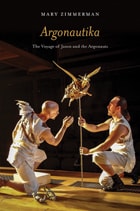
Argonautika
The Voyage of Jason and the ArgonautsMary Zimmerman
Northwestern University Press, 2013
As in her Tony Award–winning Metamorphoses, Mary Zimmerman transforms Greek mythology—here the story of Jason and the Argonauts—into a mesmerizing piece of theater. Encountering an array of daunting challenges in their “first voyage of the world,” Jason and his crew illustrate the essence of all such journeys to follow—their unpredictability, their inspiring and overwhelming breadth of emotion, their lessons in the inevitability of failure and loss. Bursts of humor and fantastical creatures enrich a story whose characters reveal remarkable complexity. Medea is profoundly sympathetic even as the seeds are sown for the monstrous life ahead of her, and the brute strength of Hercules leaves him no less vulnerable to the vicissitudes of love. Zimmerman brings to Argonautika her trademark ability to encompass the full range of human experience in a work as entertaining as it is enlightening.
Epic Ambition
Hercules and the Politics of Emulation in Valerius Flaccus' ArgonauticaJessica Blum-Sorensen
University of Wisconsin Press, 2023
Focusing especially on Hercules, Blum-Sorensen explores how Valerius’ characters—and, by extension, their Roman audience—misinterpret exemplars of past achievement, or apply them to sad effect in changed circumstances. By reading such models as normative guides to epic triumph, Valerius’ Argonauts find themselves enacting tragic outcomes: effectively, the characters impose their nostalgic longing for epic triumph on the events before them, even as Valerius and his audience anticipate the tragedy awaiting his heroes. Valerius thus questions Rome’s reliance on the past as a guide to the present, allowing for doubt about the empire’s success under the new Flavian regime. It is the literary tradition’s exchange between triumphant epic and tragedy that makes the Argo’s voyage a perfect vehicle for Valerius’ exploration: the tensions between genres both raise and prohibit resolution of anxieties about how the new age—mythological or real—will turn out.
L. Annaeus Cornutus
Greek Theology, Fragments, and TestimoniaGeorge Boys-Stones
SBL Press, 2018
The first English translation of Greek Theology
The first-century CE North African philosopher Cornutus lived in Rome as a philosopher and is best known today for his surviving work Greek Theology, which explores the origins and names of the Greek gods. However, he was also interested in the language and literature of the poets Persius and Lucan and wrote one of the first commentaries on Virgil. This book collects and translates all of our evidence for Cornutus for the first time and includes the first published English translation of Greek Theology. This collection offers entirely fresh insight into the intellectual world of the first century.
Features
- Translation based on the latest critical text
- The first truly holistic picture of Cornutus’s intellectual profile
- A new account of the early debate over Aristotle’s Categories and the Stoic contribution to it