Results by title

34 books match the query 'amp'
cover of Access, Fronthaul and Backhaul Networks for 5G & Beyond

Access, Fronthaul and Backhaul Networks for 5G & Beyond

Muhammad Ali Imran

The Institution of Engineering and Technology, 2017
The widespread use of mobile internet and smart applications has led to an explosive growth in mobile data traffic, which will continue due to the emerging need of connecting people, machines, and applications in an ubiquitous manner through the mobile infrastructure. The efficient and satisfactory operation of all these densely deployed networks hinges on a suitable backhaul and fronthaul provisioning. The research community is working to provide innovative technologies with extensive performance evaluation metrics along with the required standardisation milestones, hardware and components for a fully deployed network by 2020 and beyond.
[more]
cover of Art & Language International: Conceptual Art between Art Worlds

Art & Language International

Conceptual Art between Art Worlds

Robert Bailey

Duke University Press, 2016

In Art & Language International Robert Bailey reconstructs the history of the conceptual art collective Art & Language, situating it in a geographical context to rethink its implications for the broader histories of contemporary art. Focusing on its international collaborations with dozens of artists and critics in and outside the collective between 1969 and 1977, Bailey positions Art & Language at the center of a historical shift from Euro-American modernism to a global contemporary art. He documents the collective’s growth and reach, from transatlantic discussions on the nature of conceptual art and the establishment of distinct working groups in New York and England to the collective’s later work in Australia, New Zealand, and Yugoslavia. Bailey also details its publications, associations with political organizations, and the internal power struggles that precipitated its breakdown. Analyzing a wide range of artworks, texts, music, and films, he reveals how Art & Language navigated between art worlds to shape the international profile of conceptual art. Above all, Bailey underscores how the group's rigorous and interdisciplinary work provides a gateway to understanding how conceptual art operates as a mode of thinking that exceeds the visual to shape the philosophical, historical, and political.
[more]
cover of Detente in Europe: The Soviet Union & The West Since 1953

Detente in Europe

The Soviet Union & The West Since 1953

John Van Oudenaren

Duke University Press, 1991

The monumental events in Eastern Europe and the Soviet Union must be understood, Jan Van Oudenaren argues, in the context of a process of East-West détente begun in 1953 in the aftermath of Stalin’s death. Van Oudenaren’s comprehensive and timely study examines the development of Soviet-Western détente from the death of Stalin to the unification of Germany.
In redefining détente as a process, rather than a code of conduct, Van Oudenaren looks to its origins in Soviet policy earlier than previously identified and analyzes both its history and character. His study explores the restoration of four-power negotiations in Germany and Austria in the mid-1950s, their subsequent breakdown in the Berlin crisis, their unexpected revival in 1990 in the form of “two plus four” talks on German unity, and the future of the Soviet Union as a European power.
Among the key elements of détente discussed are diplomacy, particularly the role of summit conferences; cooperation among parliaments, political parties, and trade unions; arms control; economic relations; and links among cultural institutions, churches, and peace movements.

[more]
cover of Doing What Comes Naturally: Change, Rhetoric, and the Practice of Theory in Literary & Legal Studies

Doing What Comes Naturally

Change, Rhetoric, and the Practice of Theory in Literary & Legal Studies

Stanley Fish

Duke University Press, 1989

In literary theory, the philosophy of law, and the sociology of knowledge, no issue has been more central to current debate than the status of our interpretations. Do they rest on a ground of rationality or are they subjective impositions of a merely personal point of view? In Doing What Comes Naturally, Stanley Fish refuses the dilemma posed by this question and argues that while we can never separate our judgments from the contexts in which they are made, those judgments are nevertheless authoritative and even, in the only way that matters, objective. He thus rejects both the demand for an ahistorical foundation, and the conclusion that in the absence of such a foundation we reside in an indeterminate world. In a succession of provocative and wide-ranging chapters, Fish explores the implications of his position for our understanding of legal, literary, and psychoanalytic interpretation, the nature of professional and institutional culture, and the place of reason in a world that is rhetorical through and through.
[more]
cover of Essential Essays (Two-volume set): Foundations of Cultural Studies & Identity and Diaspora

Essential Essays (Two-volume set)

Foundations of Cultural Studies & Identity and Diaspora

Stuart Hall

Duke University Press, 2018

Volumes 1 and 2 of Stuart Hall's Essential Essays are available as a set

From his arrival in Britain in the 1950s and involvement in the New Left, to founding the field of cultural studies and examining race and identity in the 1990s and early 2000s, Stuart Hall has been central to shaping many of the cultural and political debates of our time. Essential Essays—a landmark two volume set—brings together Stuart Hall's most influential and foundational works. Spanning the whole of his career, these volumes reflect the breadth and depth of his intellectual and political projects while demonstrating their continued vitality and importance.

Volume 1: Foundations of Cultural Studies focuses on the first half of Hall's career, when he wrestled with questions of culture, class, representation, and politics. This volume's stand-out essays include his field-defining “Cultural Studies and Its Theoretical Legacies;” the prescient “The Great Moving Right Show,” which first identified the emergent mode of authoritarian populism in British politics; and “Encoding and Decoding in the Television Discourse,” one of his most influential pieces of media criticism. As a whole, Volume 1 provides a panoramic view of Hall's fundamental contributions to cultural studies.

Volume 2: Identity and Diaspora draws from Hall's later essays, in which he investigated questions of colonialism, empire, and race. It opens with “Gramsci's Relevance for the Study of Race and Ethnicity,” which frames the volume and finds Hall rethinking received notions of racial essentialism. In addition to essays on multiculturalism and globalization, black popular culture, and Western modernity's racial underpinnings, Volume 2 contains three interviews with Hall, in which he reflects on his life to theorize his identity as a colonial and diasporic subject.
[more]
cover of Feenin: R&B Music and the Materiality of BlackFem Voices and Technology

Feenin

R&B Music and the Materiality of BlackFem Voices and Technology

Alexander Ghedi Weheliye

Duke University Press, 2023

In Feenin, Alexander Ghedi Weheliye traces R&B music’s continuing centrality in Black life since the late 1970s. Focusing on various musical production and reproduction technologies such as auto-tune and the materiality of the BlackFem singing voice, Weheliye counteracts the widespread popular and scholarly narratives of the genre’s decline and death. He shows how R&B remains a thriving venue for the expression of Black thought and life and a primary archive of the contemporary moment. Among other topics, Weheliye discusses the postdisco evolution of house music in Chicago and techno in Detroit, Prince and David Bowie in relation to appropriations of Blackness and Euro-whiteness in the 1980s, how the BlackFem voice functions as a repository of Black knowledge, the methods contemporary R&B musicians use to bring attention to Black Lives Matter, and the ways vocal distortion technologies such as the vocoder demonstrate Black music’s relevance to discussions of humanism and posthumanism. Ultimately, Feenin represents Weheliye’s capacious thinking about R&B as the site through which to consider questions of Blackness, technology, history, humanity, community, diaspora, and nationhood.
[more]
cover of Guidance Note 1: Selection & Erection

Guidance Note 1

Selection & Erection

The Institution of Engineering and Technology

The Institution of Engineering and Technology, 2015

Guidance Note 1: Selection & Erection contains clear guidance on how to apply the relevant sections of BS 7671. A fundamental guide for specifiers, installers and those testing installations, the expected updates in Amendment 3 greatly impact on day-to-day tasks.
[more]
cover of Guidance Note 1: Selection & Erection

Guidance Note 1

Selection & Erection

The Institution of Engineering and Technology

The Institution of Engineering and Technology, 2018

Guidance Note 1: Selection & Erection is a fundamental guide for specifiers, installers and those inspecting and testing installations. It contains clear guidance on how to apply the relevant sections of BS 7671 and has been fully updated to BS 7671:2018.
[more]
cover of Guidance Note 1: Selection & Erection

Guidance Note 1

Selection & Erection

The Institution of Engineering and Technology

The Institution of Engineering and Technology, 2022

Guidance Note 1: Selection & Erection is a fundamental guide for specifiers, installers and those inspecting and testing installations. It contains clear guidance on how to apply the relevant sections of BS 7671 and has been fully updated to BS 7671:2018+A2:2022.
[more]
cover of Guidance Note 1: Selection & Erection

Guidance Note 1

Selection & Erection

The Institution of Engineering and Technology

The Institution of Engineering and Technology, 2026
Guidance Note 1: Selection & Erection is a fundamental guide for specifiers, installers and those inspecting and testing installations. It contains clear guidance on how to apply the relevant sections of BS 7671 and has been fully updated to BS 7671:2018+A4:2026, including Notices and identification labels required by BS 7671; bidirectional and unidirectional devices; insulation monitoring devices (IMDs); co-ordination between RCD types connected in series; guidance for Protected escape routes; conductor classes; updated guidance for the installation of cables in concealed in a wall or partition; Functional earthing and functional equipotential bonding for information and communication technology (ICT) equipment and systems; Stationary Secondary Batteries; Rating of distribution board with multiple sources with practical examples and Power over Ethernet.
[more]
cover of Guidance Note 2: Isolation & Switching

Guidance Note 2

Isolation & Switching

The Institution of Engineering and Technology

The Institution of Engineering and Technology, 2015

Guidance Note 2: Isolation & Switching is an essential guide and reference manual on this sometimes confusing aspect of BS 7671. Aspects of the book updated to the changes in Amendment 3 include:
[more]
cover of Guidance Note 2: Isolation & Switching

Guidance Note 2

Isolation & Switching

The Institution of Engineering and Technology

The Institution of Engineering and Technology, 2019

Guidance Note 2: Isolation & Switching provides clear guidance on what can be a confusing aspect of BS 7671. It is ideal for those working in specification, testing and inspection and for consulting engineers, as well as electrical installers and has been fully updated to BS 7671:2018.
[more]
cover of Guidance Note 2: Isolation & Switching

Guidance Note 2

Isolation & Switching

The Institution of Engineering and Technology

The Institution of Engineering and Technology, 2022

Guidance Note 2: Isolation & Switching provides clear guidance on what can be a confusing aspect of BS 7671. It is ideal for those working in specification, testing and inspection and for consulting engineers, as well as electrical installers and has been fully updated to BS 7671:2018:2022.
[more]
cover of Guidance Note 2: Isolation & Switching

Guidance Note 2

Isolation & Switching

The Institution of Engineering and Technology

The Institution of Engineering and Technology, 2026

Guidance Note 2: Isolation & Switching provides clear guidance on what can be a confusing aspect of BS 7671. It is ideal for those working in design, testing and inspection and maintenance and operational aspects and has been fully updated to BS 7671:2018+A4:2026, including isolation of multipole source systems, guidance on the selection of protective, isolation and switching devices; bidirectional and unidirectional devices and Firefighters switches.
[more]
cover of Guidance Note 3: Inspection & Testing

Guidance Note 3

Inspection & Testing

The Institution of Engineering and Technology

The Institution of Engineering and Technology, 2015

Important changes to the EIC and EICR forms make Guidance Note 3: Inspection & Testing a priority for all those carrying out inspection and testing on electrical installations.
[more]
cover of Guidance Note 3: Inspection & Testing

Guidance Note 3

Inspection & Testing

The Institution of Engineering and Technology

The Institution of Engineering and Technology, 2018

Guidance Note 3: Inspection & Testing is a fundamental guidance book for all those involved with the testing and inspection of electrical installations. It also contains essential guidance for those studying for inspection and testing qualifications and has been fully updated to BS 7671:2018.
[more]
cover of Guidance Note 3: Inspection & Testing

Guidance Note 3

Inspection & Testing

The Institution of Engineering and Technology

The Institution of Engineering and Technology, 2022

Guidance Note 3: Inspection & Testing is a fundamental guidance book for all those involved with the testing and inspection of electrical installations. It also contains essential guidance for those studying for inspection and testing qualifications and has been fully updated to BS 7671:2018:2022.
[more]
cover of Guidance Note 3: Inspection & Testing

Guidance Note 3

Inspection & Testing

The Institution of Engineering and Technology

The Institution of Engineering and Technology, 2026

Guidance Note 3: Inspection & Testing is a fundamental guidance book for all those involved with the testing and inspection of electrical installations. It also contains essential guidance for those studying for inspection and testing qualifications and has been fully updated to BS 7671:2018+A4:2026, including identification of conductors, Stationary Secondary Batteries, Prosumers Electrical Installations, Recommended initial frequencies of inspection of electrical installations and Maximum permissible measured earth fault loop impedance (EFLI).
[more]
cover of Guidance Note 8: Earthing & Bonding

Guidance Note 8

Earthing & Bonding

The Institution of Engineering and Technology

The Institution of Engineering and Technology, 2015

Guidance Note 8: Earthing & Bonding provides a comprehensive guide to this subject and has been updated to reflect the changes made in Amendment 3.
[more]
cover of Guidance Note 8: Earthing & Bonding

Guidance Note 8

Earthing & Bonding

The Institution of Engineering and Technology

The Institution of Engineering and Technology, 2019

Guidance Note 8: Earthing & Bonding includes information from BS 7430 Code of Practice for Earthing. It covers key guidance for all involved with specifying, designing, installing or verifying electrical installations and has been fully updated to BS 7671:2018.
[more]
cover of Guidance Note 8: Earthing & Bonding

Guidance Note 8

Earthing & Bonding

The Institution of Engineering and Technology

The Institution of Engineering and Technology, 2022

Guidance Note 8: Earthing & Bonding includes information from BS 7430 Code of Practice for Earthing. It covers key guidance for all involved with specifying, designing, installing or verifying electrical installations and has been fully updated to BS 7671:2018+A2:2022.
[more]
cover of Guidance Note 8: Earthing & Bonding

Guidance Note 8

Earthing & Bonding

The Institution of Engineering and Technology

The Institution of Engineering and Technology, 2026

Guidance Note 8: Earthing & Bonding provides guidance for all generally applied methods of protection against electric shock in BS 7671 and key information from BS 7430 Code of Practice for Earthing. It covers key guidance for all involved with specifying, designing, installing or verifying electrical installations and has been fully updated to BS 7671:2018+A4:2026, including system types; guidance on functional bonding and protective bonding along with sizing requirements and updates to Highway power supplies and street furniture.
[more]
cover of How Dungeons & Dragons Changed the Way We Play

How Dungeons & Dragons Changed the Way We Play

Aaron Trammell

Duke University Press, 2026

First released in 1974, Dungeons & Dragons revolutionized game design and interactive media by allowing players to create and perform their own fictional characters in a fantasy world as expansive as their imaginations would allow. That freedom, and the rules that governed it, weren’t a creative coincidence. In How Dungeons & Dragons Changed the Way We Play, Aaron Trammell excavates the game as an artifact of a burgeoning counterculture obsessed with individualism as well as quantification. Mapping the world onto a grid, building characters whose every trait is assigned a point value, and advancing the game’s narrative through dice throws—countless core mechanics are tied to numbers. Putting the game design of D&D into dialogue with the social and political tensions of the 1970s and 80s, Trammell illuminates how the integrated quantification in the game design led to reductionism, reinforced oppressive gender and racial norms, and accustomed generations of players to the bigoted, xenophobic mores of the Cold War era. He delivers a history of both how games can shape players and how players, united by their own shared values, can shape games in turn.
[more]
cover of Poor Dancer's Almanac: Managing Life & Work in the Performing Arts

Poor Dancer's Almanac

Managing Life & Work in the Performing Arts

David R. White, Lise Friedman, and Tia Tibbitts Levinson, eds.

Duke University Press, 1993

Combining how-to information with voices of working artists, Poor Dancer's Almanac is an essential resource tool and source of inspiration for all independent artists—choreographers, performance artists, dancers producers, managers. Created in 1975 and revised again in 1984 this handbook has come to serve as one of the most crucial references for the arts community. In the most up-to-date and comprehensive edition yet, a broad range of issues affecting performers and producers is addressed, interwoven with newly added, more personal contributions from major figures in the performance world.
Organized and compiled by Dance Theater Workshop in New York and authored by more than fifty leading professionals in the field, Poor Dancer's Almanac offers in-depth discussions of everything from personal livelihood to professional career development, from medical care, housing, and unemployment insurance to management, touring, and legal issues. Each chapter is followed by an appendix containing extensive and varied listings, giving names and addresses for finding internship programs, videotaping, flooring, grant-writing, and reference publications. Although centered on New York the Almanac includes lists of resources and contacts for many other states—California, Washington D.C, Illinois, Minnesota, North Carolina, Texas, Florida, and Ohio. An entirely new section has been added dealing with health issues and the crisis of AIDS.
In personal anecdotes and essays various performers offer their own insights and stories—both of struggles and of successes—to bring to life the practical realities of working in the arts. We hear from Merce Cunningham, Eric Bogosian, Karen Finley, Paul Zaloom, and Bill T. Jones, among others. Illustrated with original drawings by Janie Geiser, this thoroughly revised and updated edition of the Poor Dancer's Almanac will continue to serve as one of the leading sources for those concerned with managing life and work in the performing arts.
[more]
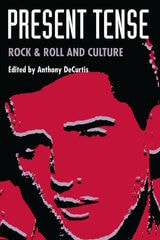
cover of Present Tense: Rock & Roll and Culture

Present Tense

Rock & Roll and Culture

Anthony DeCurtis, ed.

Duke University Press, 1992

The most compelling art form to emerge from the United States in the second half of the twentieth century, rock & roll stands in an edgy relationship with its own mythology, its own musicological history and the broader culture in which it plays a part. In Present Tense, Anthony DeCurtis brings together writers from a wide variety of fields to explore how rock & roll is made, consumed, and experienced in our time.
In this collection, Greil Marcus creates a collage of words and pictures that evokes and explores Elvis Presley's grisly fate as an American cultural image, while Robert Palmer tells the gripping tale of the origins and meanings of the electric guitar. Rap music, MTV, and the issue of gender identity in the work of Bruce Springsteen all undergo thorough examination; rock & roll's complex relationship with the forces of censorship gets a remarkably fresh reading; and the mainstreaming of rock & roll in the 1980s is detailed and analyzed. And, in an interview with Laurie Anderson and an essay by Atlanta musician Jeff Calder, the artists speak for themselves.

Contributors. Jeff Calder, Anthony DeCurtis, Mark Dery, Paul Evans, Glenn Gass, Trent Hill, Michael Jarrett, Alan Light, Greil Marcus, Robert Palmer, Robert B. Ray, Dan Rubey, David R. Shumway, Martha Nell Smith, Paul Smith

[more]
cover of Red, White & Black: Cinema and the Structure of U.S. Antagonisms

Red, White & Black

Cinema and the Structure of U.S. Antagonisms

Frank B. Wilderson III

Duke University Press, 2010

Red, White & Black is a provocative critique of socially engaged films and related critical discourse. Offering an unflinching account of race and representation, Frank B. Wilderson III asks whether such films accurately represent the structure of U.S. racial antagonisms. That structure, he argues, is based on three essential subject positions: that of the White (the “settler,” “master,” and “human”), the Red (the “savage” and “half-human”), and the Black (the “slave” and “non-human”). Wilderson contends that for Blacks, slavery is ontological, an inseparable element of their being. From the beginning of the European slave trade until now, Blacks have had symbolic value as fungible flesh, as the non-human (or anti-human) against which Whites have defined themselves as human. Just as slavery is the existential basis of the Black subject position, genocide is essential to the ontology of the Indian. Both positions are foundational to the existence of (White) humanity.

Wilderson provides detailed readings of two films by Black directors, Antwone Fisher (Denzel Washington) and Bush Mama (Haile Gerima); one by an Indian director, Skins (Chris Eyre); and one by a White director, Monster’s Ball (Marc Foster). These films present Red and Black people beleaguered by problems such as homelessness and the repercussions of incarceration. They portray social turmoil in terms of conflict, as problems that can be solved (at least theoretically, if not in the given narratives). Wilderson maintains that at the narrative level, they fail to recognize that the turmoil is based not in conflict, but in fundamentally irreconcilable racial antagonisms. Yet, as he explains, those antagonisms are unintentionally disclosed in the films’ non-narrative strategies, in decisions regarding matters such as lighting, camera angles, and sound.
[more]
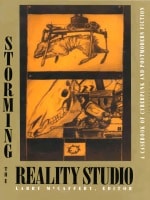
cover of Storming the Reality Studio: A Casebook of Cyberpunk & Postmodern Science Fiction

Storming the Reality Studio

A Casebook of Cyberpunk & Postmodern Science Fiction

Larry McCaffery, ed.

Duke University Press, 1992

The term “cyberpunk” entered the literary landscape in 1984 to describe William Gibson’s pathbreaking novel Neuromancer. Cyberpunks are now among the shock troops of postmodernism, Larry McCaffery argues in Storming the Reality Studio, marshalling the resources of a fragmentary culture to create a startling new form. Artificial intelligence, genetic engineering, multinational machinations, frenetic bursts of prose, collisions of style, celebrations of texture: although emerging largely from science fiction, these features of cyberpunk writing are, as this volume makes clear, integrally related to the aims and innovations of the literary avant-garde.

By bringing together original fiction by well-known contemporary writers (William Burroughs, Thomas Pynchon, Don DeLillo, Kathy Acker, J. G. Ballard, Samuel R. Delany), critical commentary by some of the major theorists of postmodern art and culture (Jacques Derrida, Fredric Jameson, Timothy Leary, Jean-François Lyotard), and work by major practitioners of cyberpunk (William Gibson, Rudy Rucker, John Shirley, Pat Cadigan, Bruce Sterling), Storming the Reality Studio reveals a fascinating ongoing dialog in contemporary culture.

What emerges most strikingly from the colloquy is a shared preoccupation with the force of technology in shaping modern life. It is precisely this concern, according to McCaffery, that has put science fiction, typically the province of technological art, at the forefront of creative explorations of our unique age.
A rich opporunity for reading across genres, this anthology offers a new perspective on the evolution of postmodern culture and ultimately shows how deeply technological developments have influenced our vision and our art.

Selected Fiction contributors: Kathy Acker, J. G. Ballard, William S. Burroughs, Pat Cadigan, Samuel R. Delany, Don DeLillo, William Gibson, Harold Jaffe, Richard Kadrey, Marc Laidlaw, Mark Leyner, Joseph McElroy, Misha, Ted Mooney, Thomas Pynchon, Rudy Rucker, Lucius Shepard, Lewis Shiner, John Shirley, Bruce Sterling, William Vollman

Selected Non-Fiction contributors: Jean Baudrillard, Jacques Derrida, Joan Gordon, Veronica Hollinger, Fredric Jameson, Arthur Kroker and David Cook, Timothy Leary, Jean-François Lyotard, Larry McCaffery, Brian McHale, Dave Porush, Bruce Sterling, Darko Suvin, Takayuki Tatsumi

[more]
cover of Taking Stock of the Profession & Teaching the Faerie Queen, Volume 3

Taking Stock of the Profession & Teaching the Faerie Queen, Volume 3

Jennifer L. Holberg and Marcy Taylor, eds.

Duke University Press, 0

This issue fuses theoretical approaches and practical realities with its two featured symposiums of articles on Gerald Graff and teaching conflicts and on how to teach Spenser’s The Faerie Queene in a week.
[more]
cover of The Constitution Besieged: The Rise & Demise of Lochner Era Police Powers Jurisprudence

The Constitution Besieged

The Rise & Demise of Lochner Era Police Powers Jurisprudence

Howard Gillman

Duke University Press, 1993

The Constitution Besieged offers a compelling reinterpretation of one of the most notorious periods in American constitutional history. In the decades following the Civil War, federal and state judges struck down as unconstitutional a great deal of innovative social and economic legislation. Scholars have traditionally viewed this as the work of a conservative judiciary more interested in promoting laissez-faire economics than in interpreting the Constitution. Gillman challenges this scholarly orthodoxy by showing how these judges were in fact observing a long-standing constitutional prohibition against "class legislation." Originally published in cloth by Duke University Press, this book received the 1994 C. Herman Pritchett Award for the "Best Book in the Field of Law and Courts," awarded by the Law and Courts Section of the American Political Science Association.
[more]
cover of The Left Unraveled: Social Democracy & the New Left Challenge in Britain & West Germany

The Left Unraveled

Social Democracy & the New Left Challenge in Britain & West Germany

Thomas A. Koelble

Duke University Press, 1991

In the early 1980s both the British Labour Party and the West German Social Democrats (SPD), confronted with serious internal challenges from the political left, experienced an erosion of support that resulted in the emergence of new political parties—the British Social Democratic Party and the West German Green Party. Explicitly comparative, this study presents a theoretically innovative analysis while offering a sophisticated understanding of the political confrontations between social democrats, the new left, traditional socialists, and trade unionists in both Britain and West Germany.
By focusing on the established parties rather than on external developments, Koelble departs from conventional methodology regarding the fortunes of political parties. In examining the fundamental processes of decision making and coalition building within the SPD and the Labour Party, he argues that it is the organizational structures within parties that shape political results by setting limits, creating opportunities, and determining strategies.

[more]
cover of The Poet & the Baroness: W.H. Auden and Stella Musulin, a Friendship

The Poet & the Baroness

W.H. Auden and Stella Musulin, a Friendship

Michael O'Sullivan

Central European University Press, 2023

For long periods in history, the Austrian capital found itself on the geographical edge of western civilisation. Yet from the 18th century on, Vienna has been a vibrant centre of European culture. This city is the scene of the formidable meeting of the two outstanding intellectuals that are at the core of this book. 

The warm relationship between W.H. Auden, the celebrated British-American poet (1907–1973), and his fellow expatriate, the Welsh-Austrian journalist, translator and writer Stella Musulin (1915–1996) lasted while Auden resided in the nearby small town of Kirchstetten starting in 1958. It was here that the poet was laid to rest in the autumn of 1973. This book is based on the unpublished letters of Auden to Musulin and her private journals.  

The study of this inspiring material yields new insights into Auden’s last, prolific, creative period and underscores the ‘Austrian Auden.’ In addition, Michael O’Sullivan pays tribute to the closest ‘Austrian’ friend of the poet. Baroness Stella von Musulin was an intellectual whose two books for Faber & Faber are acknowledged as classics: Vienna in the Age of Metternich and Austria: People & Landscape (with a foreword by Auden). The author situates the close relationship of two individuals in the context of Austria’s complex political, social, and cultural history in the Cold War years.

[more]
cover of The Reframing of Realism: Galdós & the Discourses of the 19th-Century Spanish Novel

The Reframing of Realism

Galdós & the Discourses of the 19th-Century Spanish Novel

Hazel Gold

Duke University Press, 1993

In virtually every aspect of human behavior, ritual, language, and art, perceptions are organized through the act of framing. In the writing of Benito Perez Galdós, Spain's most prolific and innovative nineteenth-century novelist, Hazel Gold finds this principle insistently at work. By exploring Galdós's methods of structuring and evaluating literary and historical experience, Gold illuminates the novelist's art and uncovers the far-reaching narratological, social, and epistemological implications of his framing strategies.
A close look at Galdós's novels reveals the artist at pains to contain and interpret what he perceived to be the distinctive and often disheartening experience of bourgeois liberalism of his day. At the same time, he can be seen here undermining or negating the accepted conventions of realist fiction. Looking beyond text to context, Gold examines the ways in which Galdós's work itself has been framed by readers and critics in accordance with changing allegiances to contemporary literary theory and the canon.
The highly ambiguous status of the frame in Galdós's fictions confirms the author's own signal position as a writer poised at the limits between realism and modernity. Gold's work will command the interest of students of Spanish and comparative literature, narrative theory, and the novel, as well as all those for whom realism and representation are at issue.

[more]
cover of Travel & See: Black Diaspora Art Practices since the 1980s

Travel & See

Black Diaspora Art Practices since the 1980s

Kobena Mercer

Duke University Press, 2016

Over the years, Kobena Mercer has critically illuminated the visual innovations of African American and black British artists. In Travel & See he presents a diasporic model of criticism that gives close attention to aesthetic strategies while tracing the shifting political and cultural contexts in which black visual art circulates. In eighteen essays, which cover the period from 1992 to 2012 and discuss such leading artists as Isaac Julien, Renée Green, Kerry James Marshall, and Yinka Shonibare, Mercer provides nothing less than a counternarrative of global contemporary art that reveals how the “dialogical principle” of cross-cultural interaction not only has transformed commonplace perceptions of blackness today but challenges us to rethink the entangled history of modernism as well.
 
 
[more]
cover of Working Women, Working Men: Sao Paulo & the Rise of Brazil’s Industrial Working Class, 1900–1955

Working Women, Working Men

Sao Paulo & the Rise of Brazil’s Industrial Working Class, 1900–1955

Joel Wolfe

Duke University Press, 1993

In Working Women, Working Men, Joel Wolfe traces the complex historical development of the working class in Sào Paulo, Brazil, Latin America's largest industrial center. He studies the way in which Sào Paulo's working men and women experienced Brazil's industrialization, their struggles to gain control over their lives within a highly authoritarian political system, and their rise to political prominence in the first half of the twentieth century.
Drawing on a diverse range of sources—oral histories along with union, industry, and government archival materials—Wolfe's account focuses not only on labor leaders and formal Left groups, but considers the impact of grassroots workers' movements as well. He pays particular attention to the role of gender in the often-contested relations between leadership groups and thee rank and file. Wolfe's analysis illuminates how various class and gender ideologies influenced the development of unions, industrialists' strategies, and rank-and-file organizing and protest activities.
This study reveals how workers in Sào Paulo maintained a local grassroots social movement that, by the mid–1950s, succeeded in seizing control of Brazil's state-run official unions. By examining the actions of these workers in their rise to political prominence in the 1940s and 1950s, this book provides a new understanding of the sources and development of populist politics in Brazil.
[more]