Results by title
3 books match the query 'de Bres, Helena'
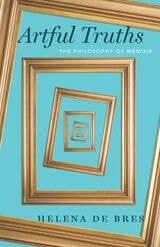
Artful Truths
The Philosophy of MemoirHelena de Bres
University of Chicago Press, 2021
Artful Truths offers a concise guide to the fundamental philosophical questions that arise when writing a literary work about your own life. Bringing a philosopher’s perspective to a general audience, Helena de Bres addresses what a memoir is, how the genre relates to fiction, memoirists’ responsibilities to their readers and subjects, and the question of why to write a memoir at all. Along the way, she delves into a wide range of philosophical issues, including the nature of the self, the limits of knowledge, the idea of truth, the obligations of friendship, the relationship between morality and art, and the question of what makes a life meaningful.
Written in a clear and conversational style, it offers a resource for those who write, teach, and study memoirs, as well as those who love to read them. With a combination of literary and philosophical knowledge, de Bres takes the many challenges directed at memoirists seriously, while ultimately standing in defense of a genre that, for all its perplexities—and maybe partly because of them—continually proves to be both beloved and valuable.
Artful Truths
The Philosophy of MemoirHelena de Bres
University of Chicago Press, 2021
Offers a philosophical perspective on the nature and value of writing a memoir.
Artful Truths offers a concise guide to the fundamental philosophical questions that arise when writing a literary work about your own life. Bringing a philosopher’s perspective to a general audience, Helena de Bres addresses what a memoir is, how the genre relates to fiction, memoirists’ responsibilities to their readers and subjects, and the question of why to write a memoir at all. Along the way, she delves into a wide range of philosophical issues, including the nature of the self, the limits of knowledge, the idea of truth, the obligations of friendship, the relationship between morality and art, and the question of what makes a life meaningful.
Written in a clear and conversational style, it offers a resource for those who write, teach, and study memoirs, as well as those who love to read them. With a combination of literary and philosophical knowledge, de Bres takes the many challenges directed at memoirists seriously, while ultimately standing in defense of a genre that, for all its perplexities—and maybe partly because of them—continually proves to be both beloved and valuable.

Philosophy in the First Person
A ManifestoHelena de Bres
University of Chicago Press, 0
A bold argument and model for how to bring one’s personal voice and experience into philosophical writing.
Contemporary philosophical writing is deeply impersonal: technical, abstract, and stripped of an individual human voice. In contrast, many of the historical philosophers we most admire saw emotion, style, narrative and humor as essential parts of doing philosophy well. What if they were on to something?
Philosophy in the First Person offers a deft and engaging case for the philosophical personal essay, a genre of writing that unites intimate revelation with intellectual depth and literary flair. As a manifesto, the book argues for a return to the more personal forms of philosophy that preceded academic professionalization. As a guide, it provides substantive advice for aspiring personal-philosophical writers, drawing on ideas from creative nonfiction. As a demonstration, the book is itself a set of philosophical personal essays, tracing one philosopher’s sentimental-intellectual journey through a vocation that frustrates and captivates her in equal measure.
Blending memoir, theory, and model, the book offers a roadmap for writing philosophy that’s enlightening as well as moving, gripping, and fun. Along the way, it makes a refreshing argument for reconnecting a philosophical vocation with a fully human way of life.