Results by title
2 books match the query 'gtt'
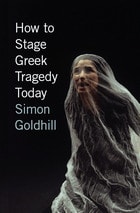
How to Stage Greek Tragedy Today
Simon Goldhill
University of Chicago Press, 2007
From the stages of Broadway and London to university campuses, Paris, and the bourgeoning theaters of Africa, Greek tragedy remains constantly in production. This global revival, in addition to delighting audiences, has highlighted both the promise and the pitfalls of staging ancient masterpieces in the modern age. Addressing the issues and challenges these performances pose, renowned classicist Simon Goldhill responds here to the growing demand for a comprehensive guide to staging Greek tragedy today.
In crisp and spirited prose, Goldhill explains how Aeschylus, Euripides, and Sophocles conceived their works in performance and then summarizes everything we know about how their tragedies were actually staged. The heart of his book tackles the six major problems facing any company performing these works today: the staging space and concept of the play; the use of the chorus; the actor’s role in an unfamiliar style of performance; the place of politics in tragedy; the question of translation; and the treatment of gods, monsters, and other strange characters of the ancient world. Outlining exactly what makes each of these issues such a pressing difficulty for modern companies, Goldhill provides insightful solutions drawn from his nimble analyses of some of the best recent productions in the United States, Britain, and Continental Europe.
One of the few experts on both Greek tragedy and contemporary performance, Goldhill uses his unique background and prodigious literary skill to illuminate brilliantly what makes tragedy at once so exciting and so tricky to get right. The result will inspire and enlighten all directors and performers—not to mention the growing audiences—of ancient Greek theater.
[more]
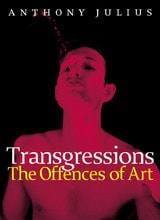
Transgressions
The Offences of ArtAnthony Julius
University of Chicago Press, 2002
Since the mid-nineteenth century, artists have compulsively rejected received ideas in order to test and subvert morality, law, society, and even art itself. But what happens when all boundaries have been crossed, all taboos broken, all limits violated?
Transgressions is the first book to address this controversial subject. Here Anthony Julius traces the history of subversion in art from the outraged response to Manet's Le Déjeuner sur l'Herbe to the scandal caused by the grant programs of the National Endowment for the Arts a century and a half later. Throughout the book, and supported by the work of such artists as Marcel Duchamp, the Chapman brothers, Andres Serrano, Damien Hirst, Gilbert & George, Paul McCarthy, Jeff Koons, Hans Haacke, and Anselm Kiefer, Julius shows how the modern period has been characterized by three kinds of transgressive art: an art that perverts established art rules; an art that defiles the beliefs and sentiments of its audience; and an art that challenges and disobeys the rules of the state.
The evidence assembled, Julius concludes his hard-hitting dissection of the landscapes of contemporary art by posing some important questions: what is art's future when its boundary-exceeding, taboo-breaking endeavors become the norm? And is anything of value lost when we submit to art's violation?
Transgressions is not a comfortable—still less a comforting—read, but it has a powerful urgency that makes it an essential document for anyone involved in our cultural life at the beginning of the twenty-first century.
[more]