Results by title
9 books match the query 'its Critics'
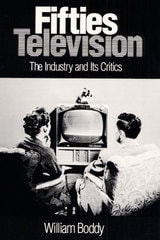
Fifties Television
THE INDUSTRY AND ITS CRITICSWilliam Boddy
University of Illinois Press, 1990
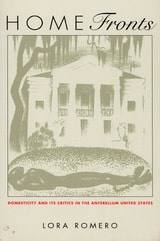
Home Fronts
Domesticity and Its Critics in the Antebellum United StatesLora Romero
Duke University Press, 1997
Romero remaps the literary landscape of the last century by looking at the operations of domesticity on the frontier as well as within the middle-class home and by reconsidering such crucial (if sometimes unexpected) sites for the workings of domesticity as social reform movements, African-American activism, and homosocial high culture. In the process, she indicts theories of the nineteenth century based on binarisms and rigidity while challenging models of power and resistance based on the idea that "culture" has the capacity to either free or enslave. Through readings of James Fenimore Cooper, Catherine Beecher, Harriet Beecher Stowe, Maria Stewart, and Nathaniel Hawthorne, Romero shows how the politics of culture reside in local formulations rather than in essential and ineluctable political structures.
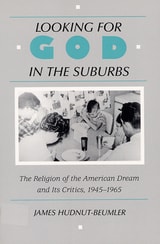
Looking for God in the Suburbs
The Religion of the American Dream and its Critics, 1945-1965Hudnut-Beumler, James
Rutgers University Press, 1994
In the 1950s, 99 percent of adult Americans said they believed in God. How, James Hudnut-Beumler asks, did this consensus about religion turn into the confrontational debates over religion in the 1960s? He argues that post-World War II suburban conformity made church-going so much a part of middle-class values and life that religion and culture became virtually synonymous. Secular critics like David Riesman, William Whyte, C. Wright Mills, and Dwight Macdonald, who blamed American culture for its conformism and lack of class consciousness, and religious critics like Will Herberg, Gibson Winter, and Peter Berger, who argued that religion had lost its true roots by incorporating only the middle class, converged in their attacks on popular religion.
Although most Americans continued to live and worship as before, a significant number of young people followed the critics' call for a faith that led to social action, but they turned away from organized religion and toward the counterculture of the sixties. The critics of the 1950s deserve credit for asking questions about the value of religion as it was being practiced and the responsibilities of the affluent to the poor—and for putting these issues on the social and cultural agenda of the next generation.
Queer Wars
The New Gay Right and Its CriticsPaul Robinson
University of Chicago Press, 2004
Queer Wars limns this new gay right, offering the first extended consideration of gay conservatism and its more trenchant critics. Here celebrated historian of gay culture Paul Robinson draws particular attention to three features of this new political movement. First, he explores how gay conservatives have rejected the idea that commitment to gay freedom should involve equal dedication to the causes of other marginalized people, be they racial minorities, women, or the poor. Second, Robinson demonstrates why gay conservatives embrace more traditional gender ideals—why they are hostile to effeminacy among men and mannishness among women. Finally, exploring the support for sexual restraint among gay conservatives, Robinson dissects their condemnation of promiscuity and their assault on behavior they deem dissolute.
Timely and rich in suggestive propositions, Queer Wars will prove to be essential reading for anyone interested in gay culture and contemporary politics.
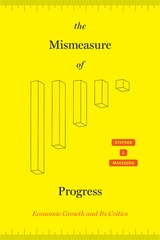
The Mismeasure of Progress
Economic Growth and Its CriticsStephen J. Macekura
University of Chicago Press, 2020
Beginning with the rise of the growth paradigm in the 1940s and 1950s and continuing through the present day, The Mismeasure of Progress is the first book on the myriad thinkers who argued against growth and the conventional way progress had been measured and defined. For growth critics, questioning the meaning and measurement of growth was a necessary first step to creating a more just, equal, and sustainable world. These critics argued that focusing on growth alone would not resolve social, political, and environmental problems, and they put forth alternate methods for defining and measuring human progress.
In today’s global political scene—marked by vast inequalities of power and wealth and made even more fraught by a global climate emergency—the ideas presented by these earlier critics of growth resonate more loudly than ever. Economic growth appealed to many political leaders because it allowed them to avoid addressing political trade-offs and class conflict. It sustained the fiction that humans are somehow separate from nonhuman “nature,” ignoring the intimate and dense connections between the two. In order to create a truly just and equitable society, Macekura argues, we need a clear understanding of our collective needs beyond growth and more holistic definitions of progress that transcend economic metrics like GDP.
The Moral Meaning of Nature
Nietzsche’s Darwinian Religion and Its CriticsPeter J. Woodford
University of Chicago Press, 2018
We start with Friedrich Nietzsche, whose writings staged one of the first confrontations with the Christian tradition using the resources of Darwinian thought. The lebensphilosophie, or “life-philosophy,” that arose from his engagement with evolutionary ideas drew responses from other influential thinkers, including Franz Overbeck, Georg Simmel, and Heinrich Rickert. These critics all offered cogent challenges to Nietzsche’s appropriation of the newly transforming biological sciences, his negotiation between science and religion, and his interpretation of the implications of Darwinian thought. They also each proposed alternative ways of making sense of Nietzsche’s unique question concerning the meaning of biological evolution “for life.” At the heart of the discussion were debates about the relation of facts and values, the place of divine purpose in the understanding of nonhuman and human agency, the concept of life, and the question of whether the sciences could offer resources to satisfy the human urge to discover sources of value in biological processes. The Moral Meaning of Nature focuses on the historical background of these questions, exposing the complex ways in which they recur in contemporary philosophical debate.
The Rise of Euroskepticism
Europe and Its Critics in Spanish CultureLuis Martín-Estudillo
Vanderbilt University Press, 2018
Covering from 1915 to the present, this book deals with the role that artists and intellectuals have played regarding projects of European integration. Consciously or not, they partake of a tradition of Euroskepticism. Because Euroskepticism is often associated with the discourse of political elites, its literary and artistic expressions have gone largely unnoticed. This book addresses that gap.
Taking Spain as a case study, author Luis Martín-Estudillo analyzes its conflict over its own Europeanness or exceptionalism, as well as the European view of Spain. He ranges from canonical writers like Unamuno, Ortega y Gasset, and Zambrano to new media artists like Valeriano López, Carlos Spottorno, and Santiago Sierra. Martín-Estudillo provides a new context for the current refugee crisis, the North-South divide among EU countries, and the generalized disaffection toward the project of European integration.
The eclipsed critical tradition he discusses contributes to a deeper understanding of the notion of Europe and its institutional embodiments. It gives resonance to the intellectual and cultural history of Europe's "peripheries" and re-evaluates Euroskeptic contributions as one of the few hopes left to imagine ways to renew the promise of a union of the European nations.
The Varieties of Atheism
Connecting Religion and Its CriticsEdited by David Newheiser
University of Chicago Press, 2022
The Varieties of Atheism reveals the diverse nonreligious experiences obscured by the combative intellectualism of Sam Harris, Richard Dawkins, and Christopher Hitchens. In fact, contributors contend that narrowly defining atheism as the belief that there is no god misunderstands religious and nonreligious persons altogether. The essays show that, just as religion exceeds doctrine, atheism also encompasses every dimension of human life: from imagination and feeling to community and ethics. Contributors offer new, expansive perspectives on atheism’s diverse history and possible futures. By recovering lines of affinity and tension between particular atheists and particular religious traditions, this book paves the way for fruitful conversation between religious and non-religious people in our secular age.
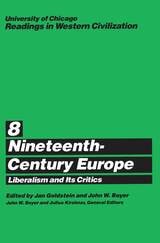
University of Chicago Readings in Western Civilization, Volume 8
Nineteenth-Century Europe: Liberalism and its CriticsEdited by Jan E. Goldstein and John W. Boyer
University of Chicago Press, 1987
Individual volumes provide essential background reading for courses covering specific eras and periods. The complete nine-volume series is ideal for general courses in history and Western civilization sequences.