Results by title
6 books match the query 'its Influence'
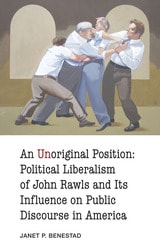
An Unoriginal Position
Political Liberalism of John Rawls and Its Influence on Public Discourse in AmericaJanet P. Benestad
St. Augustine's Press, 2026

Celebrity Culture and the Entertainment Industry in Asia
Use of Celebrity and its Influence on Society, Culture and CommunicationBy Vivienne Leung, Kimmy Cheng, and Tommy Tse
Intellect Books, 2017
Through first-hand interviews with celebrities and entertainment industry practitioners, the authors discuss the social, cultural, and economic influences of celebrity. Dialogues with celebrities such as Kwok-Leung Kam, Bob Lam, Denise Ho, Hilary Tsui, and Francis Mak provide insider accounts of celebrity formation, management, and marketing in Hong Kong and Mainland China, as well as South Korea and Taiwan.

From Science to Computational Sciences
Studies in the History of Computing and its Influence on Today‘s SciencesEdited by Gabriele Gramelsberger
Diaphanes, 2011
During the last decades hundreds of computational departments have been established all over the world and countless computer-based simulations have been conducted. This volume explores the epoch-making influence of automatic computing machines on science, in particular as simulation tools.

The Militant Hackwriter
French Popular Literature 1800–1848 and Its Influence, Artistic and PoliticalLucian W. Minor
University of Wisconsin Press, 1975
While Louis XVIII, Charles X, and Louis Philippe ruled in France, a vast majority of politically unenfranchised Frenchmen were developing their own subculture. Only recently literate, they fashioned their own literature. It consisted of two important genres: the popular novel and the melodrama. As we trace these genres from the turn of the nineteenth century until that moment of February 25, 1848, when the Second Republic was declared, we are also led to a detailed scrutiny of the injustices which the immense majority of the French suffered and of the political causes they espoused. The succession of heroes and villains in their literature mirrored accurately the fears and hopes they felt.
The Western Hemisphere
Its Influence on United States Policies to the End of World War IIBy Wilfrid Hardy Callcott
University of Texas Press, 1968
The Monroe Doctrine, "dollar diplomacy," the policy of the Good Neighbor—these well-known terms indicate the spectrum of the United States's relationships with its neighbors of the Western Hemisphere. Hemisphere thinking in the "Yankee" nation, founded on economic, political, and strategic needs, has come to encompass an appreciation of social and intellectual aspects as a vital part of a unified international unit.
In The Western Hemisphere: Its Influence on United States Policies to the End of World War II, Wilfrid Hardy Callcott traces the rise of this awareness of the essential unity of the Western Hemisphere in international affairs. Although Callcott concentrates on the United States, he discusses all hemisphere countries, and his inclusion of Canada adds an additional dimension to previous studies on the subject.
From the early days of the Republic to the end of World War I, the relations of the United Stales with its neighbors gradually developed from mere curiosity and from on-the-spot decision-making into policy. During the eighteenth century the persons entrusted with United States foreign policy pressed forward with their own country's westward expansion, while they expressed only an academic interest in the affairs of other Western Hemisphere nations from Canada to Brazil.
By the end of the nineteenth century the United States had enthusiastically joined the imperialist nations. Although it soon replaced the use of force with economic controls, its military and economic manipulations naturally generated more fear and antagonism in the neighboring nations than cooperation and sympathy.
After World War I, attention to the hemisphere was fostered by the need for strategic raw materials that were to be found from Canada to South America, and by Old World rivalries and needs that endangered New World interests. Canadian and Latin American views of Europe and the League of Nations became much like those of the United States. The new conditions that arose called forth the Good Neighbor policy to combine economic and strategic values in a complex program that included intellectual, social, and cultural elements. World War II accentuated the new consciousness and compelled recognition of the significance of hemisphere relationships in all of the New World nations.

Wisconsin's Foundations
A Review of the State's Geology and Its Influence on Geography and Human ActivityGwen Schultz
University of Wisconsin Press, 2004