Results by title
5 books match the query 'optimization'

Cogeneration
Technologies, optimization and implementationChristos A. Frangopoulos
The Institution of Engineering and Technology, 2017
Cogeneration, also called combined heat and power (CHP), refers to the use of a power station to deliver two or more useful forms of energy, for example, to generate electricity and heat at the same time. All conventional, fuel-based plants generate heat as by-product, which is often carried away and wasted. Cogeneration captures part of this heat for delivery to consumers and is thus a thermodynamically efficient use of fuel, and contributes to reduction of carbon emissions. This book provides an integrated treatment of cogeneration, including a tour of the available technologies and their features, and how these systems can be analysed and optimised.
[more]
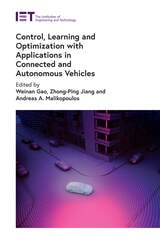
Control, Learning, and Optimization with Applications in Connected and Autonomous Vehicles
Weinan Gao
The Institution of Engineering and Technology, 2026
Connected and autonomous vehicles (CAVs) have enormous potential to shape the future of transportation. As this complex and dynamic field grows, researchers are looking for ways to improve the efficiency and performance of CAVs. Through employing predictive modeling, machine learning, and advanced sensor fusion approaches, CAVs can anticipate and respond to hazardous situations with greater precision and speed. Control algorithms coupled with real-time data analysis enable CAVs to achieve significant reductions in energy consumption without compromising performance or safety.
[more]
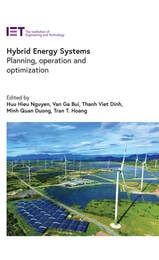
Hybrid Energy Systems
Planning, operation and optimizationHuu Hieu Nguyen
The Institution of Engineering and Technology, 2026
Hybrid energy systems are essential for combining different clean generation technologies into a clean and stable power system, incorporating solar, wind and hydropower, as well as energy storage solutions.
[more]
RFID Protocol Design, Optimization, and Security for the Internet of Things
Alex X. Liu
The Institution of Engineering and Technology, 2018
Radio-frequency identification (RFID) uses electromagnetic fields to automatically identify and track tags attached to objects. The tags contain electronically stored information. RFIDs have been widely used in countless applications such as object tracking, 3D positioning, indoor localization, supply chain management, automotive, inventory control, anti-theft, anti-counterfeit, and access control. The Internet of Things (IoT) promises a huge growth in RFID technology and usage.
[more]
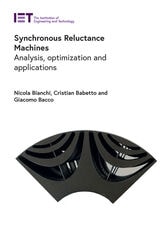
Synchronous Reluctance Machines
Analysis, optimization and applicationsNicola Bianchi
The Institution of Engineering and Technology, 2022
Reluctance motors induce non-permanent magnetic poles on the ferromagnetic rotor; the rotor does not have any windings and torque is generated through magnetic reluctance. Synchronous reluctance motors (SyRMs) have an equal number of stator and rotor poles. Reluctance motors can deliver high power density at low cost, so they are finding increasing application in the transport sector. Disadvantages include high torque ripple and the complexity of designing and controlling them. Advances in theory, computer design, and control electronics can overcome these issues.
[more]