Results by title
7 books match the query 'therapy'
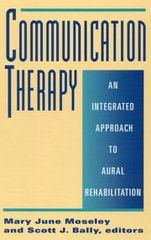
Communication Therapy
An Integrated Approach to Aural RehabilitationMary June Moseley
Gallaudet University Press, 1996
This new book for students and professionals emphasizes a functional approach to aural rehabilitation refined during the past several years. It details the use of an integrated therapy strategy designed to meet a variety of needs for each client while simultaneously working on multiple communication skill areas. Particular care has been taken to address the different requirements of deaf and hard of hearing adolescents and adults, including information about the unique needs of the culturally Deaf population. Throughout this practical text, clinicians receive encouragement to learn American Sign Language to enhance communication with Deaf clients.
Communication Therapy calls upon the expertise of various authorities well-versed in integrated therapy. They explain fully the state-of-the-art practices for all therapy areas, from global areas in communication therapy, to technology for aural rehabilitation, auditory skills, speechreading, speech and voice, pronunciation, and language skills, and telephone communication training. Case studies demonstrate the effectiveness of the integrated approach, making this book a significant advancement in communication therapy.
Diagnosis, Therapy, and Evidence
Conundrums in Modern American MedicineGrob, Gerald N
Rutgers University Press, 2010
Outpatient Treatment of Eating Disorders
A Guide for Therapists, Dietitians, and PhysiciansJames E. Mitchell, M.D.
University of Minnesota Press, 2001
Over the past decade, there have been substantial and rapidly changing developments in the treatment of eating disorders. Grounded in the most recent literature, The Outpatient Treatment of Eating Disorders balances general and pathology-specific research to emphasize outpatient treatment. The contributors provide an overview of the full range of eating disorders and offer clinical recommendations for a comprehensive treatment plan for patients with these disorders.
These distinguished contributors present case studies and hands-on treatment models based on cognitive behavioral techniques. Using three vignettes-a woman with anorexia nervosa, a woman with bulimia nervosa, and a man with binge eating disorder-the authors offer practical approaches, including extensive nutritional information for dietitians, for treating these three major forms of eating disorders. Designed for all health care workers who deal with eating disorder patients, this indispensable guide will be useful for psychiatrists, other physicians, psychologists, social workers, exercise physiologists, and dietitians as well as those who suffer from eating disorders.
Contributors: David W. Abbott, U of North Dakota; Roslyn Binford, U of Minnesota; Carol Brunzell, Fairview-University Medical Center; Scott Crow, U of Minnesota; Mary Hendrickson-Nelson, HealthPartners of Minnesota; Susan Jack, Fairview-University Medical Center; Pamela K. Keel, Harvard U; Melissa Pederson Mussell, U of St. Thomas; Carol Peterson, U of Minnesota; Claire Pomeroy, U of Kentucky; LeAnn Snow, U of Minnesota; Stephen A. Wonderlich, U of North Dakota; and Martina de Zwaan, University Hospital, Vienna.
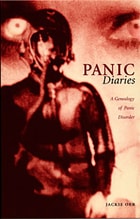
Panic Diaries
A Genealogy of Panic DisorderJackie Orr
Duke University Press, 2006
Orr, who has experienced panic attacks herself, kept a diary of her participation as a research subject in clinical trials for the Upjohn Company’s anti-anxiety drug Xanax. This “panic diary” grounds her study and suggests the complexity of her desire to track the diffusion and regulation of panic in U.S. society. Orr’s historical research, theoretical reflections, and biographical narrative combine in this remarkable and compelling genealogy, which documents the manipulation of panic by the media, the social sciences and psychiatry, the U.S. military and government, and transnational drug companies.
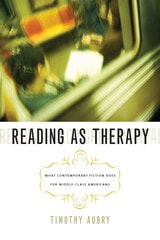
Reading as Therapy
What Contemporary Fiction Does for Middle-Class AmericansTimothy Aubry
University of Iowa Press, 2011
@font-face { font-family: "Myriad Pro";}p.MsoNormal, li.MsoNormal, div.MsoNormal { margin: 0in 0in 0.0001pt; font-size: 12pt; font-family: "Times New Roman"; }div.Section1 { page: Section1; }Why do Americans read contemporary fiction? This question seems simple, but is it? Do Americans read for the purpose of aesthetic appreciation? To satisfy their own insatiable intellectual curiosities? While other forms of media have come to monopolize consumers’ leisure time, in the past two decades book clubs have proliferated, Amazon has sponsored thriving online discussions, Oprah Winfrey has inspired millions of viewers to read both contemporary works and classics, and novels have retained their devoted following within middlebrow communities.
In Reading as Therapy, Timothy Aubry argues that contemporary fiction serves primarily as a therapeutic tool for lonely, dissatisfied middle-class American readers, one that validates their own private dysfunctions while supporting elusive communities of strangers unified by shared feelings. Aubry persuasively makes the case that contemporary literature’s persistent appeal depends upon its capacity to perform a therapeutic function.
Reading as Therapy traces the growth and proliferation of psychological concepts focused on the subjective interior within mainstream, middle-class society and the impact this has had on contemporary fiction. The prevailing tendency among academic critics has been to decry the personal emphasis of contemporary fiction as complicit with the rise of a narcissistic culture, the ascendency of liberal individualism, and the breakdown of public life. Reading as Therapy, by contrast, underscores the varied ideological effects that therapeutic culture can foster.
To uncover the many unpredictable ways in which contemporary literature answers the psychological needs of its readers, Aubry considers several different venues of reader-response—including Oprah’s Book Club and Amazon customer reviews—the promotional strategies of publishing houses, and a variety of contemporary texts, ranging from Khaled Hosseini’s The Kite Runner to Anita Shreve’s The Pilot’s Wife to David Foster Wallace’s Infinite Jest. He concludes that, in the face of an atomistic social landscape, contemporary fiction gives readers a therapeutic vocabulary that both reinforces the private sphere and creates surprising forms of sympathy and solidarity among strangers.
Technological Change in Health Care
A Global Analysis of Heart AttackMark B. McClellan and Daniel P. Kessler, Editors
University of Michigan Press, 2002
The comparisons presented here confirm that the use of medical technology in treatment for heart attack is strongly related to incentives, and that technological change is an important cause of medical expenditure growth in all developed countries. Each participating research team reviewed the economic and regulatory incentives provided by their country's health system, and major changes in those incentives over the 1980s and 1990s, according to a commonly used framework. Such incentives include: the magnitude of out-of-pocket costs to patients, the generosity of reimbursement to physicians and hospitals, regulation of the use of new technologies or the supply of physicians, regulation of competition, and the structure of hospital ownership. Each team also reviewed how care for heart attacks has changed in their country over the past decade.
The book will be of enormous importance to health economists, medical researchers and epidemiologists, and policymakers.
Mark McClellan is Associate Professor of Economics and of Medicine and, by courtesy, of Health Research and Policy, Stanford University. He is a National Fellow, the Hoover Institution. Daniel P. Kessler is Associate Professor of Economics, Law, and Policy in the Graduate School of Business, Stanford University, and a Research Fellow, the Hoover Institution.
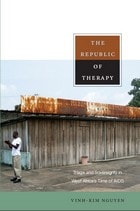
The Republic of Therapy
Triage and Sovereignty in West Africa’s Time of AIDSVinh-Kim Nguyen
Duke University Press, 2010