Results by title
9 books match the query 'user's guide'
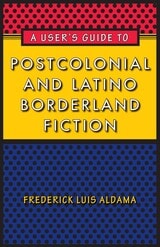
A User's Guide to Postcolonial and Latino Borderland Fiction
By Frederick Luis Aldama
University of Texas Press, 2009
Why are so many people attracted to narrative fiction? How do authors in this genre reframe experiences, people, and environments anchored to the real world without duplicating "real life"? In which ways does fiction differ from reality? What might fictional narrative and reality have in common—if anything?
By analyzing novels such as Arundhati Roy's The God of Small Things, Amitav Ghosh's The Glass Palace, Zadie Smith's White Teeth, and Hari Kunzru's The Impressionist, along with selected Latino comic books and short fiction, this book explores the peculiarities of the production and reception of postcolonial and Latino borderland fiction. Frederick Luis Aldama uses tools from disciplines such as film studies and cognitive science that allow the reader to establish how a fictional narrative is built, how it functions, and how it defines the boundaries of concepts that appear susceptible to limitless interpretations.
Aldama emphasizes how postcolonial and Latino borderland narrative fiction authors and artists use narrative devices to create their aesthetic blueprints in ways that loosely guide their readers' imagination and emotion. In A User's Guide to Postcolonial and Latino Borderland Fiction, he argues that the study of ethnic-identified narrative fiction must acknowledge its active engagement with world narrative fictional genres, storytelling modes, and techniques, as well as the way such fictions work to move their audiences.
A User's Guide to the Age of Tech
Grant Wythoff
University of Minnesota Press, 2025
How users experience and influence technological change—when so much of that change feels out of our control
Every day, we casually employ one of the most complex tools ever created, using it to read the news, plan our day, and connect with friends. In A User’s Guide to the Age of Tech, Grant Wythoff investigates the process by which now-ubiquitous technologies like our phones become integrated into our lives, showing how the “gadget” stage—before devices are widely adopted—opens the door for users to co-create these technologies and adapt them toward unexpected ends.
In this elegant, approachable work, Wythoff offers a view of how users make new technology their own, subverting dominant power structures and imagining uses never intended by their creators. Rooted in a detailed look into the history of technique (focusing on how we do things with tools rather than the tools themselves), A User’s Guide to the Age of Tech proceeds to complicate, and influence, discussion of subjects like the digital divide and AI.
Drawing on a range of sources, including novels, patents, and newspapers, Wythoff explores the vernacular philosophies that have emerged from users and their diverse, everyday practices, bringing down to earth the conversation about digital titans, away from the abstracted domains of server farms and algorithms. Lodging a passionate argument that we know ourselves better than the data brokers who appear to wield influence over our psyches, Wythoff invites readers (and tech users) to imagine their own digital technique, acknowledge their vast expertise, and see its immense value.
Retail e-book files for this title are screen-reader friendly with images accompanied by short alt text and/or extended descriptions.

A User's Guide to the Crisis of Civilization
And How to Save ItNafeez Mosaddeq Ahmed
Pluto Press, 2010
It often seems that different crises are competing to devastate civilisation. This book argues that financial meltdown, dwindling oil reserves, terrorism and food shortages need to be considered as part of the same ailing system.
Most accounts of our contemporary global crises such as climate change, or the threat of terrorism, focus on one area, or another, to the exclusion of others. Nafeez Mosaddeq Ahmed argues that the unwillingness of experts to look outside their own fields explains why there is so much disagreement and misunderstanding about particular crises. This book attempts to investigate all of these crises, not as isolated events, but as trends and processes that belong to a single global system. We are therefore not dealing with a 'clash of civilisations', as Huntington argued. Rather, we are dealing with a fundamental crisis of civilisation itself.
This book provides a stark warning of the consequences of failing to take a broad view of the problems facing the world and shows how catastrophe can be avoided.
A User's Guide to the Nestle-Aland 28 Greek New Testament
David Trobisch
SBL Press, 2013

A User’s Guide to Bypass Surgery
Ted Klein
Ohio University Press, 1996
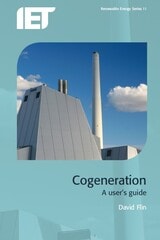
Cogeneration
A user's guideDavid Flin
The Institution of Engineering and Technology, 2009
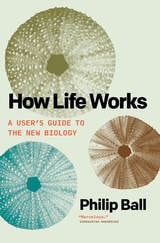
How Life Works
A User’s Guide to the New BiologyPhilip Ball
University of Chicago Press, 2023
“Ball’s marvelous book is both wide-ranging and deep. . . . I could not put it down.”—Siddhartha Mukherjee, author of The Song of the Cell and the Pulitzer Prize–winning The Emperor of All Maladies
A new, cutting-edge vision of biology that revises our understanding of what life itself is, how to enhance it, and what possibilities it offers.
Biology is undergoing a quiet but profound transformation. Several aspects of the standard picture of how life works—the idea of the genome as a blueprint, of genes as instructions for building an organism, of proteins as precisely tailored molecular machines, of cells as entities with fixed identities, and more—have been exposed as incomplete, misleading, or wrong.
In How Life Works, Philip Ball explores the new biology, revealing life to be a far richer, more ingenious affair than we had guessed. Ball explains that there is no unique place to look for an answer to this question: life is a system of many levels—genes, proteins, cells, tissues, and body modules such as the immune system and the nervous system—each with its own rules and principles. How Life Works explains how these levels operate, interface, and work together (most of the time).
With this knowledge come new possibilities. Today we can redesign and reconfigure living systems, tissues, and organisms. We can reprogram cells, for instance, to carry out new tasks and grow into structures not seen in the natural world. As we discover the conditions that dictate the forms into which cells organize themselves, our ability to guide and select the outcomes becomes ever more extraordinary. Some researchers believe that ultimately we will be able to regenerate limbs and organs, and perhaps even create new life forms that evolution has never imagined.
Incorporating the latest research and insights, How Life Works is a sweeping journey into this new frontier of the life sciences, a realm that will reshape our understanding of life as we know it.
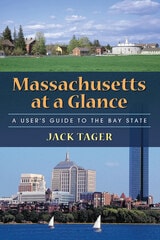
Massachusetts at a Glance
A User's Guide to the Bay StateJack Tager
University of Massachusetts Press, 2004
Site of the first Thanksgiving in the seventeenth century and seedbed of revolutionary sentiment during the eighteenth, the Bay State became a center of industrialization during the nineteenth and of the high tech revolution during the twentieth. It has served as home to some of the nation's most renowned writers, from Henry David Thoreau and Ralph Waldo Emerson to Robert Lowell and Sylvia Plath, as well as some of its most prominent public figures, including Samuel Adams, Daniel Webster, W. E. B. Du Bois, and John F. Kennedy.
A professional historian with a long-standing interest in the history of Massachusetts, Jack Tager has organized the book to allow readers to find answers to questions in an efficient and reliable manner. He begins with a compilation of basic facts about Massachusetts, including population data drawn from the latest census, state motto and seal, even the state bird. This is followed by the main section of the book, an A-to-Z list of individuals, events, and sites of interest.
Additional information about the state can be found in a year-by-year chronology of key historical developments, a statistical profile of the state's 351 towns and cities, and lists of the state's museums, historic sites, and state parks as well as its many colleges and universities, with addresses, telephone numbers, and websites for readers who might wish to contact these institutions directly. Finally, an extensive listing of suggested readings is included for those who would like to explore further any of the topics covered in the book.
The Interface Experience
A User's GuideKimon Keramidas
Bard Graduate Center, 2015
The Interface Experience surveys some of the landmark devices in the history of personal computing—including the Commodore 64, Apple Macintosh Plus, Palm Pilot Professional, and Microsoft Kinect—and helps us to better understand the historical shifts that have occurred with the design and material experience of each machine. With its spiral-bound design reminiscent of early computer user manuals and thorough consideration of the cultural moment represented by each device, The Interface Experience is a one-of-a-kind tour of modern computing technology.