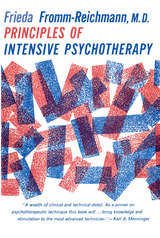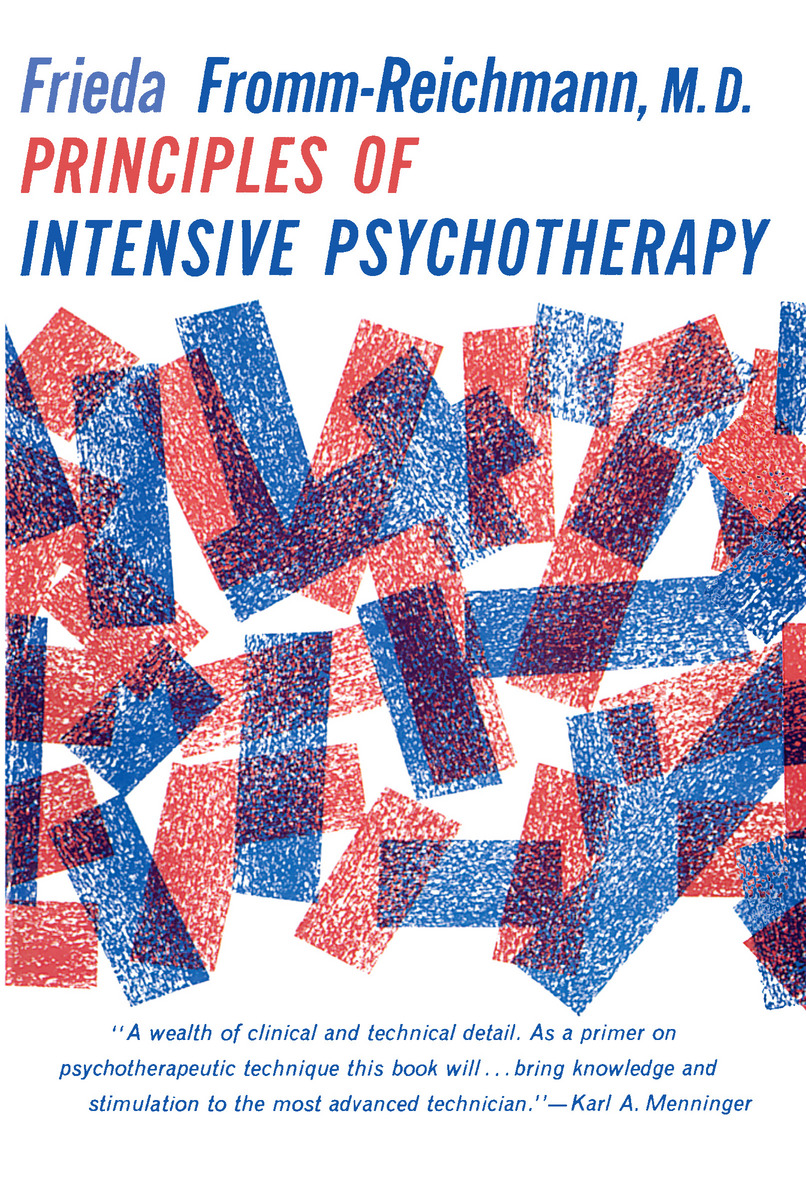
Principles of Intensive Psychotherapy
University of Chicago Press, 1960
Cloth: 978-0-226-26598-8 | eISBN: 978-0-226-22127-4 | Paper: 978-0-226-26599-5
Library of Congress Classification RC480.F766 1960eb
See other books on: Principles | Psychoanalysis | Psychotherapy
See other titles from University of Chicago Press
Cloth: 978-0-226-26598-8 | eISBN: 978-0-226-22127-4 | Paper: 978-0-226-26599-5
Library of Congress Classification RC480.F766 1960eb
ABOUT THIS BOOK | TOC | REQUEST ACCESSIBLE FILE
ABOUT THIS BOOK
"[This book has] a wealth of clinical and technical detail. As a primer on psychotherapeutic technique this book will. . .bring knowledge and stimulation to the most advanced technician"—Karl A. Menninger
"One is continuously aware that here is a truly human being at work, human in the sense of exquisite awareness, on a profoundly intuitive level, of the workings of the human totality. . . . Because of this she can bridge the vast divide that separates us from the psychotic . . . thereby gaining access to the process of recalling the patient to his lost domain."—Louise E. DeRosis, M.D., American Journal of Psychoanalysis
"One is continuously aware that here is a truly human being at work, human in the sense of exquisite awareness, on a profoundly intuitive level, of the workings of the human totality. . . . Because of this she can bridge the vast divide that separates us from the psychotic . . . thereby gaining access to the process of recalling the patient to his lost domain."—Louise E. DeRosis, M.D., American Journal of Psychoanalysis
See other books on: Principles | Psychoanalysis | Psychotherapy
See other titles from University of Chicago Press