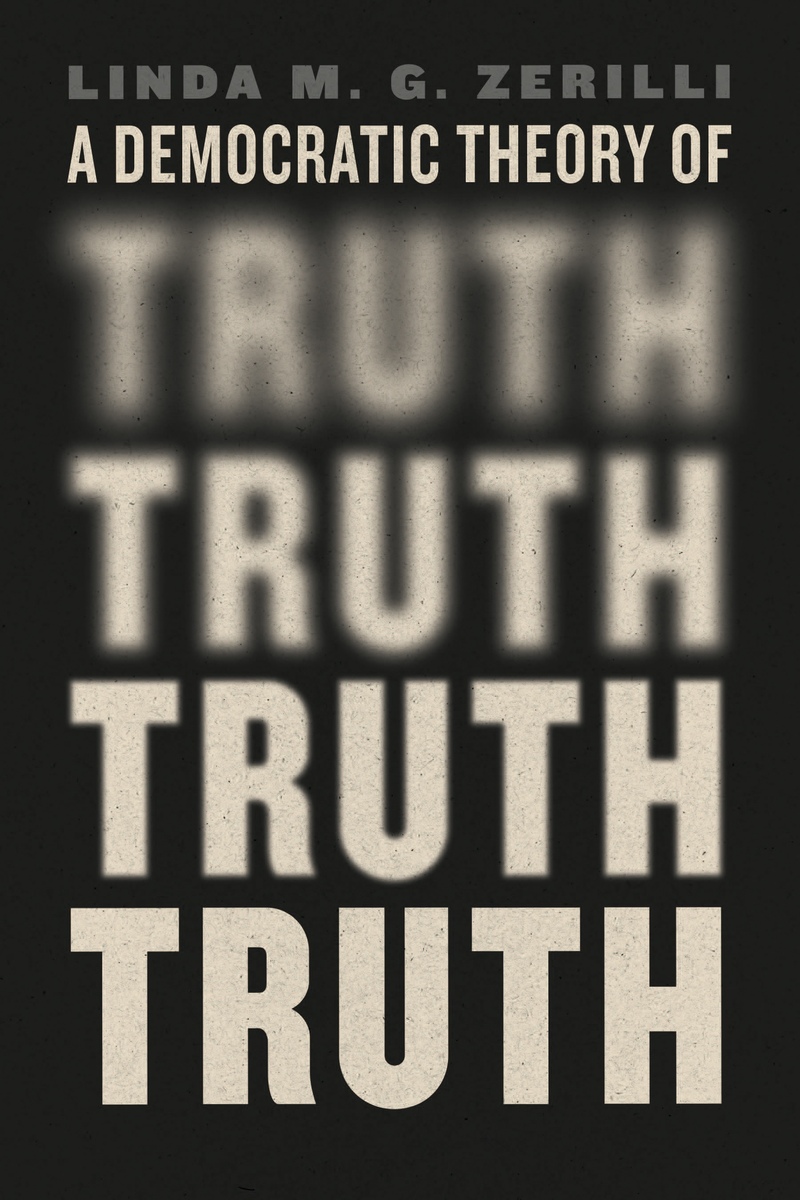
A Democratic Theory of Truth
University of Chicago Press, 2025
Cloth: 978-0-226-83902-8 | Paper: 978-0-226-83904-2 | eISBN: 978-0-226-83903-5 (all)
Library of Congress Classification BD171.Z43 2025
Dewey Decimal Classification 121
Cloth: 978-0-226-83902-8 | Paper: 978-0-226-83904-2 | eISBN: 978-0-226-83903-5 (all)
Library of Congress Classification BD171.Z43 2025
Dewey Decimal Classification 121
ABOUT THIS BOOK | AUTHOR BIOGRAPHY | REVIEWS | TOC | REQUEST ACCESSIBLE FILE
ABOUT THIS BOOK
A critique of the concept of truth presupposed by the post-truth debate—and a bold new vision for a more pluralistic citizenry.
We say that we live in a “post-truth” era because disinformation threatens our confidence in the existence of a shared public world. Affirming objective truth may, therefore, seem necessary to save democracy. According to political theorist Linda M. G. Zerilli, such affirmation can stifle political debate and silence dissent. In fact, Zerilli argues that the unqualified insistence on objective truth is as dangerous for democracy as denying it.
Drawing on Arendt, Foucault, and Wittgenstein, A Democratic Theory of Truth challenges the concept of truth presupposed by the post-truth debate. It argues that we, the people, have an essential role in discovering and evaluating any truth relevant to the political realm. The result is a striking defense of plurality, dissent, and opinion in contemporary democratic societies.
See other books on: Democratic Theory | Epistemology | Truth | Truthfulness and falsehood | Zerilli, Linda M. G.
See other titles from University of Chicago Press