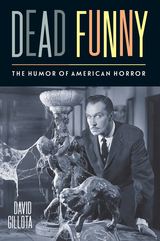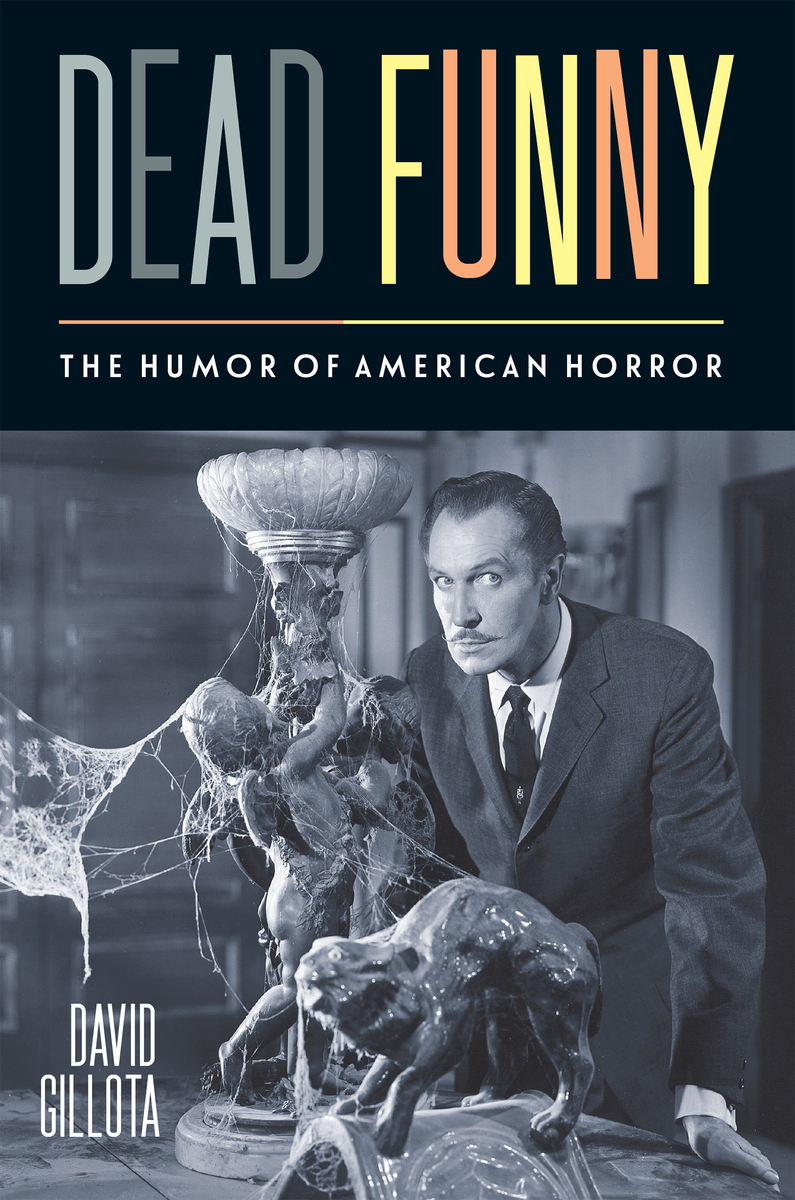
Dead Funny: The Humor of American Horror
Rutgers University Press, 2023
Cloth: 978-1-9788-3417-0 | Paper: 978-1-9788-3416-3 | eISBN: 978-1-9788-3418-7 (ePub) | eISBN: 978-1-9788-3419-4 (PDF)
Library of Congress Classification PN1995.9.H6G545 2023
Dewey Decimal Classification 791.436164
Cloth: 978-1-9788-3417-0 | Paper: 978-1-9788-3416-3 | eISBN: 978-1-9788-3418-7 (ePub) | eISBN: 978-1-9788-3419-4 (PDF)
Library of Congress Classification PN1995.9.H6G545 2023
Dewey Decimal Classification 791.436164
ABOUT THIS BOOK | AUTHOR BIOGRAPHY | REVIEWS | TOC
ABOUT THIS BOOK
Horror films strive to make audiences scream, but they also garner plenty of laughs. In fact, there is a long tradition of horror directors who are fluent in humor, from James Whale to John Landis to Jordan Peele. So how might horror and humor overlap more than we would expect?
Dead Funny locates humor as a key element in the American horror film, one that is not merely used for extraneous “comic relief” moments but often serves to underscore major themes, intensify suspense, and disorient viewers. Each chapter focuses on a different comic style or device, from the use of funny monsters and scary clowns in movies like A Nightmare on Elm Street to the physical humor and slapstick in movies ranging from The Evil Dead to Final Destination. Along the way, humor scholar David Gillota explores how horror films employ parody, satire, and camp to comment on gender, sexuality, and racial politics. Covering everything from the grotesque body in Freaks to the comedy of awkwardness in Midsommar, this book shows how integral humor has been to the development of the American horror film over the past century.
Dead Funny locates humor as a key element in the American horror film, one that is not merely used for extraneous “comic relief” moments but often serves to underscore major themes, intensify suspense, and disorient viewers. Each chapter focuses on a different comic style or device, from the use of funny monsters and scary clowns in movies like A Nightmare on Elm Street to the physical humor and slapstick in movies ranging from The Evil Dead to Final Destination. Along the way, humor scholar David Gillota explores how horror films employ parody, satire, and camp to comment on gender, sexuality, and racial politics. Covering everything from the grotesque body in Freaks to the comedy of awkwardness in Midsommar, this book shows how integral humor has been to the development of the American horror film over the past century.
See other books on: Comedy | Genres | Horror | Horror films | Humor
See other titles from Rutgers University Press