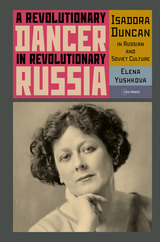
A Revolutionary Dancer in Revolutionary Russia: Isadora Duncan in Russian and Soviet Culture
Central European University Press, 2026
eISBN: 978-90-485-7664-7 (ePub) | eISBN: 978-963-386-928-4 (PDF)
Library of Congress Classification GV1785.D8Y87 2025
See other books on: 1877-1927 | Modern dance | Russia (Federation) | Soviet Culture | Women dancers
See other titles from Central European University Press
eISBN: 978-90-485-7664-7 (ePub) | eISBN: 978-963-386-928-4 (PDF)
Library of Congress Classification GV1785.D8Y87 2025
ABOUT THIS BOOK | AUTHOR BIOGRAPHY | REVIEWS | TOC
ABOUT THIS BOOK
In 1921, the legendary American dancer Isadora Duncan arrived in post-revolutionary Russia with an audacious goal: to build a new kind of dance school for a new world. Already celebrated for her groundbreaking performances across the Russian Empire from 1904 to 1913, Duncan had become an influential figure in the cultural life of the Silver Age, inspiring artists, writers, and thinkers alike.
This monograph offers a compelling exploration of Duncan’s Russian years—both before and after the October Revolution—drawing on rare archival sources and never-before-published Russian materials. It illuminates her artistic vision, her role in shaping early Soviet cultural debates, and the shifting political and aesthetic landscapes she navigated. From Silver Age reimaginations of antiquity to the rise of Socialist Realism and the modern revival of Duncan’s dance, this book traces the enduring legacy of a revolutionary artist in a world undergoing radical transformation.
This monograph offers a compelling exploration of Duncan’s Russian years—both before and after the October Revolution—drawing on rare archival sources and never-before-published Russian materials. It illuminates her artistic vision, her role in shaping early Soviet cultural debates, and the shifting political and aesthetic landscapes she navigated. From Silver Age reimaginations of antiquity to the rise of Socialist Realism and the modern revival of Duncan’s dance, this book traces the enduring legacy of a revolutionary artist in a world undergoing radical transformation.
See other books on: 1877-1927 | Modern dance | Russia (Federation) | Soviet Culture | Women dancers
See other titles from Central European University Press