Cloth: 979-8-89948-305-9 | Paper: 979-8-89948-304-2 | eISBN: 979-8-89948-306-6
Offering a unique critical approach to understanding historical violence in the present
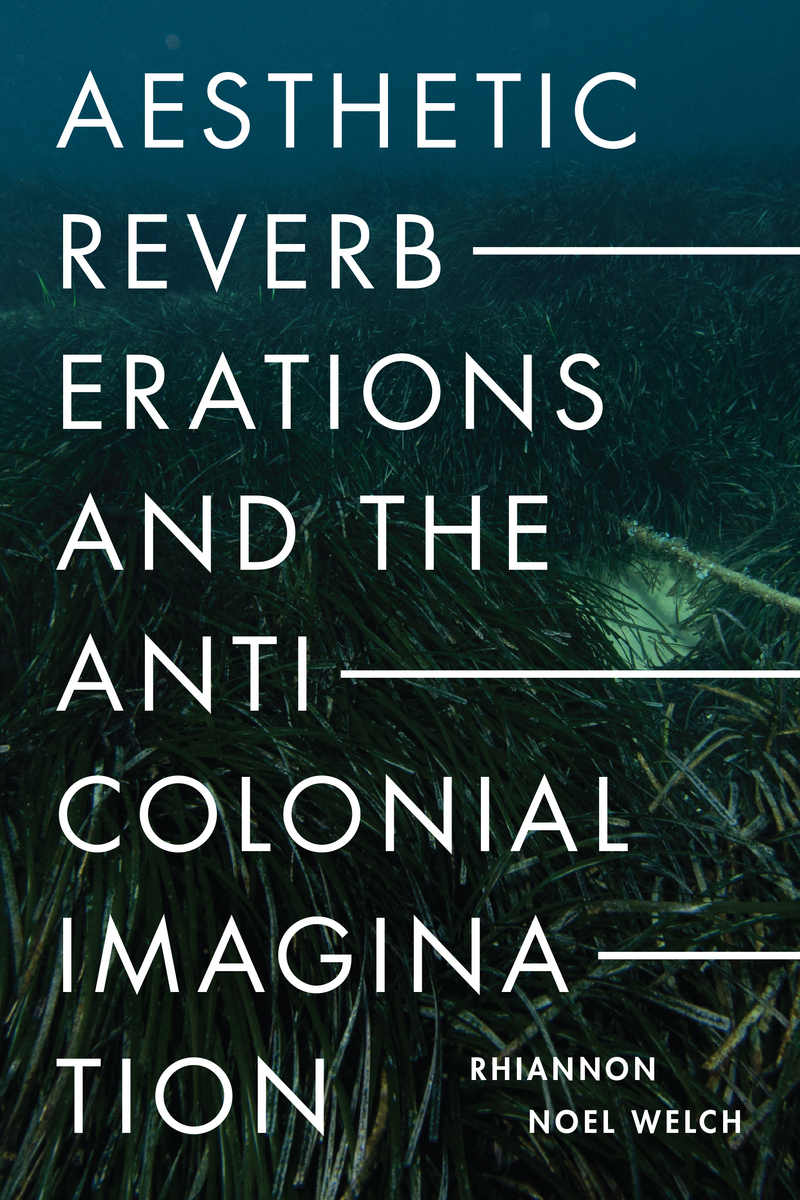
Colonial histories and their racializing assemblages persist in reconfigured forms, shaping conditions of life today. Rhiannon Noel Welch offers reverberation as an expansive concept with which to think about how aesthetics—etymologically, perception by the senses—hold, transmit, and resist colonialism’s many entangled afterlives. Though reverberation is commonly understood as an acoustic phenomenon similar to echo and resonance, Welch borrows from philosophy, philology, and physics to stretch conventional meanings of the term and emphasize its distinction from other sonic effects and metaphors. The archive assembled here includes works by artists and thinkers who reach for aesthetics (words, images, music) to contest empire’s longue durée—from early European colonialism in the Western Hemisphere to the transshipping of Africans across the Atlantic, Fascist Italy’s occupation of Ethiopia, and contemporary Mediterranean border regimes. In a series of close and interlinked readings of theory, poetry, film, and other media by Sylvia Wynter, Giacomo Leopardi, and Garrett Bradley, among others, Welch proposes reverberation as a material metaphor for how aesthetic works hit us as sentient participants in social worlds that are at once asymmetrical and inextricably linked.
See other books on: Comparative Literature | Film | History & Criticism | Performing Arts | Semiotics & Theory
See other titles from Northwestern University Press