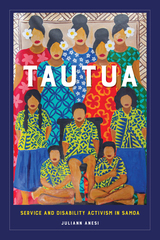
The Sāmoan concept of tautua is the cultural practice of service—to family, village, church, and nation. For Juliann Anesi, tautua includes an ethical responsibility that extends to caring for people living with disabilities. Anesi learned this value from her aunty Sina, who was instrumental in founding two schools for youths in the mid-1970s—Aoga Fiamalamalama and Loto Taumafailike. These schools were designed for students like Sina’s son Gele, students excluded from private and public education because of intellectual or physical disabilities.
Tautua recounts how the Indigenous community organized and resisted ableist paradigms in colonial institutions by changing the education system to a more inclusive environment. Anesi explains how funding was arranged for the schools through NGOs. She also uses oral histories, personal narratives, archival documents, and newspapers to offer insights about how students experienced oppression and erasure as well as shame and sexism in their communities.
Highlighting advocacy and belonging, Tautua argues that these schools for students with disabilities centered Sāmoan concepts of service, advocacy, and self-determination in an attempt to decolonize elementary education. In doing so, Anesi shows what disability activism in Sāmoa can teach us about educability, school inclusion, and collective care.
In the series Dis/color