
 A SCHOLARLY BOOK REPOSITORY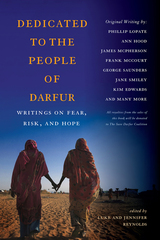
Nobel and Pulitzer Prize winners, a gallery of O.Henry award recipients, and many best-selling authors come together to share personal and compelling challenges and experiences. From contemplations on past drug use to reflections on gun control, social justice, passion and its sacrifices, and adventures such as skydiving, mountain climbing, and golfing, the topics vary greatly. This kaleidoscopic anthology is a commentary on the lives of prominent literary artists and ordinary citizens who have made simple, yet powerful choices that provoked change in one's self and for humanityùmuch the same way that Luke and Jennifer Reynolds do by building this invaluable collection for readers and the world of human rights.
Not too long ago, as struggling graduate students, Luke and Jennifer Reynolds conceived this uniquely themed volume as a way to raise funds to support ending the genocide in Darfur. Some people carry signs, others make speeches, many take action. What is most special about this book is that it extends beyond words and ideas, into a tangible effort to effect change. To this end, all royalties from the sales of Dedicated to the People of Darfur:Writings on Fear, Risk, and Hope will benefit The Save Darfur Coalition, an organization that seeks to end the genocide in Darfur, Sudan.
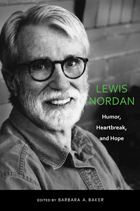
A vibrant tribute to Lewis Nordan’s unforgettable blend of Southern surrealism, dark humor, and deep humanity.
Lewis Nordan: Humor, Heartbreak, and Hope is a rich collection of essays that examines the life and work of one of the South’s most distinctive literary voices. Edited by Barbara A. Baker, this volume brings together scholars and writers who explore Nordan’s use of magical realism, dark humor, and emotional vulnerability to portray the complexities of life in the Mississippi Delta. Through themes of race, poverty, family, and resilience, the contributors illuminate how Nordan’s fiction captures both the pain and beauty of the Southern experience. This book is essential reading for fans of Southern literature, cultural studies, and American fiction.
Written by scholars and fiction writers who represent a fascinating range of experience—from a Shakespearean scholar to English professors to a former student of Nordan’s—this is a rich array of essays, poems, and visual arts in tribute to this increasingly important writer. The collection deepens the base of scholarship on Nordan, and contextualizes his work in relation to other important southern writers such as William Faulkner and Eudora Welty.
Nordan was born and raised in Mississippi before moving to Alabama to pursue his Ph.D. at Auburn University. He taught for several years at the University of Arkansas in Fayetteville and retired from the University of Pittsburgh, where he was a professor of English. Nordan has written four novels, three collections of short stories, and a memoir entitled Boy with Loaded Gun. His second novel, Wolf Whistle, won the Southern Book Award, and his subsequent novel, The Sharpshooter Blues, won the Notable Book Award from the American Library Association and the Fiction Award from the Mississippi Institute of Arts and Letters. Nordan is renowned for his distinctive comic writing style, even while addressing more serious personal and cultural issues such as heartbreak, loss, violence, and racism. He transforms tragic characters and events into moments of artistic transcendence, illuminating what he calls the “history of all human beings.”
READERS
Browse our collection.
PUBLISHERS
See BiblioVault's publisher services.
STUDENT SERVICES
Files for college accessibility offices.
RECENTLY PUBLISHED




UChicago Accessibility Resources
home | accessibility | search | about | contact us
BiblioVault ® 2001 - 2025
The University of Chicago Press