
 A SCHOLARLY BOOK REPOSITORY
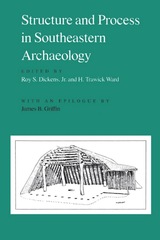
After establishing the distribution of prehistoric and historic populations from the northeastern Appalachian forests to the southern trans-Mississippian prairies, the contributors consider the archaeological and cultural record of several specific groups, including Mohawk and Onondaga, Monacan, Coosa, and Calusa. For each, they present new evidence of cultural changes prior to European contact, including populations movements triggered by the Little Ice Age (AD 1550–1770), shifting exchange and warfare networks, geological restriction of effective maize subsistence, and use of empty hunting territories as buffers between politically unstable neighbors. The contributors also trace European influences, including the devastation caused by European-introduced epidemics and the paths of European trade goods that transformed existing Native American-exchange networks.
While the profound effects of European explorers, missionaries, and traders on Eastern Woodlands tribes cannot be denied, the archaeological evidence suggests that several indigenous societies were already in the process of redefinition prior to European contact. The essays gathered here show that, whether formed in response to natural or human forces, cultural change may be traced through archaeological artifacts, which play a critical role in answering current questions regarding cultural persistence.
A Dan Josselyn Memorial Publication
Within the general structure-and-process theme of this compendium, the authors have focused on either intrasite problems (those dealing with the formation and structure of a site, type of site, or type of feature) or intersite problems (those dealing with behavioral organization and process as developed from comparative site data). These papers, from a broad range of specialists, present a comprehensive study of southeastern archaeology.
Structure and Process in Southeastern Archaeology is a foundational work that reshapes how scholars understand the cultural and social dynamics of prehistoric communities in the Southeastern United States. Roy S. Dickens, Jr. and H. Trawick Ward bring together decades of fieldwork, theoretical insight, and regional expertise to explore how ancient societies organized themselves, interacted, and evolved over time. Rather than focusing solely on artifacts or isolated site reports, this volume emphasizes the broader patterns—both structural and processual—that define the archaeological record of the Southeast.
Through a careful synthesis of settlement data, material culture, and environmental context, the authors reveal how social organization, political structures, and cultural practices were deeply embedded in the landscape. Their approach integrates processual archaeology with a nuanced understanding of regional variation, offering readers a dynamic view of how prehistoric communities adapted to changing conditions and interacted across space and time.
This book is particularly valuable for archaeologists, anthropologists, and historians seeking to move beyond descriptive accounts toward more interpretive frameworks. It provides a model for analyzing archaeological data in ways that illuminate the lived experiences of ancient peoples, making it a vital resource for both academic research and classroom instruction. The authors’ clear writing and thoughtful analysis make complex ideas accessible without sacrificing scholarly rigor.
Whether you're studying Mississippian chiefdoms, Woodland period settlements, or the broader cultural landscapes of the American South, Structure and Process in Southeastern Archaeology offers essential tools for understanding the past. It stands as a testament to the importance of theory-driven, context-rich archaeological interpretation.
READERS
Browse our collection.
PUBLISHERS
See BiblioVault's publisher services.
STUDENT SERVICES
Files for college accessibility offices.
RECENTLY PUBLISHED






UChicago Accessibility Resources
home | accessibility | search | about | contact us
BiblioVault ® 2001 - 2025
The University of Chicago Press