
 A SCHOLARLY BOOK REPOSITORY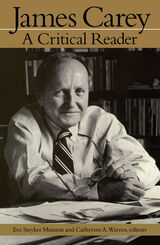
An essential guide to the thought of a central figure in media studies .
James Carey-scholar, media critic, and teacher of journalists-almost single-handedly established the importance of defining a cultural perspective when analyzing communications. Interspersing Carey’s major essays with articles exploring his central themes and their importance, this collection provides a critical introduction to the work of this significant figure.
Long before the “interpretive turn” became the fashion in the humanities and sociology, Carey was busily studying and combining the ideas of an impressive array of philosophers, sociologists, historians, and anthropologists, including John Dewey, Clifford Geertz, Raymond Williams, Thomas Kuhn, Max Weber, C. Wright Mills, Richard Rorty, Jürgen Habermas, Harold Innis, and Lewis Mumford. In James Carey: A Critical Reader, seven scholars who have been influenced by him consider his work and how it has affected the development of media studies. Carey has demonstrated that mass communications serve a complex function in society, with one central question reflecting his concerns: How does one make democracy work in a vast country that spans a continent? In his view, symbols, language, and those who create them are reality-creating, rather than reality-reflecting. Carey has examined the roles the media and the academy have played in creating and maintaining a public sphere, as well as the ways technology helps or hinders that project. Carey’s themes range from the strains on democracy and drawbacks of technology to the critique of journalism and the politics of academe. Contributors: G. Stuart Adam, Carleton U, Canada; James Carey, Columbia U; Carolyn Marvin, U of Pennsylvania; John Pauly, St. Louis U; Jay Rosen, New York U; Michael Schudson, U of California, San Diego.
READERS
Browse our collection.
PUBLISHERS
See BiblioVault's publisher services.
STUDENT SERVICES
Files for college accessibility offices.
RECENTLY PUBLISHED





UChicago Accessibility Resources
home | accessibility | search | about | contact us
BiblioVault ® 2001 - 2025
The University of Chicago Press