
 A SCHOLARLY BOOK REPOSITORY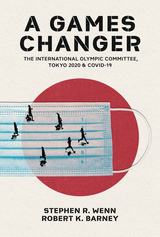
From the emergence of the COVID pandemic in early 2020 through the delayed staging of the Tokyo Olympic games in summer 2021, A Games Changer takes the reader behind the scenes to explore the myriad challenges the International Olympic Committee (IOC) and Japanese officials faced during the months of uncertainty leading up not only to the postponement of the Games but also to their delayed.
Drawing on a thorough review of contemporary newspaper and magazine coverage as well as personal interviews with current and former IOC officials, Stephen R. Wenn and Robert K. Barney examine Japan’s rising excitement in 2019 as preparations for the Games accelerated; whispers of a mysterious disease spreading first in China, then worldwide; organizers’ initial resolve to press forward with the Games; the tumultuous discussions that ultimately resulted in the joint March 2020 decision by Japanese Prime Minister Shinzo Abe and IOC President Thomas Bach to postpone the Games; and the numerous negotiations with venues, media, and sponsors required to extend contracts and protect all parties’ health. Wenn and Barney reveal how human relationships—among planners, politicians, competitors, and vaccine researchers—were vital to presenting an Olympics where, in July and August 2021, world records were set, deferred dreams were achieved, and fears of a superspreader event went unrealized.
While tracing the struggles of multiple athletes who had to pause their Olympic hopes and training as COVID-19 closed the world, Wenn and Barney focus on the journey of Canadian decathlete Damian Warner and his coach, Gar Leyshon. Denied his usual training venues, he prepared for the rescheduled Games with ingenuity, determination, and adaptability, reflective of the resilience demonstrated by Tokyo’s Olympians around the globe. The authors’ close account of Warner’s two days in Tokyo recaptures the excitement and drama of sport that home viewers sorely needed amid pandemic lockdowns and incalculable personal loss.

Entertaining and expert, The Gold in the Rings maps the Olympics' course from paragon of purity to billion-dollar profits.
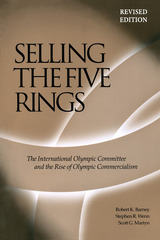
The original scheme for the modern Olympic Games was hatched at an international sports conference at the Sorbonne in June 1894. At the time, few provisions were made for the financial underwriting of the project—providence and the beneficence of host cities would somehow take care of the costs. For much of the first century of modern Olympic history, this was the case, until the advent of television and corporate sponsorship transformed that idealism.
Now, linking with the five-ring logo is good business. Advertising during the Olympic Games guarantees a global audience unmatched in size by any other sports audience in the world. However, if the image begins to tarnish and the corporate sector loses interest, television companies can’t sell advertising to business interests. This was the greatest threat posed by the scandal surrounding Salt Lake City’s bid.
Selling the Five Rings outlines the rise of the Olympic movement from an envisioned instrument of peace and brotherhood, to a transnational commercial giant of imposing power and influence. Using primary source documents such as minutes of the IOC General Sessions, minutes and reports of various IOC sub-committees and commissions concerned with finance, reports of key marketing agencies, and the letters and memoranda written to and by the major figures in Olympic history, the authors track the history of a fascinating global institution.
READERS
Browse our collection.
PUBLISHERS
See BiblioVault's publisher services.
STUDENT SERVICES
Files for college accessibility offices.
RECENTLY PUBLISHED




UChicago Accessibility Resources
home | accessibility | search | about | contact us
BiblioVault ® 2001 - 2025
The University of Chicago Press