
 A SCHOLARLY BOOK REPOSITORY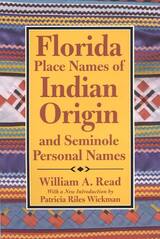
A compendium of Indian-derived names from the three languages of the Muskhogean family—Seminole, Hitchiti, and Choctaw.
The first Native peoples of what is now the United States who met and interacted with Europeans were the people of the lower Southeast. They were individuals of the larger Maskókî linguistic family who inhabited much of present-day Florida, Georgia, Alabama, Mississippi, South Carolina, and eastern portions of Tennessee, Kentucky, and Louisiana. Today, sixteen federally recognized tribes trace their heritage from these early Maskókî peoples, and many of them in both Florida and Oklahoma still speak and understand this root language.
The continuing vitality of this core language, and of Seminole culture and influence, makes this linguistic examination by William Read ever more valuable. A companion to his study of Indian Place Names in Alabama, this long out-of-print guide offers a new introduction from Patricia Wickman in which she provides current understandings of Seminole language and derivations and a brief analysis of Read's contribution to the preservation of the Native linguistic record.
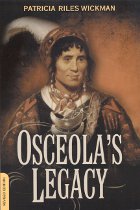
A bestselling, re-evaluation of a major Native American resistance leader. Named an Outstanding Book by the Gustavus Myers Center for the Study of Human Rights.
Born in Alabama to a Muscogee/Creek Indian mother and an English father, Osceola, born Billy Powell, came to prominence in the 1830s for resisting the U. S. government's sweep into Florida. He protested the government's Florida Indian removal, killed a pro-emigration Indian leader and then made war on the US government.
Osceola's Legacy draws on a wealth of sources, including letters, diaries, and artifacts to bring this fascinating figure and the central role he played in the Second Seminole War into vivid focus. Of particular interest is a chapter on the forensic report on Osceola's grave as well as descriptions and the illustrations of his personal property at the time of his death.
Osceola's Legacy is significant for its genealogy and archaeological study of this Native American and his interaction with the federal government during the 1800s. The catalog of photographs of Osceola portraits and his personal possessions makes this a worthwhile reference book as well.
In her compelling and controversial arguments, Wickman rejects the myths that erase Native Americans from Florida through the agency of Spaniards and diseases and make the area an empty frontier awaiting American expansion. Through research on both sides of the Atlantic and extensive oral history interviews among the Seminoles of Florida and Oklahoma, Wickman shatters current theories about the origins of the people encountered by the Spaniards and presents, for the first time ever, the Native American perspective. She describes the genesis of the groups known today as Creek, Seminole, and Miccosukee—the Maskoki peoples—and traces their common Mississippian heritage, affirming their claims to continuous habitation of the Southeast and Florida. Her work exposes the rhetoric of conquest and replaces it with the rhetoric of survival.
An important cross-disciplinary work, The Tree That Bends reveals the flexibility of the Maskoki people and the sociocultural mechanisms that allowed them to survive the pressures introduced at contact. Their world was capable of incorporating the New without destroying the Old, and their descendants not only survive today but also succeed as a discrete culture as a result.
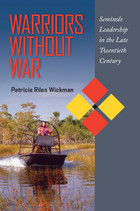
Warriors Without War takes readers beneath the placid waters of the Seminole’s public image and into the fascinating depths of Seminole society and politics.
READERS
Browse our collection.
PUBLISHERS
See BiblioVault's publisher services.
STUDENT SERVICES
Files for college accessibility offices.
RECENTLY PUBLISHED




UChicago Accessibility Resources
home | accessibility | search | about | contact us
BiblioVault ® 2001 - 2025
The University of Chicago Press