
 A SCHOLARLY BOOK REPOSITORY
Browse by Title
3 books by Wilson, Andrew
3 books by Wilson, Andrew
Coastal Deserts
Their Natural and Human Environments
David H.K. Amiran
University of Arizona Press, 1973

Early Letters to the Crown and Council of the Indies, 1516-1531
Primeras cartas para Las Indias
Bartolome de la Casas
Catholic University of America Press, 2026
Bartolomé de las Casas began his transatlantic career in 1502. Experiences of conquest and penitential discipline led him to renounce his Indian slaves and holdings. He dedicated his life to reforming Spain’s colonial project, eventually joining the Dominicans, and later serving as bishop. His works are foundational for our understanding of early colonialism.
This volume’s seven letters—all but one in English for the first time—span the initial stage of his long career as “Protector of the Indians.” Las Casas harangues corrupt officials, denounces perverse incentives, and lays out detailed plans for Spain’s presence in the Americas. He calls for direct crown control with moral oversight by mendicant bishops, proposes alternatives to Indian labor, and demands restitution for stolen property. These letters led to legal changes in the Indies, influencing later Jesuit reducciones in the Río de la Plata and Franciscan missions in California. They also reveal an entrepreneurial Las Casas with moral reflection on early global trade and commerce.
The watershed “Carta al Consejo”—a critical source for Latin American theology— concentrates all the force of his later writings into a figuratively rich, biblically saturated, theologically and philosophically sophisticated call to repentance and reform. His web of biblical allusions and dialogue with the Iberian Thomist renaissance are abundantly annotated.
A lively introduction and copious notes carefully situate Las Casas within broader trends, including Europe’s nascent religious reformations. These letters also bridge his dramatic entry into the Dominican Order, documenting his transformation from temporal reformer to eschatological prophet.
Students of law, theology, Christian mission, human rights, cultural and colonial history, and commerce, will find here rhetorical and theological treasures. While Las Casas is known chiefly for his polemical Brief Account of the Destruction of the Indies, these earliest letters suggest a far broader intellectual biography.
[more]
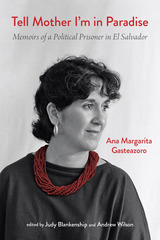
Tell Mother I'm in Paradise
Memoirs of a Political Prisoner in El Salvador
Ana Margarita Gasteazoro, edited by Judy Blankenship and Andrew Wilson
University of Alabama Press, 2022
The life and times of Ana Margarita Gasteazoro: political activist, clandestine operative, and prisoner of conscience
Ana Margarita Gasteazoro (1950–1993) was a Salvadoran opposition activist and renowned Amnesty International prisoner of conscience. Tell Mother I’m in Paradise:Memoirs of a Political Prisoner in El Salvador recounts her extraordinary life story. From a privileged Catholic upbringing, with time spent studying and working abroad, Ana Margarita first became a member of the legal political opposition in the late 1970s and later a clandestine operative at work against the brutal military junta.
Gasteazoro recounts her early rebellion against the strictures of conservative upper-class Salvadoran society. She spoke perfect English and discovered a talent for organizing in administrative jobs abroad and at home. As the civil war progressed, she quickly became a valued figure in the National Revolutionary Movement (MNR), a social democratic party, often representing it at international meetings. Against the backdrop of massive social oppression and the “disappearances” of thousands of opposition members, Gasteazoro began a double life as an operative in a faction of the Farabundo Martí National Liberation Front (FMLN). Multitalented and energetic, she organized safe houses for fellow activists, transported weapons and equipment, wrote scripts for an underground radio station, and produced an award-winning documentary film. But the toll on her family life and personal relationships was heavy.
Ana Margarita was disappeared in May 1981 by the infamous National Guard and endured a nightmare 11 days of interrogations, beatings, and abuse. Through international pressure and the connections of her family, her arrest was finally made public, and she was transferred to the women’s prison at Ilopango. There, she and other activists continued the political struggle through the Committee of Political Prisoners of El Salvador (COPPES). During her two years in prison, tested by hunger strikes, violence, and factional divisions, she became one of Amnesty International’s best-known prisoners of conscience. Tell Mother I’m in Paradise is a gripping story of a self-aware activist and a vital young woman’s struggle to find her own way within a deeply conservative society.
Ana Margarita Gasteazoro (1950–1993) was a Salvadoran opposition activist and renowned Amnesty International prisoner of conscience. Tell Mother I’m in Paradise:Memoirs of a Political Prisoner in El Salvador recounts her extraordinary life story. From a privileged Catholic upbringing, with time spent studying and working abroad, Ana Margarita first became a member of the legal political opposition in the late 1970s and later a clandestine operative at work against the brutal military junta.
Gasteazoro recounts her early rebellion against the strictures of conservative upper-class Salvadoran society. She spoke perfect English and discovered a talent for organizing in administrative jobs abroad and at home. As the civil war progressed, she quickly became a valued figure in the National Revolutionary Movement (MNR), a social democratic party, often representing it at international meetings. Against the backdrop of massive social oppression and the “disappearances” of thousands of opposition members, Gasteazoro began a double life as an operative in a faction of the Farabundo Martí National Liberation Front (FMLN). Multitalented and energetic, she organized safe houses for fellow activists, transported weapons and equipment, wrote scripts for an underground radio station, and produced an award-winning documentary film. But the toll on her family life and personal relationships was heavy.
Ana Margarita was disappeared in May 1981 by the infamous National Guard and endured a nightmare 11 days of interrogations, beatings, and abuse. Through international pressure and the connections of her family, her arrest was finally made public, and she was transferred to the women’s prison at Ilopango. There, she and other activists continued the political struggle through the Committee of Political Prisoners of El Salvador (COPPES). During her two years in prison, tested by hunger strikes, violence, and factional divisions, she became one of Amnesty International’s best-known prisoners of conscience. Tell Mother I’m in Paradise is a gripping story of a self-aware activist and a vital young woman’s struggle to find her own way within a deeply conservative society.
[more]
READERS
Browse our collection.
PUBLISHERS
See BiblioVault's publisher services.
STUDENT SERVICES
Files for college accessibility offices.
RECENTLY PUBLISHED





UChicago Accessibility Resources
home | accessibility | search | about | contact us
BiblioVault ® 2001 - 2025
The University of Chicago Press