
 A SCHOLARLY BOOK REPOSITORY
Film and Genocide brings together scholars of film and of genocide to discuss film representations, both fictional and documentary, of the Holocaust, the Armenian genocide, and genocides in Chile, Australia, Rwanda, and the United States. Since 1955, when Alain Resnais created his experimental documentary Night and Fog about the Nazis’ mass killings of Jews and other ostracized groups, filmmakers have struggled with using this medium to tell such difficult stories, to re-create the sociopolitical contexts of genocide, and to urge awareness and action among viewers. This volume looks at such issues as realism versus fiction, the challenge of depicting atrocities in a manner palatable to spectators and film distributors, the Holocaust film as a model for films about other genocides, and the role of new technologies in disseminating films about genocide.
Film and Genocide also includes interviews with three film directors, who discuss their experiences in working with deeply disturbing images and bringing hidden stories to life: Irek Dobrowolski, director of The Portraitist (2005) a documentary about Wilhelm Brasse, an Auschwitz-Birkenau prisoner ordered to take more than 40,000 photos at the camp; Nick Hughes, director of 100 Days (2005) a dramatic film about the Rwandan mass killings; and Greg Barker, director of Ghosts of Rwanda (2004), a television documentary for Frontline.
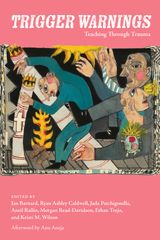
Trigger Warnings: Teaching Through Trauma brings theory and praxis to examine the ideological underpinnings and pedagogy around trigger warnings and trauma, offering multiple heuristics for classroom implementation. The ongoing interest in trigger warnings is partly a result of trigger warnings and trauma becoming more inextricably interwoven in the past few years in the wake of COVID-19, mental health crises, right-wing attacks on educational institutions, climate change, and attempts at political redress and educational equity. Critiques of trigger warnings come from all sides of the political and pedagogical spectra, and even scholars and practitioners who offer a trauma-informed approach to the topic are not unified in their view of the benefits or drawbacks of trigger warnings.
Trigger Warnings: Teaching Through Trauma provides insights through a range of forms: research articles, personal essays, long and short teaching narratives, student perspectives, memoirs, vignettes, autoethnographies, reflections, case studies, manifesto, theory, and history. Not only does this collection create a more varied engagement experience for readers, but, in line with recent scholarship in “counterstory,” it also allows for a wider variety of voices to be heard and for the articulation of experiences that might not be well accommodated by traditional scholarly essays.
READERS
Browse our collection.
PUBLISHERS
See BiblioVault's publisher services.
STUDENT SERVICES
Files for college accessibility offices.
RECENTLY PUBLISHED



UChicago Accessibility Resources
home | accessibility | search | about | contact us
BiblioVault ® 2001 - 2025
The University of Chicago Press