
 A SCHOLARLY BOOK REPOSITORY
China has reemerged as a powerhouse in the global economy, reviving a classic question in economic history: why did sustained economic growth arise in Europe rather than in China?
Many favor cultural and environmental explanations of the nineteenth-century economic divergence between Europe and the rest of the world. This book, the product of over twenty years of research, takes a sharply different tack. It argues that political differences which crystallized well before 1800 were responsible both for China’s early and more recent prosperity and for Europe’s difficulties after the fall of the Roman Empire and during early industrialization.
Rosenthal and Wong show that relative prices matter to how economies evolve; institutions can have a large effect on relative prices; and the spatial scale of polities can affect the choices of institutions in the long run. Their historical perspective on institutional change has surprising implications for understanding modern transformations in China and Europe and for future expectations. It also yields insights in comparative economic history, essential to any larger social science account of modern world history.
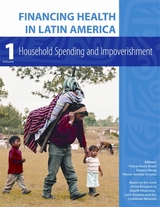
Among the most serious challenges facing health systems in lower and middle income countries is establishing efficient, fair, and sustainable financing mechanisms that offer universal protection. Lack of financial protection forces families to suffer the burden not only of illness but also of economic ruin and impoverishment. In Latin America, financial protection for health continues to be segmented and fragmented; health is mainly financed through out-of-pocket payments.
Financing Health in Latin America presents new and important insight into the crucial issue of financial protection in health systems. The book analyzes the level and determinants of catastrophic health expenditures among households in Argentina, Brazil, Chile, Colombia, Costa Rica, the Dominican Republic, Mexico, and Peru, applying both descriptive and econometric analyses. The results demonstrate that out-of-pocket health spending is pushing large segments of the population into impoverishment and that the poorest and most vulnerable segments of the population are most at risk of financial catastrophe. This work is a product of the collaboration between more than 25 researchers and 18 institutions associated with the Research for Health Financing in Latin America and the Caribbean Network, with support from the International Development Research Centre of Canada.
The Gender Impact of Social Security Reform compares the gendered outcomes of social security systems in Chile, Argentina, and Mexico, and presents empirical findings from Eastern and Central European transition economies as well as several OECD countries. Women’s positions have improved relative to men in countries where joint pensions have been required, widows who have worked can keep the joint pension in addition to their own benefit, the public benefit has been targeted toward low earners, and women’s retirement age has been raised to equality with that of men. The Gender Impact of Social Security Reform will force economists and policy makers to reexamine the design features that enable social security systems to achieve desirable gender outcomes.


READERS
Browse our collection.
PUBLISHERS
See BiblioVault's publisher services.
STUDENT SERVICES
Files for college accessibility offices.
RECENTLY PUBLISHED






UChicago Accessibility Resources
home | accessibility | search | about | contact us
BiblioVault ® 2001 - 2025
The University of Chicago Press