
 A SCHOLARLY BOOK REPOSITORY
Browse by Title
2 books by Wright, Gwendolyn
2 books by Wright, Gwendolyn
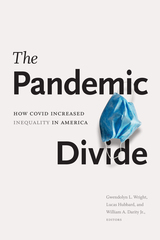
The Pandemic Divide
How COVID Increased Inequality in America
Gwendolyn L. Wright, Lucas Hubbard, and William A. Darrity, editors
Duke University Press, 2022
As COVID-19 made inroads in the United States in spring 2020, a common refrain rose above the din: “We’re all in this together.” However, the full picture was far more complicated—and far less equitable. Black and Latinx populations suffered illnesses, outbreaks, and deaths at much higher rates than the general populace. Those working in low-paid jobs and those living in confined housing or communities already disproportionately beset by health problems were particularly vulnerable. The contributors to The Pandemic Divide explain how these and other racial disparities came to the forefront in 2020. They explore COVID-19’s impact on multiple arenas of daily life—including wealth, health, housing, employment, and education—while highlighting what steps could have been taken to mitigate the full force of the pandemic. Most crucially, the contributors offer concrete public policy solutions that would allow the nation to respond effectively to future crises and improve the long-term well-being of all Americans.
Contributors. Fenaba Addo, Steve Amendum, Leslie Babinski, Sandra Barnes, Mary T. Bassett, Keisha Bentley-Edwards, Kisha Daniels, William A. Darity Jr., Melania DiPietro, Jane Dokko, Fiona Greig, Adam Hollowell, Lucas Hubbard, Damon Jones, Steve Knotek, Arvind Krishnamurthy, Henry Clay McKoy Jr., N. Joyce Payne, Erica Phillips, Eugene Richardson, Paul Robbins, Jung Sakong, Marta Sánchez, Melissa Scott, Kristen Stephens, Joe Trotter, Chris Wheat, Gwendolyn L. Wright
Contributors. Fenaba Addo, Steve Amendum, Leslie Babinski, Sandra Barnes, Mary T. Bassett, Keisha Bentley-Edwards, Kisha Daniels, William A. Darity Jr., Melania DiPietro, Jane Dokko, Fiona Greig, Adam Hollowell, Lucas Hubbard, Damon Jones, Steve Knotek, Arvind Krishnamurthy, Henry Clay McKoy Jr., N. Joyce Payne, Erica Phillips, Eugene Richardson, Paul Robbins, Jung Sakong, Marta Sánchez, Melissa Scott, Kristen Stephens, Joe Trotter, Chris Wheat, Gwendolyn L. Wright
[more]
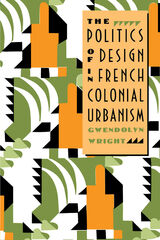
The Politics of Design in French Colonial Urbanism
Gwendolyn Wright
University of Chicago Press, 1991
Politics and culture are at once semi-autonomous and intertwined. Nowhere is this more revealingly illustrated than in urban design, a field that encompasses architecture and social life, traditions and modernization. Here aesthetic goals and political intentions meet, sometimes in collaboration, sometimes in conflict. Here the formal qualities of art confront the complexities of history. When urban design policies are implemented, they reveal underlying aesthetic, cultural, and political dilemmas with startling clarity.
Gwendolyn Wright focuses on three French colonies—Indochina, Morocco, and Madagascar—that were the most discussed, most often photographed, and most admired showpieces of the French empire in the early twentieth century. She explores how urban policy and design fit into the French colonial policy of "association," a strategy that accepted, even encouraged, cultural differences while it promoted modern urban improvements that would foster economic development for Western investors. Wright shows how these colonial cities evolved, tracing the distinctive nature of each locale under French imperialism. She also relates these cities to the larger category of French architecture and urbanism, showing how consistently the French tried to resolve certain stylistic and policy problems they faced at home and abroad.
With the advice of architects and sociologists, art historians and geographers, colonial administrators sought to exert greater control over such matters as family life and working conditions, industrial growth and cultural memory. The issues Wright confronts—the potent implications of traditional norms, cultural continuity, modernization, and radical urban experiments—still challenge us today.
Gwendolyn Wright focuses on three French colonies—Indochina, Morocco, and Madagascar—that were the most discussed, most often photographed, and most admired showpieces of the French empire in the early twentieth century. She explores how urban policy and design fit into the French colonial policy of "association," a strategy that accepted, even encouraged, cultural differences while it promoted modern urban improvements that would foster economic development for Western investors. Wright shows how these colonial cities evolved, tracing the distinctive nature of each locale under French imperialism. She also relates these cities to the larger category of French architecture and urbanism, showing how consistently the French tried to resolve certain stylistic and policy problems they faced at home and abroad.
With the advice of architects and sociologists, art historians and geographers, colonial administrators sought to exert greater control over such matters as family life and working conditions, industrial growth and cultural memory. The issues Wright confronts—the potent implications of traditional norms, cultural continuity, modernization, and radical urban experiments—still challenge us today.
[more]
READERS
Browse our collection.
PUBLISHERS
See BiblioVault's publisher services.
STUDENT SERVICES
Files for college accessibility offices.
RECENTLY PUBLISHED




UChicago Accessibility Resources
home | accessibility | search | about | contact us
BiblioVault ® 2001 - 2025
The University of Chicago Press