
 A SCHOLARLY BOOK REPOSITORY
236 start with A start with A


In this special edition of Artivate built around the expanded field of arts entrepreneurship, guest editors Adrienne Callander and Johanna K. Taylor collect scholars’ research on ideas they see as both central and pivotal in driving the field forward. In a futurecasting glossary, past, present, and future Artivate editors gather their thinking around such ideas, exploring where and how arts entrepreneurship currently happens beyond expected models. The three articles contained in this issue explore arts entrepreneurship’s overlaps from policy to activism to philanthropy through new adaptable organizational modeling. Starting with an in-depth analysis of hybrid practice as a mode of institutional entrepreneurship, the conversation turns to a view on artist activism as a form of arts entrepreneurship, followed by a case study of the Maniobra program of cultural employment supporting artists. To culminate in this issue’s galleries, an artist showcase profiles participating artists in the Maniobra program.
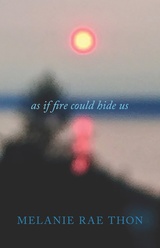
Three lives. One song. A fire that reveals what cannot be hidden.
As If Fire Could Hide Us explores the expansiveness of consciousness and compassion through and beyond the human body.
A twelve-year-old girl slips out a basement window, steals a bike, and sets off on a perilous adventure. Injured and slowly bleeding out, Orelia enters a vast, spectacularly animate environment where she senses the limits of self disintegrating, her being entangled with the forest.
A prison guard and member of the strap down team witnesses a painfully prolonged execution and is delivered to a heart-cracking sense of identification with the ones he’s killed. Every grieving mother is his own. Any man might be himself, his closest friend, his brother.
An organ donor’s body is restored and resurrected through the bodies of multitudes. Spiritually and physically, one human being becomes many. Everything in the cosmos is intertwined and interchangeable. Embracing this awareness may bring fear or euphoria—desolation, peace, despair, rapture.
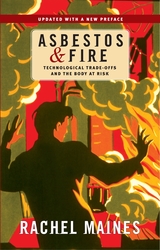
For much of the industrial era, asbestos was a widely acclaimed benchmark material. During its heyday, it was manufactured into nearly three thousand different products, most of which protected life and property from heat, flame, and electricity. It was used in virtually every industry from hotel keeping to military technology to chemical manufacturing, and was integral to building construction from shacks to skyscrapers in every community across the United States. Beginning in the mid-1960s, however, this once popular mineral began a rapid fall from grace as growing attention to the serious health risks associated with it began to overshadow the protections and benefits it provided.
In this thought-provoking and controversial book, Rachel Maines challenges the recent vilification of asbestos by providing a historical perspective on Americans’ changing perceptions about risk. She suggests that the very success of asbestos and other fire-prevention technologies in containing deadly blazes has led to a sort of historical amnesia about the very risks they were supposed to reduce.
Asbestos and Fire is not only the most thoroughly researched and balanced look at the history of asbestos, it is also an important contribution to a larger debate that considers how the risks of technological solutions should be evaluated. As technology offers us ever-increasing opportunities to protect and prevent, Maines urges that learning to accept and effectively address the unintended consequences of technological innovations is a growing part of our collective responsibility.
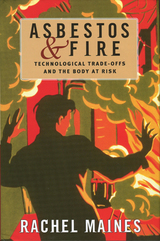
For much of the industrial era, asbestos was a widely acclaimed benchmark material. During its heyday, it was manufactured into nearly three thousand different products, most of which protected life and property from heat, flame, and electricity. It was used in virtually every industry from hotel keeping to military technology to chemical manufacturing, and was integral to building construction from shacks to skyscrapers in every community across the United States. Beginning in the mid-1960s, however, this once popular mineral began a rapid fall from grace as growing attention to the serious health risks associated with it began to overshadow the protections and benefits it provided.
In this thought-provoking and controversial book, Rachel Maines challenges the recent vilification of asbestos by providing a historical perspective on Americans’ changing perceptions about risk. She suggests that the very success of asbestos and other fire-prevention technologies in containing deadly blazes has led to a sort of historical amnesia about the very risks they were supposed to reduce.
Asbestos and Fire is not only the most thoroughly researched and balanced look at the history of asbestos, it is also an important contribution to a larger debate that considers how the risks of technological solutions should be evaluated. As technology offers us ever-increasing opportunities to protect and prevent, Maines urges that learning to accept and effectively address the unintended consequences of technological innovations is a growing part of our collective responsibility.
Volume I: The Century of Discovery brings together "everything that a European could know of India, Southeast Asia, China, and Japan, from printed books, missionary reports, traders' accounts and maps" (The New York Review of Books). Volume II: A Century of Wonder examines the influence of that vast new body of information about Asia on the arts, institutions, literatures, and ideas of sixteenth-century Europe.
In Volume III: A Century of Advance, the authors have researched seventeenth-century European writings on Asia in an effort to understand how contemporaries saw Asian societies and peoples.
Asian America is the first comprehensive look at post-1960s Asian American communities in the United States and Canada. From Chinese Americans in Chicagoland to Vietnamese Americans in Orange County, this multi-disciplinary collection spans a wide comparative and panoramic scope. Contributors from an array of academic fields focus on global views of Asian American communities as well as on territorial and cultural boundaries.
Presenting groundbreaking perspectives, Asian America revises worn assumptions and examines current challenges Asian American communities face in the twenty-first century.
Jean Yu-wen Shen Wu and Thomas C. Chen have selected essays for the significance of their contribution to the field and their clarity, brevity, and accessibility to readers with little to no prior knowledge of Asian American studies. Featuring both reprints of seminal articles and groundbreaking texts, as well as bold new scholarship, Asian American Studies Now addresses the new circumstances, new communities, and new concerns that are reconstituting Asian America.
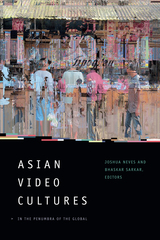
Contributors. Conerly Casey, Jenny Chio, Michelle Cho, Kay Dickinson, Bishnupriya Ghosh, Feng-Mei Heberer, Tzu-hui Celina Hung, Rahul Mukherjee, Joshua Neves, Bhaskar Sarkar, Nishant Shah, Abhigyan Singh, SV Srinivas, Marc Steinberg, Chia-chi Wu, Patricia Zimmerman
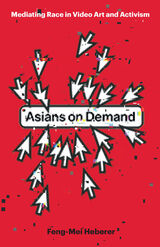
Does media representation advance racial justice?
While the past decade has witnessed a push for increased diversity in visual media, Asians on Demand grapples with the pressing question of whether representation is enough to advance racial justice. Surveying a contemporary, cutting-edge archive of video works from the Asian diaspora in North America, Europe, and East Asia, this book uncovers the ways that diasporic artists challenge the narrow—and damaging—conceptions of Asian identity pervading mainstream media.
Through an engagement with grassroots activist documentaries, experimental video diaries by undocumented and migrant workers, and works by high-profile media artists such as Hito Steyerl and Ming Wong, Feng-Mei Heberer showcases contemporary video productions that trouble the mainstream culture industry’s insistence on portraying ethnic Asians as congenial to dominant neoliberal values. Undermining the demands placed on Asian subjects to exemplify institutional diversity and individual exceptionalism, this book provides a critical and nuanced set of alternatives to the easily digestible forms generated by online streaming culture and multicultural lip service more broadly.
Employing feminist, racial, and queer critiques of the contemporary media landscape, Asians on Demand highlights how the dynamics of Asian representation play out differently in Germany, the United States, Taiwan, and Spain. Rather than accepting the notion that inclusion requires an uncomplicated set of appearances, the works explored in this volume spotlight a staunch resistance to formulating racial identity as an instantly accessible consumer product.
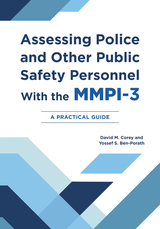
A hands-on guide for using the MMPI-3 when assessing suitability and fitness for duty of public safety personnel
Factors unique to police and public safety candidate selection require adjustments to standard guidelines when interpreting MMPI-3 scores. David M. Corey and Yossef S. Ben-Porath’s latest work broadly focuses on use of the MMPI-3 in both prehire suitability evaluations and posthire fitness-for-duty evaluations of individuals in public safety occupations.
This practical guide was written for clinicians who conduct evaluations of incumbent public safety personnel as well as candidates for law enforcement, correctional, firefighter/medic, or emergency dispatcher positions. The chapters are devoted to foundational and practical knowledge required for conducting these evaluations, including a concise primer on the MMPI-3, common procedural and legal requirements, and contextual factors affecting evaluations. The book also provides case illustrations that demonstrate use of integrative models in preemployment and fitness-for-duty evaluations and includes expanded coverage of the updated MMPI-3 Police Candidate Interpretive Report as well as the newly released Correctional Candidate Interpretive Report, Dispatcher Candidate Interpretive Report, and Firefighter Candidate Interpretive Report.
The contributors examine how central bankers determine their policy prescriptions with reference to the fluctuating housing market, the balance of debt and credit, changing beliefs of investors, the level of commodity prices, and other factors. At a time when the public has never been more involved in stocks, retirement funds, and real estate investment, this insightful book will be useful to all those concerned with the current state of the economy.

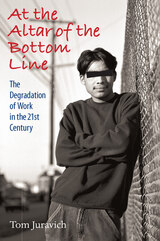
Tom Juravich combines oral history with social and economic analysis to provide a vivid account of the multiple challenges presented in today's workplaces.
Based on extensive interviews with workers in four different industries, this book takes us behind the statistics of the economic collapse and into the lives of Americans who are struggling to make ends meet and support their families.
At a Verizon call center in Andover, Massachusetts, customer service reps find themselves overwhelmed by the pace of work and the constant monitoring. They describe a daily routine marked by regimentation, intense pressure to sell, and unrelenting stress. In New Bedford, undocumented Guatemalans in the fish-processing industry are fired if they don't work fast enough, cheated out of wages, and mistreated by supervisors. Juravich describes a brutal immigration raid by U.S. Immigration and Customs Enforcement that divided families and forced workers further underground.
Juravich then takes us inside the operating rooms at the Boston Medical Center, where hospital consolidation has brought a new “bottom line” philosophy that has fundamentally altered the way patient care is delivered. Surgery takes place almost non-stop, driving some nurses from their chosen profession and leaving those who remain exhausted.
The final case study looks at the shuttering of the Jones Beloit plant, an internationally known manufacturer of machinery for the paper industry. Despite the best efforts of highly skilled and productive workers to save their plant, it was abruptly closed and they were abandoned after their CEO recklessly became involved in a shaky foreign investment.
Juravich argues that workers face a series of paradoxes in the contemporary American workplace. They can no longer assume that large established firms create good jobs. The new working conditions often resemble what was traditionally associated with marginal and low-wage employers. He concludes that we must bring a discussion about the quality of jobs back into the public discourse and that a “good jobs” strategy is a fundamental building block to economic recovery.
Workers' voices are front and center in this highly readable book. It includes striking photographs by Paul Shoul and a CD that presents a series of audio documentaries with excerpts from the interviews, as well as four original songs written and performed by Juravich.
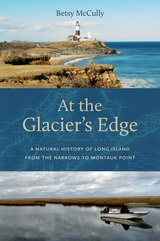
Combining science writing, environmental history, and first-hand accounts from a longtime resident, At the Glacier’s Edge offers a unique narrative natural history of Long Island. Betsy McCully tells the story of how the island was formed at the end of the last ice age, how its habitats evolved, and how humans in the last few hundred years have radically altered and degraded its landscape. Yet as she personally recounts the habitat losses and species declines she has witnessed over the past few decades, she describes the vital efforts that environmental activists are making to restore and reclaim this land—from replanting salt marshes, to preserving remaining grasslands and forests, to cleaning up the waters. At the Glacier’s Edge provides an in-depth look at the flora, fauna and geology that make Long Island so special.

At the Movies, Film Reviewing, and Screenwriting discusses the interplay between film criticism and screenwriting, providing a different view on how reviewers engage with story and dialogue. Steven Maras draws on Pierre Bourdieu’s theories of cultural taste to examine film reviewing as a key site of cultural production, analyzing ten years of television scripts from At the Movies (2004–2014). Hosted by Australia’s most influential film critics Margaret Pomeranz and David Stratton, this long-running program shaped public discourse on cinema and left an indelible mark on Australian screen culture.
Studying the program’s broadcast scripts, this book addresses how film reviewing operates as both critique and storytelling. Of particular interest to media scholars, screenwriting researchers, and cinephiles alike, it provides fresh insights into the evolving role of criticism in contemporary screen culture. Engaging and deeply researched, this work rightfully emphasizes the cultural significance of movie criticism in film culture in Australia and beyond.

The First World War and its aftermath were significant events with widespread consequences that impacted everyday people. This book is the first comprehensive analysis of the various ways in which the Great War affected urban life, extending beyond the typically recognized regions such as the European great powers, the United States, and US colonies and spheres of influence. It explores the impacts on peripheral cities in East Asia, South Europe, Latin America, and Africa, which have often been overlooked in the historiography of the 1914 to 1918 conflict. Despite their historical neglect, these urban areas felt the repercussions of the war as it reshaped their structures, rhythms, and daily routines. This transformation influenced both private and public life, highlighting the crucial role these cities played as actors during wartime.
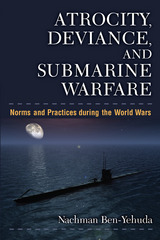
In the early 20th century, the diesel-electric submarine made possible a new type of unrestricted naval warfare. Such brutal practices as targeting passenger, cargo, and hospital ships not only violated previous international agreements; they were targeted explicitly at civilians. A deviant form of warfare quickly became the norm.
In Atrocity, Deviance, and Submarine Warfare, Nachman Ben-Yehuda recounts the evolution of submarine warfare, explains the nature of its deviance, documents its atrocities, and places these developments in the context of changing national identities and definitions of the ethical, at both social and individual levels. Introducing the concept of cultural cores, he traces the changes in cultural myths, collective memory, and the understanding of unconventionality and deviance prior to the outbreak of World War I. Significant changes in cultural cores, Ben-Yehuda concludes, permitted the rise of wartime atrocities at sea.
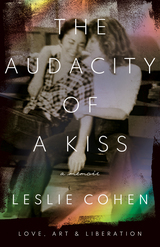
Rendered in bronze, covered in white lacquer, two women sit together on a park bench in Greenwich Village. One of the women touches the thigh of her partner as they gaze into each other’s eyes. The two women are part of George Segal’s iconic sculpture “Gay Liberation,” but these powerful symbols were modeled on real people: Leslie Cohen and her partner (now wife) Beth Suskin.
In this evocative memoir, Cohen tells the story of a love that has lasted for over fifty years. Transporting the reader to the pivotal time when brave gay women and men carved out spaces where they could live and love freely, she recounts both her personal struggles and the accomplishments she achieved as part of New York’s gay and feminist communities. Foremost among these was her 1976 cofounding of the groundbreaking women’s nightclub Sahara, which played host to such luminaries as Betty Friedan, Gloria Steinem, Pat Benatar, Ntozake Shange, Rita Mae Brown, Adrienne Rich, Patti Smith, Bella Abzug, and Jane Fonda. The Audacity of a Kiss is a moving and inspiring tale of how love, art, and solidarity can overcome oppression.

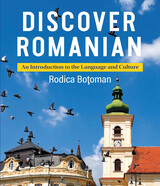
This comprehensive introduction to Romanian for English-speaking students emphasizes communication with a complete treatment of grammar, an extensive vocabulary, and a focus on the four major language skills—listening, speaking, reading, and writing. Cultural information, an integral part of the textbook, is presented both formally, in sections on culture and civilization, and informally, as the setting for dialogues and exercises. Tables of verb conjugations and a glossary round out the book’s primary materials.
Straightforward and accessible, Discover Romanian is an essential textbook for all those teaching and learning the language and provides important information for those seeking to understand Romanian culture. Together with the accompanying audio files and workbook, it provides a complete language course.
This comprehensive introduction to Romanian for English-speaking students emphasizes communication with a complete treatment of grammar, an extensive vocabulary, and a focus on the four major language skills—listening, speaking, reading, and writing. Cultural information, an integral part of the textbook, is presented both formally, in sections on culture and civilization, and informally, as the setting for dialogues and exercises. Tables of verb conjugations and a glossary round out the book’s primary materials.
Straightforward and accessible, Discover Romanian is an essential textbook for all those teaching and learning the language and provides important information for those seeking to understand Romanian culture. Together with the accompanying audio files and workbook, it provides a complete language course.

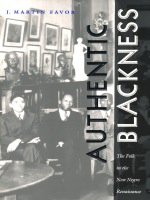
Authentic Blackness looks at the place of the “folk”—those African Americans “furthest down,” in the words of Alain Locke—and how the representation of the folk and the black middle class both spurred the New Negro Movement and became one of its most serious points of contention. Drawing on vernacular theories of African American literature from such figures as Henry Louis Gates Jr. and Houston Baker as well as theorists Judith Butler and Stuart Hall, Favor looks closely at the work of four Harlem Renaissance fiction writers: James Weldon Johnson, Nella Larsen, George Schuyler, and Jean Toomer. Arguing that each of these writers had, at best, an ambiguous relationship to African American folk culture, Favor demonstrates how they each sought to redress the notion of a fixed black identity. Authentic Blackness illustrates how “race” has functioned as a type of performative discourse, a subjectivity that simultaneously builds and conceals its connections with such factors as class, gender, sexuality, and geography.
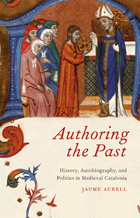
Authoring the Past surveys medieval Catalan historiography, shedding light on the emergence and evolution of historical writing and autobiography in the Middle Ages, on questions of authority and authorship, and on the links between history and politics during the period. Jaume Aurell examines texts from the late twelfth to the late fourteenth century—including the Latin Gesta comitum Barcinonensium and four texts in medieval Catalan: James I’s Llibre dels fets, the Crònica of Bernat Desclot, the Crònica of Ramon Muntaner, and the Crònica of Peter the Ceremonious—and outlines the different motivations for the writing of each.
For Aurell, these chronicles are not mere archaeological artifacts but rather documents that speak to their writers’ specific contemporary social and political purposes. He argues that these Catalonian counts and Aragonese kings were attempting to use their role as authors to legitimize their monarchical status, their growing political and economic power, and their aggressive expansionist policies in the Mediterranean. By analyzing these texts alongside one another, Aurell demonstrates the shifting contexts in which chronicles were conceived, written, and read throughout the Middle Ages.
The first study of its kind to make medieval Catalonian writings available to English-speaking audiences, Authoring the Past will be of interest to scholars of history and comparative literature, students of Hispanic and Romance medieval studies, and medievalists who study the chronicle tradition in other languages.

When María Vela y Cueto (1561–1617) declared that God had personally ordered her to take only the Eucharist as food and to restore primitive dress and public penance in her aristocratic convent, the entire religious community, according to her confessor, “rose up in wrath.” Yet, when Vela died, her peers joined with the populace to declare her a saint. In her autobiography and personal letters, Vela speaks candidly of the obstacles, perils, and rewards of re-negotiating piety in a convent where devotion to God was no longer expressed through rigorous asceticism. Vela’s experience, told in her own words, reveals her shrewd understanding of the persuasive power of a woman’s body.
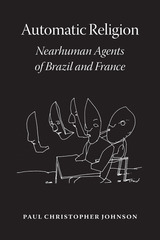
Automatic Religion explores an unlikely series of episodes from the end of the nineteenth century, when crucial ideas related to automatism and, in a different realm, the study of religion were both being born. Paul Christopher Johnson draws on years of archival and ethnographic research in Brazil and France to explore the crucial boundaries being drawn at the time between humans, “nearhumans,” and automata. As agency came to take on a more central place in the philosophical, moral, and legal traditions of the West, certain classes of people were excluded as less-than-human. Tracking the circulation of ideas across the Atlantic, Johnson tests those boundaries, revealing how they were constructed on largely gendered and racial foundations. In the process, he reanimates one of the most mysterious and yet foundational questions in trans-Atlantic thought: what is agency?

Mike Sell's study is groundbreaking in its consideration of the avant-garde in relationship to a crucial but rarely considered agent: the scholar and critic. The book examines the role of the scholar and critic in the cultural struggles of radical artists and activists and reveals how avant-garde performance identifies the very limits of critical consideration. The book also explores the popularization of the avant-garde: how formerly subversive art is eventually discovered by the mass media, is gobbled up by the marketplace, and eventually finds its way onto the syllabi of college and university courses. Avant-Garde Performance and the Limits of Criticism is a timely and significant book that will become a standard reference for scholars in the fields of avant-garde literary criticism, theater history, critical theory, and performance studies.
"A provocative exploration of relations between the historical avant-garde and Cold War vanguard art and theatre. Sell's compelling historical and cultural narrative shows how the connections between the two exist at a very deep level of radical politics and aesthetics--an amazing concoction of rigorous scholarship, interdisciplinary learning, and progressive theorizing."
--Michael Vanden Heuvel, University of Wisconsin, Madison
"One of the most sophisticated, engaged, and engaging studies of the avant-garde in the United States that I've read-an important study that will raise the bar not only on scholarship of the Black Arts Movement, but on U.S. avant-gardism generally."
--James Smethurst, University of Massachusetts
A volume in the series Theater: Theory/Text/Performance. A list of recent titles in the series appears at the front of this volume.
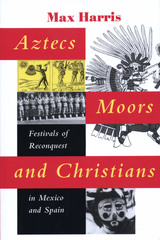
In villages and towns across Spain and its former New World colonies, local performers stage mock battles between Spanish Christians and Moors or Aztecs that range from brief sword dances to massive street theatre lasting several days. The festival tradition officially celebrates the triumph of Spanish Catholicism over its enemies, yet this does not explain its persistence for more than five hundred years nor its widespread diffusion.
In this insightful book, Max Harris seeks to understand Mexicans' "puzzling and enduring passion" for festivals of moros y cristianos. He begins by tracing the performances' roots in medieval Spain and showing how they came to be superimposed on the mock battles that had been a part of pre-contact Aztec calendar rituals. Then using James Scott's distinction between "public" and "hidden transcripts," he reveals how, in the hands of folk and indigenous performers, these spectacles of conquest became prophecies of the eventual reconquest of Mexico by the defeated Aztec peoples. Even today, as lively descriptions of current festivals make plain, they remain a remarkably sophisticated vehicle for the communal expression of dissent.
READERS
Browse our collection.
PUBLISHERS
See BiblioVault's publisher services.
STUDENT SERVICES
Files for college accessibility offices.
RECENTLY PUBLISHED


UChicago Accessibility Resources
home | accessibility | search | about | contact us
BiblioVault ® 2001 - 2026
The University of Chicago Press