
 A SCHOLARLY BOOK REPOSITORY
321 start with A start with A
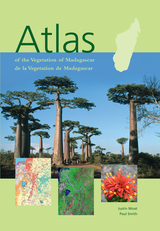
This first vegetation atlas for Madagascar, supported by the Critical Ecosystem Partnership Fund, has combined vegetation data from fieldwork and satellite images into a map-based information system. The result is a conservation tool which will help Madagascar’s government and people to plan a more sustainable future. This atlas is also of great use to anyone studying or visiting the island.
Presented in both French and English, the atlas gives a brief history of vegetation mapping in Madagascar; the methodology used in compiling these new maps; and detailed descriptions of each vegetation type, illustrated with photographs and diagrams. Trends in deforestation, extent of occurrence and levels of protection are assessed for each vegetation type. Additional information includes roads, trails, rivers, airports, reserves and a full place name index.
The atlas comprises 36 maps in A3 format, all in high resolution colour.
Earlier this year, President Obama declared one of his top priorities to be “making sure that people are able to get enough to eat.” The United States spends about five billion dollars on food aid and related programs each year, but still, both domestically and internationally, millions of people are hungry. In 2006, the Food and Agricultural Organization of the United Nations counted 850 million hungry people worldwide, but as food prices soared, an additional 100 million or more who were vulnerable succumbed to food insecurity.
If hunger were simply a matter of food production, no one would go without. There is more than enough food produced annually to provide every living person with a healthy diet, yet so many suffer from food shortages, unsafe water, and malnutrition every year. That’s because hunger is a complex political, economic, and ecological phenomenon. The interplay of these forces produces a geography of hunger that Thomas J. Bassett and Alex Winter-Nelson illuminate in this empowering book. The Atlas of World Hunger uses a conceptual framework informed by geography and agricultural economics to present a hunger index that combines food availability, household access, and nutritional outcomes into a single tool—one that delivers a fuller understanding of the scope of global hunger, its underlying mechanisms, and the ways in which the goals for ending hunger can be achieved. The first depiction of the geography of hunger worldwide, the Atlas will be an important resource for teachers, students, and anyone else interested in understanding the geography and causes of hunger. This knowledge, the authors argue, is a critical first step toward eliminating unnecessary suffering in a world of plenty.

Demonstrates how policymakers influenced environmental science during the early nuclear age
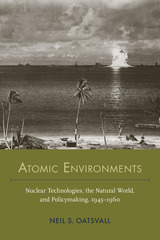
In Atomic Environments: Nuclear Technologies, the Natural World, and Policymaking, 1945–1960, Neil S. Oatsvall examines how top officials in the Truman and Eisenhower administrations used environmental science to develop nuclear strategy at the beginning of the Cold War. While many people were involved in research and analysis during the period in question, it was at highest levels of executive decision-making where environmental science and nuclear science most clearly combined to shape the nation’s policies.
Oatsvall clearly demonstrates how the natural world and the scientific disciplines that study it became integral parts of nuclear science rather than adversarial fields of knowledge. But while nuclear technologies heavily depended on environmental science to develop, those same technologies frequently caused great harm to the natural world. Moreover, while some individuals expressed real anxieties about the damage wrought by nuclear technologies, policymakers as a class consistently made choices that privileged nuclear boosterism and secrecy, prioritizing institutional values over the lives and living systems that they were ostensibly charged to protect.
By scrutinizing institutional policymaking practices and agendas at the birth of the nuclear age, a constant set of values becomes clear. Oatsvall reveals an emerging technocratic class that routinely valued knowledge about the environment to help create and maintain a nuclear arsenal, despite its existential threat to life on earth and the negative effects many nuclear technologies had on ecosystems and the American people alike. Although policymakers took their charge to protect and advance the welfare of the United States and its people seriously, Atomic Environments demonstrates how they often failed to do so because their allegiance to the US nuclear hierarchy blinded them to the real risks and dangers of the nuclear age.
Akira Mizuta Lippit focuses on historical moments in which such modes of avisuality came into being—the arrival of cinema, which brought imagination to life; psychoanalysis, which exposed the psyche; the discovery of x-rays, which disclosed the inside of the body; and the “catastrophic light” of Hiroshima and Nagasaki, which instituted an era of atomic discourses.
With a taut, poetic style, Lippit produces speculative readings of secret and shadow archives and visual structures or phenomenologies of the inside, charting the materiality of what both can and cannot be seen in the radioactive light of the twentieth century.
Akira Mizuta Lippit is professor of cinema, comparative literature, and Japanese culture at the University of Southern California. He is the author of Electric Animal: Toward a Rhetoric of Wildlife (Minnesota, 2000).
Tracing the alchemical roots of Robert Boyle’s famous mechanical philosophy, Newman shows that alchemy contributed to the mechanization of nature, a movement that lay at the very heart of scientific discovery. Boyle and his predecessors—figures like the mysterious medieval Geber or the Lutheran professor Daniel Sennert—provided convincing experimental proof that matter is made up of enduring particles at the microlevel. At the same time, Newman argues that alchemists created the operational criterion of an “atomic” element as the last point of analysis, thereby contributing a key feature to the development of later chemistry. Atomsand Alchemy thus provokes a refreshing debate about the origins of modern science and will be welcomed—and deliberated—by all who are interested in the development of scientific theory and practice.

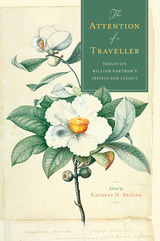
William Bartram, author of Travels through North and South Carolina, Georgia, East and West Florida, the Cherokee Country, the Extensive Territories of the Muscogulees, or Creek Confederacy, and the Country of the Chactaws, was colonial America’s first native born naturalist and artist, and the first author in the modern genre of writers who portrayed nature through personal experience as well as scientific observation. His book, first published in 1791, was based on his journeys through southern Indian nations and Britain’s southern colonies in the years just prior to the American Revolution and provides descriptions of the natural and cultural environments of what would soon become the American South. Scholars and general readers alike have long appreciated Bartram’s lush, vivid prose, his clarity of observation and evident wonder at the landscapes he traversed, and his engagement with the native nations whose lands he traveled through.
The Attention of a Traveller: Essays on William Bartram’s “Travels” and Legacy offers an interdisciplinary assessment of Bartram’s influence and evolving legacy, opening new avenues of research concerning the flora, fauna, and people connected to Bartram and his writings. Featuring 13 essays divided into five sections, contributors to the volume weave together scholarly perspectives from geology, art history, literary criticism, geography, and philosophy, alongside the more traditional Bartram-affiliated disciplines of biology and history. The collection concludes with a comprehensive treatment of the book as a material historical artifact.
In the past two decades, the familiar experience of attention--the emphasis on a particular mental activity so that it "fills the mind"--has been subjected to much scientific inquiry. David LaBerge now provides a systematic view of the attention process as it occurs in everyday perception, thinking, and action. Drawing from a variety of research methods and findings from cognitive psychology, neurobiology, and computer science, he presents a masterful synthesis of what is understood about attentional processing.
LaBerge explores how we are able to restrict the input of extraneous and confusing information, or prepare to process a future stimulus, in order to take effective action. As well as describing the pathways in the cortex presumed to be involved in attentional processing, he examines the hypothesis that two subcortical structures, the superior colliculus and the thalamus, contain circuit mechanisms that embody an algorithm of attention. In addition, he takes us through various ways of posing the problem, from an information-processing description of how attention works to a consideration of some of the cognitive and behavioral consequences of the brain's computations, such as desiring, judging, imaging, and remembering.
Attentional Processing is a highly sophisticated integration of contributions from several fields of neuroscience. It brings together the latest efforts to solve the puzzle of attention: how it works, how it is modulated, what its benefits are, and how it is expressed in the brain.
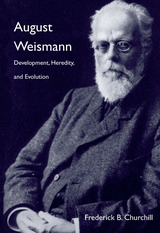
The evolutionist Ernst Mayr considered August Weismann “one of the great biologists of all time.” Yet the man who formulated the germ plasm theory—that inheritance is transmitted solely through the nuclei of the egg and sperm cells—has not received an in-depth historical examination. August Weismann reintroduces readers to a towering figure in the life sciences. In this first full-length biography, Frederick Churchill situates Weismann in the swirling intellectual currents of his era and demonstrates how his work paved the way for the modern synthesis of genetics and evolution in the twentieth century.
In 1859 Darwin’s tantalizing new idea stirred up a great deal of activity and turmoil in the scientific world, to a large extent because the underlying biological mechanisms of evolution through natural selection had not yet been worked out. Weismann’s achievement was to unite natural history, embryology, and cell biology under the capacious dome of evolutionary theory. In his major work on the germ plasm (1892), which established the material basis of heredity in the “germ cells,” Weismann delivered a crushing blow to Lamarck’s concept of the inheritance of acquired traits.
In this deeply researched biography, Churchill explains the development of Weismann’s pioneering work based on cytology and embryology and opens up an expanded history of biology from 1859 to 1914. August Weismann is sure to become the definitive account of an extraordinary life and career.

Starting at a basic level, the handbook begins appropriately with matters of immediate concern to someone who hopes to see an auroral display: what causes the aurora, where and when it is most often seen, and how best to capture it on film. Later sections provide a thorough and clear review of all aspects of auroral science, including the mysterious realm of auroral sound. In a concise and readable fashion, the handbook covers what is known about auroras, encompassing overviews of the northern Natives' legends and myths and the several theories geophysicists have produced to explain why auroras behave as they do. The Aurora Watcher's Handbook includes numerous illustrations, ranging from cartoons to color plates and drawings.
"I am confident [this book] will become the aurora watcher's bible for many years to come." (Sky & Telescope)
"This is participatory science at its best!" (Midwest Book Review)
"A delightful book, highly recommended." (CHOICE )
"A complete course for the layman with an interest in the northern lights." (Fairbanks Daily News-Miner)
"[Davis] has written the book in a smooth, how-it-works style, and his presentation is remarkably clear. . . . [He] expended much effort on this book, forming from his lifetime of knowledge a coherent and comprehensible picture of the aurora for the non-specialist." (ARCTIC)
"For a comprehensive guide to the northern lights, read Neil Davis's The Aurora." (Small Press Magazine)
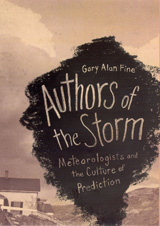
Whether it is used as an icebreaker in conversation or as the subject of serious inquiry, “the weather” is one of the few subjects that everyone talks about. And though we recognize the faces that bring us the weather on television, how government meteorologists and forecasters go about their jobs is rarely scrutinized. Given recent weather-related disasters, it’s time we find out more. In Authors of the Storm, Gary Alan Fine offers an inside look at how meteorologists and forecasters predict the weather.
Based on field observation and interviews at the Storm Prediction Center in Oklahoma, the National Weather Service in Washington, D.C., and a handful of midwestern outlets, Fine finds a supremely hard-working, insular clique of professionals who often refer to themselves as a “band of brothers.” In Fine’s skilled hands, we learn their lingo, how they “read” weather conditions, how forecasts are written, and, of course, how those messages are conveyed to the public. Weather forecasts, he shows, are often shaped as much by social and cultural factors inside local offices as they are by approaching cumulus clouds. By opening up this unique world to us, Authors of the Storm offers a valuable and fascinating glimpse of a crucial profession.
READERS
Browse our collection.
PUBLISHERS
See BiblioVault's publisher services.
STUDENT SERVICES
Files for college accessibility offices.
RECENTLY PUBLISHED



UChicago Accessibility Resources
home | accessibility | search | about | contact us
BiblioVault ® 2001 - 2025
The University of Chicago Press