
 A SCHOLARLY BOOK REPOSITORY
8 start with A start with A

In a book sure to inspire controversy, Gene Heyman argues that conventional wisdom about addiction—that it is a disease, a compulsion beyond conscious control—is wrong.
Drawing on psychiatric epidemiology, addicts’ autobiographies, treatment studies, and advances in behavioral economics, Heyman makes a powerful case that addiction is voluntary. He shows that drug use, like all choices, is influenced by preferences and goals. But just as there are successful dieters, there are successful ex-addicts. In fact, addiction is the psychiatric disorder with the highest rate of recovery. But what ends an addiction?
At the heart of Heyman’s analysis is a startling view of choice and motivation that applies to all choices, not just the choice to use drugs. The conditions that promote quitting a drug addiction include new information, cultural values, and, of course, the costs and benefits of further drug use. Most of us avoid becoming drug dependent, not because we are especially rational, but because we loathe the idea of being an addict.
Heyman’s analysis of well-established but frequently ignored research leads to unexpected insights into how we make choices—from obesity to McMansionization—all rooted in our deep-seated tendency to consume too much of whatever we like best. As wealth increases and technology advances, the dilemma posed by addictive drugs spreads to new products. However, this remarkable and radical book points to a solution. If drug addicts typically beat addiction, then non-addicts can learn to control their natural tendency to take too much.

For centuries, mental distress in West Africa has been subject to a mix of healing, harming, ritual, and regulation. In African Pharmakon, Nana Osei Quarshie questions conventional narratives about colonial psychiatry. Instead of displacing African therapeutic traditions, he argues, European psychiatric institutions in fact built upon them, adapting long-standing techniques of social control and healing.
With a focus on Ghana, Quarshie explores the shifting landscape of West African mental health practices, tracking their transformation from shrine-based rituals to colonial asylums and modern psychiatric institutions. Combining extensive archival research and ethnographic fieldwork, including the first scholarly examination of patient records from the Accra Psychiatric Hospital, Quarshie identifies five enduring techniques that have shaped the treatment of mental distress: spiritual pawning, logging, manhunting, mass expulsion, and pharmacotherapy.
Rejecting the simplistic opposition of Indigenous healing versus colonial oppression, African Pharmakon provides a nuanced account of how psychiatric care in Ghana became a tool of empowerment as well as exclusion. This pioneering study reframes our understanding of psychiatry and mental health governance in West Africa, past and present.
From August 29 to September 21, 1909, Sigmund Freud visited the United States, where he gave five lectures at Clark University in Worcester, Massachusetts. This volume brings together a stunning gallery of leading historians of psychoanalysis and of American culture to consider the broad history of psychoanalysis in America and to reflect on what has happened to Freud’s legacy in the United States in the century since his visit.
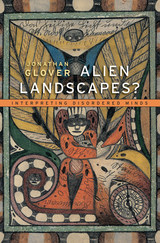
We have made huge progress in understanding the biology of mental illnesses, but comparatively little in interpreting them at the psychological level. The eminent philosopher Jonathan Glover believes that there is real hope of progress in the human interpretation of disordered minds.
The challenge is that the inner worlds of people with psychiatric disorders can seem strange, like alien landscapes, and this strangeness can deter attempts at understanding. Do people with disorders share enough psychology with other people to make interpretation possible? To explore this question, Glover tackles the hard cases—the inner worlds of hospitalized violent criminals, of people with delusions, and of those diagnosed with autism or schizophrenia. Their first-person accounts offer glimpses of inner worlds behind apparently bizarre psychiatric conditions and allow us to begin to learn the “language” used to express psychiatric disturbance. Art by psychiatric patients, or by such complex figures as van Gogh and William Blake, give insight when interpreted from Glover’s unique perspective. He also draws on dark chapters in psychiatry’s past to show the importance of not medicalizing behavior that merely transgresses social norms. And finally, Glover suggests values, especially those linked with agency and identity, to guide how the boundaries of psychiatry should be drawn.
Seamlessly blending philosophy, science, literature, and art, Alien Landscapes? is both a sustained defense of humanistic psychological interpretation and a compelling example of the rich and generous approach to mental life for which it argues.

In 1895 there was not a single case of dementia praecox reported in the United States. By 1912 there were tens of thousands of people with this diagnosis locked up in asylums, hospitals, and jails. By 1927 it was fading away . How could such a terrible disease be discovered, affect so many lives, and then turn out to be something else?
In vivid detail, Richard Noll describes how the discovery of this mysterious disorder gave hope to the overworked asylum doctors that they could at last explain—though they could not cure—the miserable patients surrounding them. The story of dementia praecox, and its eventual replacement by the new concept of schizophrenia, also reveals how asylum physicians fought for their own respectability. If what they were observing was a disease, then this biological reality was amenable to scientific research. In the early twentieth century, dementia praecox was psychiatry’s key into an increasingly science-focused medical profession.
But for the moment, nothing could be done to help the sufferers. When the concept of schizophrenia offered a fresh understanding of this disorder, and hope for a cure, psychiatry abandoned the old disease for the new. In this dramatic story of a vanished diagnosis, Noll shows the co-dependency between a disease and the scientific status of the profession that treats it. The ghost of dementia praecox haunts today’s debates about the latest generation of psychiatric disorders.
American Melancholy traces the growth of depression as an object of medical study and as a consumer commodity and illustrates how and why depression came to be such a huge medical, social, and cultural phenomenon. It is the first book to address gender issues in the construction of depression, explores key questions of how its diagnosis was developed, how it has been used, and how we should question its application in American society.

Rated Outstanding by the American Association of School Libraries
This is the first book to be written by autistic college students about the challenges they face. Aquamarine Blue 5 details the struggle of these highly sensitive students and shows that there are gifts specific to autistic students that enrich the university system, scholarship, and the world as a whole.
Dawn Prince-Hughes presents an array of writings by students who have been diagnosed with Asperger’s Syndrome or High-Functioning Autism, showing their unique ways of looking at and solving problems. In their own words, they portray how their divergent thinking skills could be put to great use if they were given an opportunity. Many such students never get the chance because the same sensitivity that gives them these insights makes the flicker of fluorescent lights and the sound of chalk on the board unbearable For simple—and easily remedied—reasons, we lose these students, who are as gifted as they are challenged.
Aquamarine Blue 5 is a showcase of the strength and resilient character of individuals with Asperger’s Syndrome. It will be an invaluable resource for those touched by this syndrome, their friends and families, and school administrators.
READERS
Browse our collection.
PUBLISHERS
See BiblioVault's publisher services.
STUDENT SERVICES
Files for college accessibility offices.
RECENTLY PUBLISHED







UChicago Accessibility Resources
home | accessibility | search | about | contact us
BiblioVault ® 2001 - 2026
The University of Chicago Press