
 A SCHOLARLY BOOK REPOSITORY
11 start with B start with B

Offers insights into the social and cultural implications of humans’ relationships with rats and the natural world.
Apart from the occasional pet owner who has rats, most people regard rats as disease-carrying nocturnal pests, scurrying around dumpsters and dragging slices of pizza through New York City subways. Since rats are seemingly omnipresent in human life, why do we harbor such negative feelings about them, and why are they among the creatures most frequently targeted for systematic extermination?
In Bad Nature, sociologist Andrew McCumber draws out the cultural underpinnings of rat extermination across three countries and two continents. Drawing from ethnographic, interview, and textual data from the frigid prairie of Alberta, Canada; the heart of downtown Los Angeles, California; and the iconic Galápagos Islands of Ecuador, McCumber studies how humans have sought to suppress and exterminate rat populations in a variety of environmental, social, and political situations. He shows how, in these disparate locations, rat control is a social practice that draws and clarifies the spatial and symbolic boundaries between “good” and “bad” forms of nature. Rats are near the bottom of a symbolic hierarchy of species that places human life at the top, companion animals and majestic wildlife just below them, and the “invasive species” that call for systematic extermination at the very bottom. This hierarchy of living things that places rats at the bottom, McCumber argues, mirrors human systems of social inequalities and power dynamics.
Both original and engaging, Bad Nature urges readers to consider, when charting a just and sustainable future, where will the rats be placed in the worlds we envision?

A sobering excavation of how deeply nineteenth-century American banks were entwined with the institution of slavery.
It’s now widely understood that the fullest expression of nineteenth-century American capitalism was found in the structures of chattel slavery. It’s also understood that almost every other institution and aspect of life then was at least entangled with—and often profited from—slavery’s perpetuation. Yet as Sharon Ann Murphy shows in her powerful and unprecedented book, the centrality of enslaved labor to banking in the antebellum United States is far greater than previously thought.
Banking on Slavery sheds light on precisely how the financial relationships between banks and slaveholders worked across the nineteenth-century South. Murphy argues that the rapid spread of slavery in the South during the 1820s and ’30s depended significantly upon southern banks’ willingness to financialize enslaved lives, with the use of enslaved individuals as loan collateral proving central to these financial relationships. She makes clear how southern banks were ready—and, in some cases, even eager—to alter time-honored banking practices to meet the needs of slaveholders. In the end, many of these banks sacrificed themselves in their efforts to stabilize the slave economy. Murphy also details how banks and slaveholders transformed enslaved lives from physical bodies into abstract capital assets. Her book provides an essential examination of how our nation’s financial history is more intimately intertwined with the dehumanizing institution of slavery than scholars have previously thought.
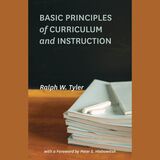
In 1949, a small book had a big impact on education. In just over one hundred pages, Ralph W. Tyler presented the concept that curriculum should be dynamic, a program under constant evaluation and revision. Curriculum had always been thought of as a static, set program, and in an era preoccupied with student testing, he offered the innovative idea that teachers and administrators should spend as much time evaluating their plans as they do assessing their students.
Since then, Basic Principles of Curriculum and Instruction has been a standard reference for anyone working with curriculum development. Although not a strict how-to guide, the book shows how educators can critically approach curriculum planning, studying progress and retooling when needed. Its four sections focus on setting objectives, selecting learning experiences, organizing instruction, and evaluating progress. Readers will come away with a firm understanding of how to formulate educational objectives and how to analyze and adjust their plans so that students meet the objectives. Tyler also explains that curriculum planning is a continuous, cyclical process, an instrument of education that needs to be fine-tuned.
This emphasis on thoughtful evaluation has kept Basic Principles of Curriculum and Instruction a relevant, trusted companion for over sixty years. And with school districts across the nation working feverishly to align their curriculum with Common Core standards, Tyler's straightforward recommendations are sound and effective tools for educators working to create a curriculum that integrates national objectives with their students' needs.

Examining the history of phrenology and physiognomy, Beauty and the Brain proposes a bold new way of understanding the connection between science, politics, and popular culture in early America.
Between the 1770s and the 1860s, people all across the globe relied on physiognomy and phrenology to evaluate human worth. These once-popular but now discredited disciplines were based on a deceptively simple premise: that facial features or skull shape could reveal a person’s intelligence, character, and personality. In the United States, these were culturally ubiquitous sciences that both elite thinkers and ordinary people used to understand human nature.
While the modern world dismisses phrenology and physiognomy as silly and debunked disciplines, Beauty and the Brain shows why they must be taken seriously: they were the intellectual tools that a diverse group of Americans used to debate questions of race, gender, and social justice. While prominent intellectuals and political thinkers invoked these sciences to justify hierarchy, marginalized people and progressive activists deployed them for their own political aims, creatively interpreting human minds and bodies as they fought for racial justice and gender equality. Ultimately, though, physiognomy and phrenology were as dangerous as they were popular. In addition to validating the idea that external beauty was a sign of internal worth, these disciplines often appealed to the very people who were damaged by their prejudicial doctrines. In taking physiognomy and phrenology seriously, Beauty and the Brain recovers a vibrant—if largely forgotten—cultural and intellectual universe, showing how popular sciences shaped some of the greatest political debates of the American past.

OG Kush. Sour Diesel. Wax, shatter, and vapes. Marijuana has come a long way since its seedy days in the back parking lots of our culture. So has Howard S. Becker, the eminent sociologist, jazz musician, expert on “deviant” culture, and founding NORML board member. When he published Becoming a Marihuana User more than sixty years ago, hardly anyone paid attention—because few people smoked pot. Decades of Cheech and Chong films, Grateful Dead shows, and Cannabis Cups later, and it’s clear—marijuana isn’t just an established commodity, it’s an entire culture. And that’s just the thing—Becker totally called it: pot has everything to do with culture. It’s not a blight on culture, but a culture itself—in fact, you’ll see in this book the first use of the term “users,” rather than “abusers” or “addicts.” Come along on this short little study—now a famous timestamp in weed studies—and you will be astonished at how relevant it is to us today.
Becker doesn’t judge, but neither does he holler for legalization, tell you how to grow it in a hollowed-out dresser, or anything else like that for which there are plenty of other books you can buy. Instead, he looks at marijuana with a clear sociological lens—as a substance that some people enjoy, and that some others have decided none of us should. From there he asks: so how do people decide to get high, and what kind of experience do they have as a result of being part of the marijuana world? What he discovers will bother some, especially those who proselytize the irrefutably stunning effects of the latest strain: chemistry isn’t everything—the important thing about pot is how we interact with it. We learn to be high. We learn to like it. And from there, we teach others, passing the pipe in a circle that begins to resemble a bona fide community, defined by shared norms, values, and definitions just like any other community.
All throughout this book, you’ll see the intimate moments when this transformation takes place. You’ll see people doing it for the first time and those with considerable experience. You’ll see the early signs of the truths that have come to define the marijuana experience: that you probably won’t get high at first, that you have to hold the hit in, and that there are other people here who are going to smoke that, too.
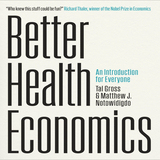
This is an auto-narrated audiobook version of this book.
An ideal entry point into health economics for everyone from aspiring economists to healthcare professionals.
The economics of healthcare are messy. For most consumers, there’s little control over costs or services. Sometimes doctors are paid a lot; other times they aren’t paid at all. Insurance and drug companies are evil, except when they’re not. If economics is the study of market efficiency, how do we make sense of this?
Better Health Economics is a warts-and-all introduction to a field that is more exceptions than rules. Economists Tal Gross and Matthew J. Notowidigdo offer readers an accessible primer on the field’s essential concepts, a review of the latest research, and a framework for thinking about this increasingly imperfect market.
A love letter to a traditionally unlovable topic, Better Health Economics provides an ideal entry point for students in social science, business, public policy, and healthcare. It’s a reminder that healthcare may be a failed market—but it’s our failed market.
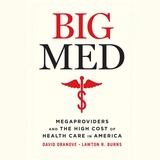
This is an auto-narrated audiobook edition of this book.
There is little debate that health care in the United States is in need of reform. But where should those improvements begin? With insurers? Drug makers? The doctors themselves? In Big Med, David Dranove and Lawton Robert Burns argue that we’re overlooking the most ubiquitous cause of our costly and underperforming system: megaproviders, the expansive health care organizations that have become the face of American medicine. Your local hospital is likely part of one. Your doctors, too. And the megaproviders are bad news for your health and your wallet.
Drawing on decades of combined expertise in health care consolidation, Dranove and Burns trace Big Med’s emergence in the 1990s, followed by its swift rise amid false promises of scale economies and organizational collaboration. In the decades since, megaproviders have gobbled up market share and turned independent physicians into salaried employees of big bureaucracies, while delivering on none of their early promises. For patients this means higher costs and lesser care. Meanwhile, physicians report increasingly low morale, making it all but impossible for most systems to implement meaningful reforms.
In Big Med, Dranove and Burns combine their respective skills in economics and management to provide a nuanced explanation of how the provision of health care has been corrupted and submerged under consolidation. They offer practical recommendations for improving competition policies that would reform megaproviders to actually achieve the efficiencies and quality improvements they have long promised.
This is an essential read for understanding the current state of the health care system in America—and the steps urgently needed to create an environment of better care for all of us.
Revealing a history that is deep, broad, and infuriating, The Black Tax casts a bold light on the racist practices long hidden in the shadows of America’s tax regimes.
American taxation is unfair, and it is most unfair to the very people who critically need its support. Not only do taxpayers with fewer resources—less wealth, power, and land—pay more than the well-off, but they are forced to fight for their rights within an unjust system that undermines any attempts to improve their position or economic standing. In The Black Tax, Andrew W. Kahrl reveals the shocking history and ruinous consequences of inequitable and predatory tax laws in this country—above all, widespread and devastating racial dispossession.
Throughout the twentieth century, African Americans acquired substantial amounts of property nationwide. But racist practices, obscure processes, and outright theft diminished their holdings and their power. Of these, Kahrl shows, few were more powerful, or more quietly destructive, than property taxes. He examines all the structural features and hidden traps within America’s tax system that have forced Black Americans to pay more for less and stripped them of their land and investments, and he reveals the staggering cost. The story of America’s now enormous concentration of wealth at the top—and the equally enormous absence of wealth among most Black households—has its roots here.
Kahrl exposes the painful history of these practices, from Reconstruction up to the present, and tells, for the first time, the story of Black Americans’ experiences as taxpayers and their fight for a more fair and equitable system for raising and spending the public’s money. This is a history that deepens our understanding of the disadvantages and persistent inequalities that African American households continue to face and reveals hidden engines of economic inequality in America. Detailing the hows and whys of America’s profoundly unequal tax system, The Black Tax equips readers with the knowledge needed to combat inequality and injustice today.

Probes the relationship between the immigration and health care systems in the United States.
For the roughly ten million undocumented immigrants living in the United States, federal health care coverage is out of reach. Barred from Medicare, Medicaid, and the Affordable Care Act, most rely on hospital emergency rooms when they get sick, or clinics that don’t inquire about immigration status. Further obstacles to health care, including discrimination and the fear of deportation, mean that immigrants, undocumented or not, seek and receive less medical attention than any other population in the country. Yet immigrants haven’t always been ostracized from health care in the United States—providers and activists have for over a century worked to make medical services available to newcomers and migrants, including, at times, the undocumented.
Drawing together stories from diverse communities from the mid-nineteenth century to the present, Borders of Care examines how health care in the United States has both included and excluded immigrants. Beatrix Hoffman analyzes both the health and immigration systems, adding to our understanding of why these structures, and the policies that support them, have resisted reform. Moreover, she shows that immigrants, often scapegoated as burdens on the health-care system, have strengthened it through their responses to systemic exclusion. By creating hospitals and clinics, serving as practitioners, fighting for safer workplaces, filing lawsuits, organizing and protesting, immigrants and migrants have improved medical access for everybody and advanced the idea of health care as a universal right. As accessible as it is authoritative, Hoffman’s survey could not be more timely.
This is an auto-narrated audiobook version of this book.
The story of how a biologically driven understanding of gender and sexuality became central to US LGBTQ+ political and legal advocacy.
Across protests and courtrooms, LGBTQ+ advocates argue that sexual and gender identities are innate. Oppositely, conservatives incite panic over “groomers” and a contagious “gender ideology” that corrupts susceptible children. Yet, as this debate rages on, the history of what first compelled the hunt for homosexuality’s biological origin story may hold answers for the queer rights movement’s future.
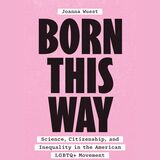
Born This Way tells the story of how a biologically based understanding of gender and sexuality became central to LGBTQ+ advocacy. Starting in the 1950s, activists sought out mental health experts to combat the pathologizing of homosexuality. As Joanna Wuest shows, these relationships were forged in subsequent decades alongside two broader, concurrent developments: the rise of an interest-group model of rights advocacy and an explosion of biogenetic and bio-based psychological research. The result is essential reading to fully understand LGBTQ+ activism today and how clashes over science remain crucial to equal rights struggles.
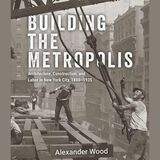
A sweeping history of New York that chronicles the construction of one of the world’s great cities.
Between the 1880s and the 1930s, New York City experienced explosive growth as nearly a million buildings, dozens of bridges and tunnels, hundreds of miles of subway lines, and thousands of miles of streets were erected to meet the needs of an ever-swelling population. This landscape—jagged with skyscrapers, rattling with the sound of mass transit, alive with people—made the city world-famous.
Building the Metropolis offers a revelatory look at this era of urban development by asking, “Who built New York, and how?” Focusing on the work of architects, builders, and construction workers, Alexander Wood chronicles the physical process of the city’s rapid expansion. New York’s towering buildings and busy thoroughfares aren’t just stylish or structural marvels, Wood shows, but the direct result of the many colorful personalities who worked in one of the city’s largest industries. This development boom drew on the resources of the whole community and required money, political will, creative vision, entrepreneurial drive, skilled workmanship, and hard physical labor. Wood shows this to be an even larger story as well. As cities became nodes in a regional, national, and global economy, the business of construction became an important motor of economic, political, and social development. While they held drastically different views on the course of urban growth, machine politicians, reformers, and radicals alike were all committed to city building on an epic scale.
Drawing on resources that include city archives and the records of architecture firms, construction companies, and labor unions, Building the Metropolis tells the story of New York in a way that’s epic, lively, and utterly original.
READERS
Browse our collection.
PUBLISHERS
See BiblioVault's publisher services.
STUDENT SERVICES
Files for college accessibility offices.
RECENTLY PUBLISHED






UChicago Accessibility Resources
home | accessibility | search | about | contact us
BiblioVault ® 2001 - 2026
The University of Chicago Press