
 A SCHOLARLY BOOK REPOSITORY
6 start with B start with B
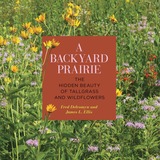
In 2003 Fred Delcomyn imagined his backyard of two and a half acres, farmed for corn and soybeans for generations, restored to tallgrass prairie. Over the next seventeen years, Delcomyn, with help from his friend James L. Ellis scored, seeded, monitored, reseeded, and burned these acres into prairie. In A Backyard Prairie, they document their journey and reveal the incredible potential of a backyard to travel back to a time before the wild prairie was put into plow rows. It has been said, “Anyone can love the mountains, but it takes a soul to love the prairie.” This book shows us how.
The first book to celebrate a smaller, more private restoration, A Backyard Prairie offers a vivid portrait of what makes a prairie. Delcomyn and Ellis describe selecting and planting seeds, recount the management of a prescribed fire, and capture the prairie’s seasonal parades of colorful flowers in concert with an ever-growing variety of animals, from the minute eastern tailed-blue butterfly to the imperious red-winged blackbird and the reclusive coyote.
This book offers a unique account of their work and their discovery of a real backyard, an inviting island of grass and flowers uncovered and revealed. We often travel miles and miles to find nature larger than ourselves. In this rich account of small prairie restoration, Delcomyn and Ellis encourage the revival of original prairie in our backyards and the patient, beauty-seeking soul sleeping within ourselves.
Between the Flowers is Harriette Simpson Arnow's second novel. Written in the late 1930s, but unpublished until 1997, this early work shows the development of social and cultural themes that would continue in Arnow's later work: the appeal of wandering and of modern life, the countervailing desire to stay within a traditional community, and the difficulties of communication between men and women in such a community.
Between the Flowers goes far beyond categories of "local color," literary regionalism, or the agrarian novel, to the heart of human relationships in a modernized world. Arnow, who went on to write Hunter's Horn (1949) and The Dollmaker (1952)—her two most famous works—has continually been overlooked by critics as a regional writer. Ironically, it is her stinging realism that is seen as evidence of her realism, evidence that she is of the Cumberland—an area somehow more "regional" than others.
Beginning with an edition of critical essays on her work in 1991 and a complete original edition of Hunter's Horn in 1997, the Michigan State University Press is pleased to continue its effort to make available the timeless insight of Arnow's work with the posthumous publication of Between the Flowers.
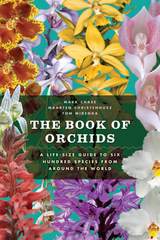
The Book of Orchids revels in the diversity and oddity of these beguiling plants. Six hundred of the world’s most intriguing orchids are displayed, along with life-size photographs that capture botanical detail, as well as information about distribution, peak flowering period, and each species’ unique attributes, both natural and cultural. With over 28,000 known species—and more being discovered each year—the orchid family is arguably the largest and most geographically widespread of the flowering plant families. Including the most up-to-date science and accessibly written by botanists Mark Chase, Maarten Christenhusz, and Tom Mirenda, each entry in The Book of Orchids will entice researchers and orchid enthusiasts alike.
With stunning full-color images, The Book of Orchids is sure to become the go-to reference for these complex, alluring, and extraordinarily adaptable plants.
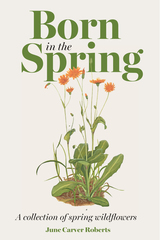
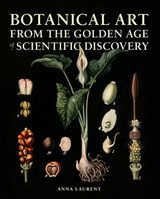
This beautifully illustrated oversized book gives the humble wall chart its due, reproducing more than two hundred of them in dazzling full color. Each wall chart is accompanied by captions that offer accessible information about the species featured, the scientists and botanical illustrators who created it, and any particularly interesting or innovative features the chart displays. And gardeners will be pleased to discover useful information about plant anatomy and morphology and species differences. We see lilies and tulips, gourds, aquatic plants, legumes, poisonous plants, and carnivorous plants, all presented in exquisite, larger-than-life detail.
A unique fusion of art, science, and education, the wall charts gathered here offer a glimpse into a wonderful scientific heritage and are sure to thrill naturalists, gardeners, and artists alike.
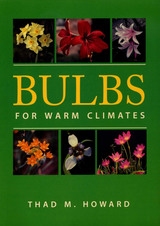
Bulb gardening in the southwestern and southern United States presents challenges unknown in cooler climates. Bulbs that turn Holland into a kaleidoscope of color droop and fade in our mild winters, hot summers, and uncertain rainfall. Yet hundreds of native and naturalized species of bulbs thrive in these same conditions and offer as many colors, shapes, and fragrances as even the most demanding gardener desires. These are the bulbs that Thad Howard describes in this comprehensive guide to bulbs that will grow in USDA gardening zones 8 and 9.
Writing from more than forty-five years' experience in collecting and cultivating bulbs, Howard offers expert advice about hundreds of little-known, hybrid, and common species and varieties that grow well in warm climates. His species accounts, which are grouped by family, describe each plant and its growing requirements and often include interesting stories from his collecting expeditions. Lovely color photos illustrate many of the species.
Howard also gives reliable information about refrigerating bulbs, using them in the landscape and in containers, choosing scented ones, making potpourri, buying, collecting, cultivating, and hybridizing bulbs, and dealing with pests and diseases. He concludes with lists of plant societies and suppliers and a helpful glossary and bibliography.
READERS
Browse our collection.
PUBLISHERS
See BiblioVault's publisher services.
STUDENT SERVICES
Files for college accessibility offices.
RECENTLY PUBLISHED



UChicago Accessibility Resources
home | accessibility | search | about | contact us
BiblioVault ® 2001 - 2026
The University of Chicago Press