
 A SCHOLARLY BOOK REPOSITORY
3 start with B start with B
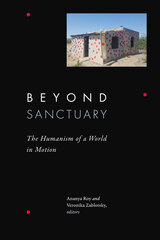
Contributors. Leisy Abrego, Damon Azali-Rojas, Amy Sara Carroll, Sharad Chari, Nicholas De Genova, Ricardo Dominguez, Lorgia García-Peña, Sarah Haley, Gaye Theresa Johnson, Moon-Kie Jung, Maria Kaika, Saree Makdisi, Kyle T. Mays, Ananya Roy, Charles Sepulveda, SA Smythe, Vanessa E. Thompson, Charalampos Tsavdaroglou, João H. Costa Vargas, Rinaldo Walcott, Veronika Zablotsky, Maite Zubiaurre
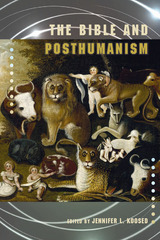
What does it mean, and what should it mean to be human?
In this collection of essays, scholars place the philosophies and theories of animal studies and posthumanism into conversation with biblical studies. Authors cross and disrupt boundaries and categories through close readings of stories where the human body is invaded, possessed, or driven mad. Articles explore the ethics of the human use of animals and the biblical contributions to the question. Other essays use the image of lions—animals that appear not only in the wild, but also in the Bible, ancient Near Eastern texts, and philosophy—to illustrate the potential these theories present for students of the Bible. Contributors George Aichele, Denise Kimber Buell, Benjamin H. Dunning, Heidi Epstein, Rhiannon Graybill, Jennifer L. Koosed, Eric Daryl Meyer, Stephen D. Moore, Hugh Pyper, Robert Paul Seesengood, Yvonne Sherwood, Ken Stone, and Hannah M. Strømmen present an open invitation for further work in the field of posthumanism.
Features:
- Coverage of texts that explore the boundaries between animal, human, and divinity
- Discussion of the term posthumanism and how it applies to biblical studies
- Essays engage Derrida, Foucault, Wolfe, Lacan, Žižek, Singer, Haraway, and others
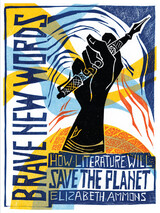
The activist tradition in American literature has long testified to the power of words to change people and the power of people to change the world, yet in recent years many professional humanists have chosen to distract themselves with a postmodern fundamentalism of indeterminacy and instability rather than engage with social and political issues. Throughout her bold and provocative call to action, Elizabeth Ammons argues that the responsibility now facing humanists is urgent: inside and outside academic settings, they need to revive the liberal arts as a progressive cultural force that offers workable ideas and inspiration in the real-world struggle to achieve social and environmental justice.
Brave New Words challenges present and future literary scholars and teachers to look beyond mere literary critique toward the concrete issue of social change and how to achieve it. Calling for a profound realignment of thought and spirit in the service of positive social change, Ammons argues for the continued importance of multiculturalism in the twenty-first century despite attacks on the concept from both right and left. Concentrating on activist U.S. writers—from ecocritics to feminists to those dedicated to exposing race and class biases, from Jim Wallis and Cornel West to Winona LaDuke and Paula Moya and many others—she calls for all humanists to link their work to the progressive literature of the last half century, to insist on activism in the service of positive change as part of their mission, and to teach the power of hope and action to their students.
As Ammons clearly demonstrates, much of American literature was written to expose injustice and motivate readers to work for social transformation. She challenges today’s academic humanists to address the issues of hope and purpose by creating a practical activist pedagogy that gives students the knowledge to connect their theoretical learning to the outside world. By relying on the transformative power of literature and replacing nihilism and powerlessness with conviction and faith, the liberal arts can offer practical, useful inspiration to everyone seeking to create a better world.
READERS
Browse our collection.
PUBLISHERS
See BiblioVault's publisher services.
STUDENT SERVICES
Files for college accessibility offices.
RECENTLY PUBLISHED



UChicago Accessibility Resources
home | accessibility | search | about | contact us
BiblioVault ® 2001 - 2025
The University of Chicago Press