front cover of Bandung Revisited
Bandung Revisited
The Legacy of the 1955 Asian-African Conference for International Order
Edited by Amitav Acharya and Tan See Seng
National University of Singapore Press, 2008
The 1955 Asia-Africa conference (the “Bandung Conference”) was a meeting of 29 Asian and African nations that sought to draw on Asian and African nationalism and religious traditions to forge a new international order that was neither communist nor capitalist, and led six years later to the non-aligned movement. Few would dispute the notion that the inaugural meeting in 1955 was a watershed in international history, but there is much disagreement about its long-term legacy and its significance for present-day international affairs. Was it a post-colonial ideological reaction to the passing of the age of empire or an innovative effort to promote a new regionalism? Were its principles of peaceful coexistence a rhetorical flourish or a substantive policy initiative? Did the Conference help define North-South relations? And in what way did the Conference contribute to the regional order of contemporary Asia?


The authors in the present volume argue that the Bandung Conference had a lasting normative influence on the contemporary regional order of Asia, and that it underlies the diplomatic principles and loosely defined normative framework that characterize present-day Asian international relations.
[more]

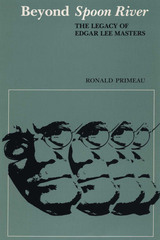
front cover of Beyond Spoon River
Beyond Spoon River
The Legacy of Edgar Lee Masters
By Ronald Primeau
University of Texas Press, 1981

As the first full-length critical study of Edgar Lee Masters, Beyond Spoon River is important not only for its reevaluation of this American poet and his work but also for its valuable insights into central questions of aesthetics, regionalism, and the nature and meaning of literary influence.

The inordinate popularity of Spoon River Anthology has for many years unfairly restricted Masters' reputation as a "one-book phenomenon," although between 1911 and 1942 he wrote over fifty other books—most of which were neglected or misinterpreted precisely because they attempted a large-scale rewriting of what he felt had been obscured or distorted in the Anglo-American tradition. Masters' wide reading in the whole of western literature shaped his own attitudes, themes, and style, and his detailed accounts of that reading and its effect on his work form the basis for this reinterpretation of his place in American poetry in this century.

After reviewing Masters' own statements on literary influence and his role as a critic, Primeau devotes the main body of his study to the major influences on Masters' work—the Greeks, Goethe, Emerson, Whitman, Shelley, and Browning. For Masters, the composite of all these influences provided a corrective to the poetry and criticism of his time, which he little admired. Primeau concludes by exploring Masters' midwestern heritage in the light of recent reinterpretations of regionalism.


[more]

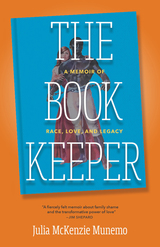
front cover of The Book Keeper
The Book Keeper
A Memoir of Race, Love, and Legacy
Julia McKenzie Munemo
Ohio University Press, 2020

“A fiercely felt memoir about family shame and the transformative power of love even as it’s also an ongoing meditation on privilege and race in twenty-first-century America. This is a debut striking in its empathetic imagination, observational acuity, and emotional intelligence.” — Jim Shepard, author of Like You’d Understand, Anyway.

In a memoir that’s equal parts love story, investigation, and racial reckoning, Munemo unravels and interrogates her whiteness, a shocking secret, and her family’s history.

When interracial romance novels written by her long-dead father landed on Julia McKenzie Munemo’s kitchen table, she—a white woman—had been married to a black man for six years and their first son was a toddler. Out of shame about her father’s secret career as a writer of “slavery porn,” she hid the books from herself, and from her growing mixed-race family, for more than a decade. But then, with police shootings of African American men more and more in the public eye, she realized that understanding her own legacy was the only way to begin to understand her country.

[more]

front cover of Bowers Mansion
Bowers Mansion
The Legacy of a Comstock Family
Tamera J. Buzick
University of Nevada Press, 2026
Few estates born from the discovery of the Comstock Lode still survive. Among the grandest, Bowers Mansion, dates to the height of the Civil War. The property has a tragic history shrouded in legend, laid bare within these pages: from the mansion’s construction; to Eilley Bowers’s fight to maintain the property after her husband’s death, running it as a resort and telling fortunes; to the mansion’s restoration in the sixties with aid of a handful of determined women. Bowers Mansion: The Legacy of a Comstock Family is a tale of wealth and poverty, of decay and revival, offering up a powerful story from Nevada’s history for readers of all kinds to enjoy.
[more]


Send via email Share on Facebook Share on Twitter