
 A SCHOLARLY BOOK REPOSITORY
113 start with C start with C
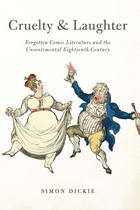
Eighteenth-century British culture is often seen as polite and sentimental—the creation of an emerging middle class. Simon Dickie disputes these assumptions in Cruelty and Laughter, a wildly enjoyable but shocking plunge into the forgotten comic literature of the age. Beneath the surface of Enlightenment civility, Dickie uncovers a rich vein of cruel humor that forces us to recognize just how slowly ordinary human sufferings became worthy of sympathy.
Delving into an enormous archive of comic novels, jestbooks, farces, variety shows, and cartoons, Dickie finds a vast repository of jokes about cripples, blind men, rape, and wife-beating. Epigrams about syphilis and scurvy sit alongside one-act comedies about hunchbacks in love. He shows us that everyone—rich and poor, women as well as men—laughed along. In the process, Dickie also expands our understanding of many of the century’s major authors, including Samuel Richardson, Lady Mary Wortley Montagu, Tobias Smollett, Frances Burney, and Jane Austen. He devotes particular attention to Henry Fielding’s Joseph Andrews, a novel that reflects repeatedly on the limits of compassion and the ethical problems of laughter. Cruelty and Laughter is an engaging, far-reaching study of the other side of culture in eighteenth-century Britain.
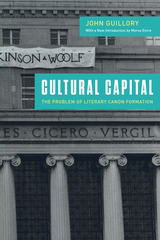
Since its publication in 1993, John Guillory’s Cultural Capital has been a signal text for understanding the codification and uses of the literary canon. Cultural Capital reconsiders the social basis for aesthetic judgment and exposes the unequal distribution of symbolic and linguistic knowledge on which culture has long been based. Drawing from Pierre Bourdieu’s sociology, Guillory argues that canon formation must be understood less as a question of the representation of social groups and more as a question of the distribution of cultural capital in schools, which regulate access to literacy, to the practices of reading and writing.
Now, as the crisis of the canon has evolved into the so-called crisis of the humanities, Guillory’s groundbreaking, incisive work has never been more urgent. As scholar and critic Merve Emre writes in her introduction to this enlarged edition: “Exclusion, selection, reflection, representation—these are the terms on which the canon wars of the last century were fought, and the terms that continue to inform debates about, for instance, decolonizing the curriculum and the rhetoric of antiracist pedagogy.”
The whole history of literary criticism is illuminated by this analysis of one English critic’s work. It is, in effect, a literary case study presented as partial answer to the complicated question: what cultural conditions are conducive to the development of a particular theory of literature?
Initially, Lee Andrew Elioseff defines four difficult responsibilities of the historian of criticism: the interpretation of his material in terms of all the cultural circumstances that produced it; elimination of the purely chance elements, such as private feuds and unimportant personal tastes; consideration of those aspects of criticism that best indicate the dominant critical opinions of the age and the principles that are leading it; and illumination of the present critical situation.
Concentrating upon the first three of these obligations, Elioseff seeks the sources of modern literary criticism in the works of Joseph Addison and his contemporaries, analyzing with great care and accuracy their responses to problems—both literary and nonliterary—in their culture. From the analysis, Addison emerges as a very significant figure: a critic who moved from Renaissance and neoclassical humanism and became one of the most important predecessors of romantic criticism; a formulator of what was to become the “emotive strain” in literary criticism; an essayist who raised many problems shared by the “modern” psychological critic whose immediate concern is the effect of the literature upon its audience.
Drawing abundantly from a wide knowledge of philosophy, literature, and history, and exercising an incisive critical acumen, Elioseff discusses Addison’s criticism in three aspects: “The Critical Milieu,” an interpretation of Addison’s relation to his age as it influenced his views on tragedy, epic poetry, and ballads; “Addison and Eighteenth-Century England,” a consideration of contemporary political thought, morals, and theology; and the “Empirical Tradition,” an analysis of Addison’s critical views as expressed in The Pleasures of the Imagination.
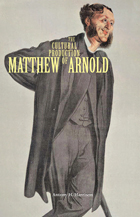
The career of Matthew Arnold as an eminent poet and the preeminent critic of his generation constitutes a remarkable historical spectacle orchestrated by a host of powerful Victorian cultural institutions.
The Cultural Production of Matthew Arnold investigates these constructions by situating Arnold’s poetry in a number of contexts that partially shaped it. Such analysis revises our understanding of the formation of the elite (and elitist) male literary-intellectual subject during the 1840s and 1850s, as Arnold attempts self-definition and strives simultaneously to move toward a position of ideological influence upon intellectual institutions that were contested sites of economic, social, and political power in his era.
Antony H. Harrison reopens discussion of selected works by Arnold in order to make visible some of their crucial sociohistorical, intertextual, and political components. Only by doing so can we ultimately view the cultural work of Arnold “steadily and … whole,” and in a fashion that actually eschews this mystifying premise of all Arnoldian inquiry which, by the early twentieth century, had become wholly naturalized in the academy as ideology.
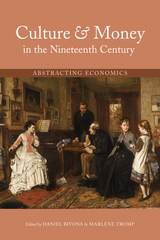
Since the 1980s, scholars have made the case for examining nineteenth-century culture—particularly literary output—through the lens of economics. In Culture and Money in the Nineteenth Century: Abstracting Economics, two luminaries in the field of Victorian studies, Daniel Bivona and Marlene Tromp, have collected contributions from leading thinkers that push New Economic Criticism in new and exciting directions.
Spanning the Americas, India, England, and Scotland, this volume adopts an inclusive, global view of the cultural effects of economics and exchange. Contributors use the concept of abstraction to show how economic thought and concerns around money permeated all aspects of nineteenth-century culture, from the language of wills to arguments around the social purpose of art.
The characteristics of investment and speculation; the fraught symbolic and practical meanings of paper money to the Victorians; the shifting value of goods, services, and ideas; the evolving legal conceptualizations of artistic ownership—all of these, contributors argue, are essential to understanding nineteenth-century culture in Britain and beyond.
Contributors: Daniel Bivona, Suzanne Daly, Jennifer Hayward, Aeron Hunt, Roy Kreitner, Kathryn Pratt Russell, Cordelia Smith, and Marlene Tromp.
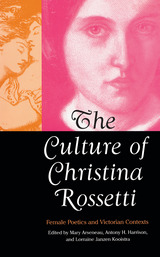
The Culture of Christina Rossetti explores a “new” Christina Rossetti as she emerges from the scrutiny of the particular historical and cultural context in which she lived and wrote. The essays in this collection demonstrate how the recluse, saint, and renunciatory spinster of former studies was in fact an active participant in her society’s attempt to grapple with new developments in aesthetics, theology, science, economics, and politics.
The volume examines Rossetti’s poetry, fiction, and nonfiction from a variety of theoretical and critical perspectives in order to reevaluate her place in the Victorian world of art, literature, and ideas. The essays offer a radical rethinking of her best-known poems, retrieve neglected works, establish the diversity of her writing, and reposition Rossetti within a canon continually under formation.
Contributing to the ongoing retrieval of the nineteenth-century woman poet, The Culture of Christina Rossetti highlights Rossetti’s responses to both male and female literary traditions and explores her incorporation and revision of literary influences from medieval Italian sources to contemporary writers.

In this striking social history, Barbara M. Benedict draws on the texts of the early modern period to discover the era's attitudes toward curiosity, a trait we learn was often depicted as an unsavory form of transgression or cultural ambition.
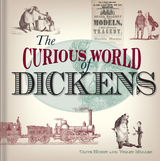
Published to celebrate the twohundredth anniversary of Dickens’s birth, this book brings together quotations from Dickens’s novels and letters with photographs of their original covers and Victorian-era images—among them, prints, posters, and newspaper pieces—that shed light on the topics about which Dickens writes. Ordered by theme, the book covers such topics as schools in Victorian England, domestic entertainment, the introduction of the railroad, and the poor conditions in prisons and workhouses, which loom large in Dickens’s novels—and, indeed, his own childhood. Dickens was also an avid theater enthusiast who arranged productions and public readings of many of his works, and this book explores his role throughout his later years in adroitly adapting his novels for the stage.
The Curious World of Dickens breathes new life on this momentous occasion into the vibrant world inhabited by Dickens and his characters.
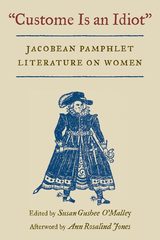
During the early seventeenth century a fierce debate raged in British intellectual society regarding the role of women, how much is ordained by God, and how much is merely custom. The pamphlets that circulated at the time reveal a great deal about the terms of the debate, and these six constitute a significant body of primary literature, allowing the contending voices to be heard anew.
Included here are two pamphlets about gossips by Samuel Rowlands, William Heale's treatise against wife-beating, Christopher Newstead's argument for the superiority of women, and Hic Mulier and Haec Vir, two pamphlets that address the theme of cross-dressing. Introductions by Susan Gushee O'Malley place each pamphlet in a wider context, and detailed annotations shed light on the individual texts.
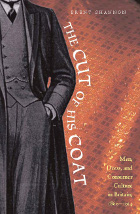
The English middle class in the late nineteenth century enjoyed an increase in the availability and variety of material goods. With that, the visual markers of class membership and manly behavior underwent a radical change. In The Cut of His Coat: Men, Dress, and Consumer Culture in Britain, 1860–1914, Brent Shannon examines familiar novels by authors such as George Eliot, Anthony Trollope, Thomas Hughes, and H. G. Wells, as well as previously unexamined etiquette manuals, period advertisements, and fashion monthlies, to trace how new ideologies emerged as mass-produced clothes, sartorial markers, and consumer culture began to change.
While Victorian literature traditionally portrayed women as having sole control of class representations through dress and manners, Shannon argues that middle-class men participated vigorously in fashion. Public displays of their newly acquired mannerisms, hairstyles, clothing, and consumer goods redefined masculinity and class status for the Victorian era and beyond.
The Cut of His Coat probes the Victorian disavowal of men’s interest in fashion and shopping to recover men’s significant role in the representation of class through self-presentation and consumer practices.
In her modern translation of Cymbeline, Andrea Thome takes up one of Shakespeare’s most complex plays. Thome’s update brings the play’s language into the present, highlighting new resonances and providing a more accessible version of Shakespeare’s play for today’s audiences. One of Shakespeare’s final plays, Cymbeline tells the story of the British king Cymbeline and his daughter, Imogen. It is a tale of deceit and jealousy, with accusations of infidelity that often draw comparisons to Othello and The Winter’s Tale.
This translation of Cymbeline was written as part of the Oregon Shakespeare Festival’s Play On! project, which commissioned new translations of thirty-nine Shakespeare plays. These translations present the work of “The Bard” in language accessible to modern audiences while never losing the beauty of Shakespeare’s verse. Enlisting the talents of a diverse group of contemporary playwrights, screenwriters, and dramaturges from diverse backgrounds, this project reenvisions Shakespeare for the twenty-first century. These volumes make these works available for the first time in print—a new First Folio for a new era.
READERS
Browse our collection.
PUBLISHERS
See BiblioVault's publisher services.
STUDENT SERVICES
Files for college accessibility offices.
RECENTLY PUBLISHED






UChicago Accessibility Resources
home | accessibility | search | about | contact us
BiblioVault ® 2001 - 2025
The University of Chicago Press