
 A SCHOLARLY BOOK REPOSITORY
18 start with C start with C
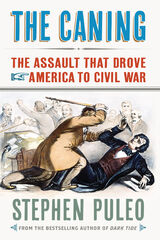
Early in the afternoon of May 22, 1856, ardent pro-slavery Congressman Preston S. Brooks of South Carolina strode into the United States Senate Chamber in Washington, D.C., and began beating renowned anti-slavery Senator Charles Sumner with a gold-topped walking cane. Brooks struck again and again—more than thirty times across Sumner’s head, face, and shoulders—until his cane splintered into pieces and the helpless Massachusetts senator, having nearly wrenched his desk from its fixed base, lay unconscious and covered in blood. It was a retaliatory attack. Forty-eight hours earlier, Sumner had concluded a speech on the Senate floor that had spanned two days, during which he vilified Southern slaveowners for violence occurring in Kansas, called Stephen A. Douglas of Illinois a “noise-some, squat, and nameless animal,” and famously charged Brooks’s second cousin, South Carolina Senator Andrew Butler, as having “a mistress. . . who ugly to others, is always lovely to him. . . . I mean, the harlot, Slavery.” Brooks not only shattered his cane during the beating, but also destroyed any pretense of civility between North and South.
One of the most shocking and provocative events in American history, the caning convinced each side that the gulf between them was unbridgeable and that they could no longer discuss their vast differences of opinion regarding slavery on any reasonable level.The Caning: The Assault That Drove America to Civil War tells the incredible story of this transformative event. While Sumner eventually recovered after a lengthy convalescence, compromise had suffered a mortal blow. Moderate voices were drowned out completely; extremist views accelerated, became intractable, and locked both sides on a tragic collision course.
The caning had an enormous impact on the events that followed over the next four years: the meteoric rise of the Republican Party and Abraham Lincoln; the Dred Scott decision; the increasing militancy of abolitionists, notably John Brown’s actions; and the secession of the Southern states and the founding of the Confederacy. As a result of the caning, the country was pushed, inexorably and unstoppably, to war. Many factors conspired to cause the Civil War, but it was the caning that made conflict and disunion unavoidable five years later.
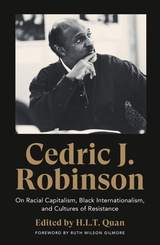
"Like W. E. B. Du Bois, Michel Foucault, Sylvia Wynter, and Edward Said, Robinson was that rare polymath capable of seeing the whole....He left behind a body of work to which we must return constantly and urgently"—Robin D. G. Kelley, author of Freedom Dreams
Cedric J. Robinson is one of the doyens of Black Studies and a pioneer in study of the Black Radical Tradition. His works have been essential texts, deconstructing racial capitalism and inspiring insurgent movements from Ferguson, Missouri to the West Bank. For the first time, Robinson's essays come together, spanning over four decades and reflective of his diverse interests in the interconnections between culture and politics, radical social theory, and classic and modern political philosophy.
Themes explored include Africa and Black internationalism, World politics, race and US Foreign Policy, representations of blackness in popular culture, and reflections on popular resistance to racial capitalism, white supremacy and more. Essays here include:
*The Black Detective and American Memory
*Slavery and the Platonic Origins of Anti-Democracy
*Africa: In Hock to History and the Banks
*Blaxploitation and the Misrepresentation of Liberalism
*The Mulatta on Film
*Race, Capitalism, and Anti-democracy
*The Killing in Ferguson
*And much more!
Accompanied by an introduction by H. L. T. Quan and a foreword by Ruth Wilson Gilmore, this collection, which includes previously unpublished materials, extends the many contributions by a giant in Black radical thought.

In this engaging book, David Brion Davis offers an illuminating perspective on American slavery. Starting with a long view across the temporal and spatial boundaries of world slavery, he traces continuities from the ancient world to the era of exploration, with its expanding markets and rise in consumption of such products as sugar, tobacco, spices, and chocolate, to the conditions of the New World settlement that gave rise to a dependence on the forced labor of millions of African slaves. With the American Revolution, slavery crossed another kind of boundary, in a psychological inversion that placed black slaves outside the dream of liberty and equality—and turned them into the Great American Problem.
Davis then delves into a single year, 1819, to explain how an explosive conflict over the expansion and legitimacy of slavery, together with reinterpretations of the Bible and the Constitution, pointed toward revolutionary changes in American culture. Finally, he widens the angle again, in a regional perspective, to discuss the movement to colonize blacks outside the United States, the African-American impact on abolitionism, and the South's response to slave emancipation in the British Caribbean, which led to attempts to morally vindicate slavery and export it into future American states. Challenging the boundaries of slavery ultimately brought on the Civil War and the unexpected, immediate emancipation of slaves long before it could have been achieved in any other way.
This imaginative and fascinating book puts slavery into a brilliant new light and underscores anew the desperate human tragedy lying at the very heart of the American story.
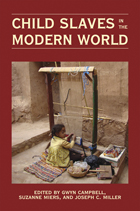
Child Slaves in the Modern World is the second of two volumes that examine the distinctive uses and experiences of children in slavery in the nineteenth and twentieth centuries. This collection of previously unpublished essays exposes the global victimization of child slaves from the period of abolition of legal slavery in the nineteenth century to the human rights era of the twentieth century. It contributes to the growing recognitionthat the stereotypical bonded male slave was in fact a rarity.
Nine of the studies are historical, with five located in Africa and three covering Latin America from the British Caribbean to Chile. One study follows the children liberated in the famousAmistad incident (1843). The remaining essays cover contemporary forms of child slavery, from prostitution to labor to forced soldiering.
Child Slaves in the Modern World adds historical depth to the current literature on contemporary slavery, emphasizing the distinctive vulnerabilities of children, or effective equivalents,that made them particularly valuable to those who could acquire and control them. The studies also make clear the complexities of attempting to legislate or decree regulations limiting practices that appear to have been—and continue to be —ubiquitous around the world.
Contributors: Benjamin N. Lawrance, Gwyn Campbell, Cecily Jones, Sue Taylor, Nara Milanich, Martin Klein, Bernard Moitt, Trevor R. Getz, William G. Clarence-Smith, Jonathan Blagbrough, Philip Whalen, Malika Id’ Salah, Zosa de Sas Kropiwnicki, Sarah Maguire, and Mike Dottridge.
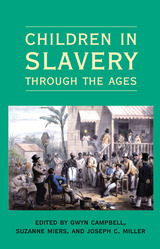
Significant numbers of the people enslaved throughout world history have been children. The vast literature on slavery has grown to include most of the history of this ubiquitous practice, but nearly all of it concentrates on the adult males whose strong bodies and laboring capacities preoccupied the masters of the modern Americas. Children in Slavery through the Ages examines the children among the enslaved across a significant range of earlier times and other places; its companion volume will examine the children enslaved in recent American contexts and in the contemporary/modern world.
This is the first collection to focus on children in slavery. These leading scholars bring our thinking about slaving and slavery to new levels of comprehensiveness and complexity. They further provide substantial historical depth to the abuse of children for sexual and labor purposes that has become a significant humanitarian concern of governments and private organizations around the world in recent decades.
The collected essays in Children in Slavery through the Ages fundamentally reconstruct our understanding of enslavement by exploring the often-ignored role of children in slavery and rejecting the tendency to narrowly equate slavery with the forced labor of adult males. The volume’s historical angle highlights many implications of child slavery by examining the variety of children’s roles—as manual laborers and domestic servants to court entertainers and eunuchs—and the worldwide regions in which the child slave trade existed.
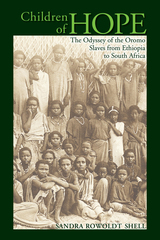
In Children of Hope, Sandra Rowoldt Shell traces the lives of sixty-four Oromo children who were enslaved in Ethiopia in the late-nineteenth century, liberated by the British navy, and ultimately sent to Lovedale Institution, a Free Church of Scotland mission in the Eastern Cape, South Africa, for their safety. Because Scottish missionaries in Yemen interviewed each of the Oromo children shortly after their liberation, we have sixty-four structured life histories told by the children themselves.
In the historiography of slavery and the slave trade, first passage narratives are rare, groups of such narratives even more so. In this analytical group biography (or prosopography), Shell renders the experiences of the captives in detail and context that are all the more affecting for their dispassionate presentation. Comparing the children by gender, age, place of origin, method of capture, identity, and other characteristics, Shell enables new insights unlike anything in the existing literature for this region and period.
Children of Hope is supplemented by graphs, maps, and illustrations that carefully detail the demographic and geographic layers of the children’s origins and lives after capture. In this way, Shell honors the individual stories of each child while also placing them into invaluable and multifaceted contexts.

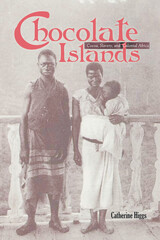
In Chocolate Islands: Cocoa, Slavery, and Colonial Africa, Catherine Higgs traces the early-twentieth-century journey of the Englishman Joseph Burtt to the Portuguese colony of São Tomé and Príncipe—the chocolate islands—through Angola and Mozambique, and finally to British Southern Africa. Burtt had been hired by the chocolate firm Cadbury Brothers Limited to determine if the cocoa it was buying from the islands had been harvested by slave laborers forcibly recruited from Angola, an allegation that became one of the grand scandals of the early colonial era. Burtt spent six months on São Tomé and Príncipe and a year in Angola. His five-month march across Angola in 1906 took him from innocence and credulity to outrage and activism and ultimately helped change labor recruiting practices in colonial Africa.
This beautifully written and engaging travel narrative draws on collections in Portugal, the United Kingdom, and Africa to explore British and Portuguese attitudes toward work, slavery, race, and imperialism. In a story still familiar a century after Burtt’s sojourn, Chocolate Islands reveals the idealism, naivety, and racism that shaped attitudes toward Africa, even among those who sought to improve the conditions of its workers.

This beautifully written and engaging travel narrative draws on collections in Portugal, the United Kingdom, and Africa to explore British and Portuguese attitudes toward work, slavery, race, and imperialism. In a story still familiar a century after Burtt’s sojourn, Chocolate Islands reveals the idealism, naivety, and racism that shaped attitudes toward Africa, even among those who sought to improve the conditions of its workers.
Chocolate on Trial: Cadbury, Slavery and the Economics of Virtue in Imperial Britain gives a lively and highly readable account of the events surrounding the libel trial in which Cadbury Bros. Ltd. sued the London Standard, following the newspaper's accusation that the firm was hypocritical in its use of slave-grown cocoa. As compelling now as at the turn of the previous century, the issues probed by Lowell J. Satre give invaluable historical background to contemporary issues of business ethics, corporate social responsibility, and globalization. The story Satre tells illuminates what a stubbornly persistent institution slavery was and shows how Cadbury, a company with a well-regarded brand name and logo, endured ethical dilemmas and challenges to its record for social responsibility. Chocolate on Trial brings to life the age-old conflict between economic interests and the value of human life.
Satre illuminates the stubborn persistence of the institution of slavery and shows how Cadbury, a company with a well-regarded brand name from the nineteenth century, faced ethical dilemmas and challenges to its record for social responsibility. Chocolate on Trial brings to life the age-old conflict between economic interests and regard for the dignity of human life.
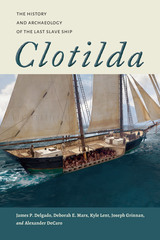
Documents the maritime historical research and archaeological fieldwork used to identify the wreck of the notorious schooner Clotilda
Clotilda: The History and Archaeology of the Last Slave Ship is the first definitive work to examine the maritime historical and archaeological record of one of the most infamous ships in American history. Clotilda was owned by Alabama businessman Timothy Meaher, who, on a dare, equipped it to carry captured Africans from what is now Benin and bring them to Alabama in 1860—some fifty years after the import of captives to be enslaved was banned. To hide the evidence, Clotilda was set afire and sunk.
What remained was a substantially intact, submerged, and partially buried shipwreck located in a backwater of the Mobile River. The site of the wreck was an open secret to some people who knew Meaher, but its identity remained unknown for more than a century as various surveys through the years failed to locate the ship.
This volume, authored by the archaeological team who conducted a comprehensive, systematic survey of a forgotten “ship graveyard,” details the exhaustive forensic work that conclusively identified the wreck, as well as the stories and secrets that have emerged from the partly burned hulk. James P. Delgado and his coauthors discuss the various searches for Clotilda, sharing the forensic data and other analyses showing how those involved concluded that this wreck was indeed Clotilda. Additionally, they offer physical evidence not previously shared that situates the schooner and its voyage in a larger context of the slave trade.
Clotilda: The History and Archaeology of the Last Slave Ship serves as a nautical biography of the ship as well. After reviewing the maritime trade in and out of Mobile Bay, this account places Clotilda within the larger landscape of American and Gulf of Mexico schooners and chronicles its career before being used as a slave ship. All of its voyages had a link to slavery, and one may have been another smuggling voyage in violation of federal law. The authors have also painstakingly reconstructed Clotilda’s likely appearance and characteristics.
Pulitzer Prize Finalist
Winner of the Frederick Douglass Book Prize
Winner of the Merle Curti Award
“McCurry strips the Confederacy of myth and romance to reveal its doomed essence. Dedicated to the proposition that men were not created equal, the Confederacy had to fight a two-front war. Not only against Union armies, but also slaves and poor white women who rose in revolt across the South. Richly detailed and lucidly told, Confederate Reckoning is a fresh, bold take on the Civil War that every student of the conflict should read.”
—Tony Horwitz, author of Confederates in the Attic
“McCurry challenges us to expand our definition of politics to encompass not simply government but the entire public sphere. The struggle for Southern independence, she shows, opened the door for the mobilization of two groups previously outside the political nation—white women of the nonslaveholding class and slaves…Confederate Reckoning offers a powerful new paradigm for understanding events on the Confederate home front.”
—Eric Foner, The Nation
“Perhaps the highest praise one can offer McCurry’s work is to say that once we look through her eyes, it will become almost impossible to believe that we ever saw or thought otherwise…At the outset of the book, McCurry insists that she is not going to ask or answer the timeworn question of why the South lost the Civil War. Yet in her vivid and richly textured portrait of what she calls the Confederacy’s ‘undoing,’ she has in fact accomplished exactly that.”
—Drew Gilpin Faust, New Republic
“A brilliant, eye-opening account of how Southern white women and black slaves fatally undermined the Confederacy from within.”
—Edward Bonekemper, Civil War News
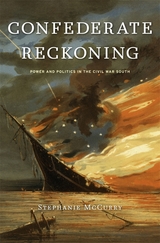
The story of the Confederate States of America, the proslavery, antidemocratic nation created by white Southern slaveholders to protect their property, has been told many times in heroic and martial narratives. Now, however, Stephanie McCurry tells a very different tale of the Confederate experience. When the grandiosity of Southerners’ national ambitions met the harsh realities of wartime crises, unintended consequences ensued. Although Southern statesmen and generals had built the most powerful slave regime in the Western world, they had excluded the majority of their own people—white women and slaves—and thereby sowed the seeds of their demise.
Wartime scarcity of food, labor, and soldiers tested the Confederate vision at every point and created domestic crises to match those found on the battlefields. Women and slaves became critical political actors as they contested government enlistment and tax and welfare policies, and struggled for their freedom. The attempt to repress a majority of its own population backfired on the Confederate States of America as the disenfranchised demanded to be counted and considered in the great struggle over slavery, emancipation, democracy, and nationhood. That Confederate struggle played out in a highly charged international arena.
The political project of the Confederacy was tried by its own people and failed. The government was forced to become accountable to women and slaves, provoking an astounding transformation of the slaveholders’ state. Confederate Reckoning is the startling story of this epic political battle in which women and slaves helped to decide the fate of the Confederacy and the outcome of the Civil War.
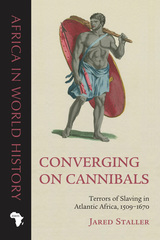
In Converging on Cannibals, Jared Staller demonstrates that one of the most terrifying discourses used during the era of transatlantic slaving—cannibalism—was coproduced by Europeans and Africans. When these people from vastly different cultures first came into contact, they shared a fear of potential cannibals. Some Africans and European slavers allowed these rumors of themselves as man-eaters to stand unchallenged. Using the visual and verbal idioms of cannibalism, people like the Imbangala of Angola rose to power in a brutal world by embodying terror itself.
Beginning in the Kongo in the 1500s, Staller weaves a nuanced narrative of people who chose to live and behave as “jaga,” alleged cannibals and terrorists who lived by raiding and enslaving others, culminating in the violent political machinations of Queen Njinga as she took on the mantle of “Jaga” to establish her power. Ultimately, Staller tells the story of Africans who confronted worlds unknown as cannibals, how they used the concept to order the world around them, and how they were themselves brought to order by a world of commercial slaving that was equally cannibalistic in the human lives it consumed.
READERS
Browse our collection.
PUBLISHERS
See BiblioVault's publisher services.
STUDENT SERVICES
Files for college accessibility offices.
RECENTLY PUBLISHED





UChicago Accessibility Resources
home | accessibility | search | about | contact us
BiblioVault ® 2001 - 2026
The University of Chicago Press