
 A SCHOLARLY BOOK REPOSITORY
15 start with C start with C
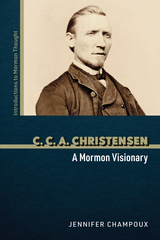
Drawing on the artist’s voluminous writings, Jennifer Champoux illuminates Christensen’s influential art, including recently rediscovered works. Christensen received Church commissions and approval and helped shape Latter-day Saints’ vision of themselves. Over time the work of other artists eclipsed his achievements, but a twenty-first century revival of interest began to restore his reputation. Champoux also profiles how Christensen’s expansive activities outside of the art world gave him a unique vantage point for chronicling how the Latter-day Saint faith and culture evolved in Utah.
A revealing intellectual biography, C. C. A. Christensen offers a rare in-depth look at a major Latter-day Saint artist.

Cai Guo-Qiang (China, b. 1957) is among the most prominent contemporary artists active today. His prolific, diverse creative practice—which includes gunpowder drawings and paintings, explosion events, videos, multimedia installations, and site-specific works—draws on a personal belief system that freely blends symbols and tenets from Eastern and Western traditions. Cai’s output seeks to establish dialogues among different cultures, different periods of time, and even different species—always while probing our shared humanity and the connections that can be divined across space and time, out of chaos and disorder. Based on in-depth interviews between the author and artist and with studio assistants, as well as extensive examination, sampling, and scientific analysis of a wide range of artworks, this publication addresses the implications of Cai’s distinctive materials and processes and their associated conservation issues.
Written for conservation scientists, conservators, specialists in contemporary art history, museum curators, collections managers, practicing artists, collectors, and art enthusiasts, this book offers insights into the life, methods, and materials of a leading figure in the art world. The technical discussions provide essential findings that will inform strategies for the future care of his works.
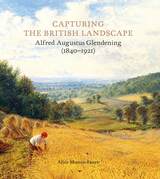
Though critics often reviewed Alfred Augustus Glendening’s exhibitions, very little has been written about the artist himself. Here, new and extensive research removes layers of mystery and misinformation about his life, family, and career, accurately placing him amid the British art world during much of the nineteenth and into the twentieth century. Glendening was a man from humble origins, working full-time as a railway clerk when he managed to make his London exhibition debut at the age of twenty—a feat that would have been almost impossible before the Victorian era ushered in new possibilities of social mobility. Although his paintings show a tranquil and unspoiled landscape, his environment was rapidly being transformed by social, scientific, and industrial developments, while advances in transport, photography, and other technical discoveries undoubtedly influenced him and his fellow painters.
Celebrating his uniquely Victorian story, the book places Glendening within his proper historical context. Running alongside the main text is a timeline outlining significant landmarks, from political and social events to artistic and technical innovations. Thoroughly researched, the narrative explores why and for whom he painted, his artistic training, and his various inspirations. The book uncovers new information about the Victorian art world and embraces such aspects as Royal Academy prejudices, the popularity of Glendening’s work at home and abroad, his use of photography, and the sourcing of his art materials.

At the dawn of the twentieth century, Henry Adams proclaimed that the machine was as central to our modem American culture as the Virgin was to medieval culture. We worshiped in our factories as our ancestors worshiped in cathedrals. In this century we also raised up bridges, grain elevators, and skyscrapers, and many were dazzled by these symbols of the Machine Age--from American presidents such as Calvin Coolidge to European artists such as Marcel Duchamp. Charles Sheeler (1886-1965) was one of the most noted American painters and photographers to embrace the iconography of the machine. But was he high priest or heretic in the religion of mass production and technology that dominated his era?
Karen Lucic considers this intriguing question while telling us Sheeler's story: his coming of age, his achievement of artistic independence in the teens and twenties, and his later treatments of Machine Age subjects throughout the years of the Depression and World War II. The author shows us how--in paintings, drawings, and photographs depicting New York skyscrapers, Henry Ford's automobile factories, and machine-dominated interiors--Sheeler produced images of extraordinary aesthetic power that provocatively confirmed America's technological and industrial prestige in clear, vivid, and exact detail.
Do these compelling works establish Sheeler as a champion of the Machine Age? Most of the artist's contemporaries thought so. "Sheeler was objective before the rest of us were," claimed his friend Edward Steichen, and critics either lauded or assailed Sheeler for his seemingly straightforward acceptance of the machine. He is misunderstood today for the same reason. In the post-industrial era, Sheeler has been attacked for objectifying his subjects, for eliminating the human element from the modern landscape, and ultimately for complicity in the mechanization of the world he so accurately portrayed.
By closely investigating Sheeler's social and aesthetic contexts and through exceptionally clear and convincing visual analysis, Karen Lucic reinterprets the work of this important modernist. She argues that his images do not celebrate the machine but question its predominance during his time. They provoke us to confront the social consequences of modern technology.
Sheeler appears in this book as neither believer nor heretic in the cult of the machine. Lucic asks us to grant Sheeler his ambivalence, for it was his ambivalence that enabled him to portray modernity so splendidly.
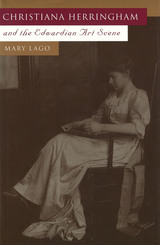
Christiana Herringham (1852-1929), an expert copyist of the Italian Old Masters, was an extraordinary and accomplished woman. Her achievements required a delicate balance, for she had to negotiate old Victorian restrictions in order "to find and fortify a place for herself" in the male-dominated spheres of fine-art administration and public service.
Lady Herringham arrived on the Edwardian art scene with a translation of Il Libro dell' Arte o Trattato della Pittura, Cennini's fifteenth-century handbook on fresco and tempera. It aroused new interest in those techniques and led to the founding of the Society of Painters in Tempera in 1901. To preserve Britain's art heritage from buyers abroad, she provided the money that launched the National Art Collections Fund in 1903, creating what is still a vital and authoritative voice in Britain's cultural life. Her work as the only woman on the NACF's first executive committee prepared her to assist in founding the India Society, which urged respect for indigenous Indian traditions of the fine arts and encouraged appreciation for them in England.
Her concern for undervalued art led her to India to copy the Buddhist wall paintings in the Ajanta caves near Hyderabad. Her copies are the only color record of their condition during those years. Sadly, as she returned from India in 1911, Lady Herringham began to suffer from delusions of pursuit and persecution and withdrew to an asylum, where she remained until her death. There were then no satisfactory explanations for her symptoms, only the Victorian medical premise that insanity was an extension of physical illness.
A distinguished Edwardian scholar, Mary Lago has used her knowledge of the cultural history of the period to bring significant insight into the personal and professional conflicts Lady Herringham faced during a time of limited opportunities for women. Lago also discusses the issue of nationalism in art and the role of colonial imperialism in defining and preserving art. As a postscript, she presents the fascinating possibility that Christiana Herringham's experience may have inspired the character of Mrs. Moore in E. M. Forster's A Passage to India.
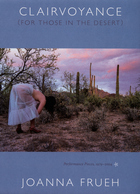
Frueh’s performances are unabashedly autobiographical, as likely to reflect her scholarship as a feminist art historian as her love affairs or childhood memories. For Frueh, eros and self-love are part of a revolutionary feminist strategy; her work exemplifies the physicality and embrace of pleasure that she finds wanting in contemporary feminist theory. Scholarly and rigorous yet playful in tone, her performances are joyful, filled with eroticism, flowers, sexy costumes, and beautiful colors, textures, and scents. Recurring themes include Frueh’s passionate attachment to the desert landscape and the idea of transformation: a continual reaching for clarity of thought and feeling.
In an afterword as lyrical and breathless as her performance pieces, Frueh explores her identification with the desert and its influence on her art. Clairvoyance (For Those In The Desert) includes a detailed chronology of Frueh’s performances.
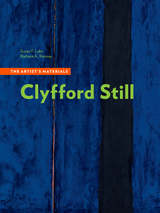
Among the most radical of the great American Abstract Expressionist painters, Clyfford Still has also long been among the least studied. Still severed ties with the commercial art world in the early 1950s, and his estate at the time of his death in 1980 comprised some 3,125 artworks—including more than 800 paintings—that were all but unknown to the art world. Susan F. Lake and Barbara A. Ramsay were granted access to this collection by the estate and by the Clyfford Still Museum in Denver, which houses this immense corpus today.
This volume, based on the authors’ materials research and enriched by their unprecedented access to Still’s artworks, paints, correspondence, studio records, and personal library, provides the first detailed account of his materials, working methods, and techniques. Initial chapters provide an engaging and erudite overview of the artist's life. Subsequent chapters trace the development of his visionary style, offer in-depth materials analysis of selected works from each decade of his career, and suggest new approaches to the care and conservation of his paintings. There is also a series of technical appendices as well as a full bibliography.
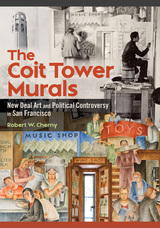
Created in 1934, the Coit Tower murals were sponsored by the Public Works of Art Project (PWAP), the first of the New Deal art programs. Twenty-five master artists and their assistants worked there, most of them in buon fresco, Nearly all of them drew upon the palette and style of Diego Rivera. The project boosted the careers of Victor Arnautoff, Lucien Labaudt, Bernard Zakheim, and others, but Communist symbols in a few murals sparked the first of many national controversies over New Deal art.
Sixty full-color photographs illustrate Robert Cherny’s history of the murals from their conception and completion through their evolution into a beloved San Francisco landmark. Cherny traces and critiques the treatment of the murals by art critics and historians. He also probes the legacies of Coit Tower and the PWAP before surveying San Francisco’s recent controversies over New Deal murals.
An engaging account of an artistic landmark, The Coit Tower Murals tells the full story behind a public art masterpiece.
The Collaborative Artist’s Book offers a rare glimpse into collaborations between poets and painters from 1945 to the present, and highlights how the artist’s book became a critical form for experimental American artists in the twentieth and twenty-first centuries. Alexandra Gold provides a broad overview of the artist’s book form and the many ongoing debates and challenges, from the disciplinary to the institutional, that these forms continue to pose.
Gold presents five case studies and details not only how each individual collaboration came to be but how all five together engage and challenge conventional ideals about art, subjectivity, poetry, and interpersonal relations, as well as complex social questions related to gender and race. Taking several of these books out of special collections libraries and museum archives and making them available to a broad readership, Gold brings to light a whole genre that has been largely forgotten or neglected.

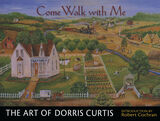
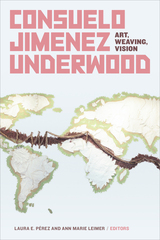
Contributors. Constance Cortez, Karen Mary Davalos, Carmen Febles, M. Esther Fernández, Christine Laffer, Ann Marie Leimer, Amalia Mesa-Bains, Robert Milnes, Jenell Navarro, Laura E. Pérez, Marcos Pizarro, Verónica Reyes, Clara Román-Odio, Carol Sauvion, Cristina Serna, Emily Zaiden
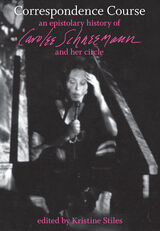
Kristine Stiles selected, edited, annotated, and wrote the introduction to the letters, assembling them so that readers can follow the development of Schneemann’s art, thought, and private and public relationships. The correspondence chronicles a history of energy and invention, joy and sorrow, and charged personal and artistic struggles. It sheds light on the internecine aesthetic politics and mundane activities that constitute the exasperating vicissitudes of making art, building an artistic reputation, and negotiating an industry as unpredictable and demanding as the art world in the mid- to late twentieth century.
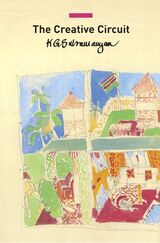
What conception does a modern artist or critic have of contemporary art activity? How do modern artists react to their environment and cultural inheritance? And what general norms of achievement can we think of in the highly heterogeneous art scene of today? In Creative Circuit, K. G. Subramanyan, one of India's most celebrated artists, draws upon his considerable experience as a practicing artist and theoretician to engage with these concerns from a modern Indian perspective.
Through a series of five lectures, Subramanyan critically examines key concepts such as modernity, eclecticism, and nostalgia, which have become integral to contemporary art discourse. He provocatively questions the perceptions, illusions, and emotional motivations driving artistic expression in today's heterogeneous art scene, prompting readers to reconsider established norms of achievement in the context of evolving artistic practices. With over one hundred color illustrations complementing Subramanyan's insightful discourse, Creative Circuit offers a visually engaging exploration of the interplay between tradition and innovation in contemporary art.
Subramanyan played a pivotal role in shaping India’s artistic identity after Independence. Mani-da, as he was fondly called, seamlessly blended elements of modernism with folk expression in his works, spanning paintings, murals, sculptures, prints, set designs, and toys. Beyond his visual artistry, his writings have laid a solid foundation for understanding the demands of art on the individual. In the year of his centenary, Seagull is proud to publish his writings in special new editions.
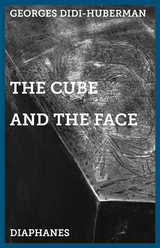
With The Cube and the Face, renowned French art historian and philosopher Georges Didi-Huberman has conducted a careful analysis of Cube, consulting the artist’s sketches, etchings, texts, and other sculptural works in the years just before and after Cube was created. Cube, he finds, is indeed exceptional—a work without clear stylistic kinship to the works that came before or after it. At the same time, Didi-Huberman shows, Cube marks the transition between the artist’s surrealist and realist phases and contains many elements of Giacometti’s aesthetic consciousness, including his interest in dimensionality, the relation of the body to geometry, and the portrait—or what Didi-Huberman terms “abstract anthropomorphism.” Drawing on Freud, Bataille, Leiris, and others Giacometti counted as influence, Didi-Huberman presents fans and collectors of Giacometti’s art with a new approach to transitional work.
READERS
Browse our collection.
PUBLISHERS
See BiblioVault's publisher services.
STUDENT SERVICES
Files for college accessibility offices.
RECENTLY PUBLISHED





UChicago Accessibility Resources
home | accessibility | search | about | contact us
BiblioVault ® 2001 - 2025
The University of Chicago Press