
 A SCHOLARLY BOOK REPOSITORY
11 start with C start with C
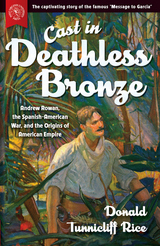
Donald Tunnicliff Rice reveals the facts behind the story of “A Message to García” while using Rowan’s biography as a window into the history of the Spanish-American War, the Philippine War, and the Moro Rebellion. The result is a compellingly written narrative containing many details never before published in any form, and also an accessible perspective on American diplomatic and military history in the late nineteenth and early twentieth centuries.
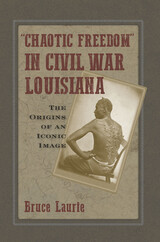
Bruce Laurie uncovers the people and events that created this seminal image, telling the tale of three men, two Yankee soldiers from western Massachusetts who were serving the Union Army in Louisiana and a man named Peter whose scarred back horrified all who saw it. The two soldiers were so shocked by what had been done to Peter, they sought to capture the image and document slavery's cruelty, the likes of which was all too common among those fleeing bondage in Louisiana. Meticulously researched and briskly told, this short volume unearths the story behind an iconic image.
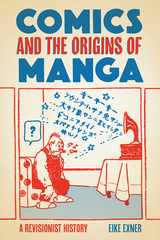
Japanese comics, commonly known as manga, are a global sensation. Critics, scholars, and everyday readers have often viewed this artform through an Orientalist framework, treating manga as the exotic antithesis to American and European comics. In reality, the history of manga is deeply intertwined with Japan’s avid importation of Western technology and popular culture in the early twentieth century.
Comics and the Origins of Manga reveals how popular U.S. comics characters like Jiggs and Maggie, the Katzenjammer Kids, Felix the Cat, and Popeye achieved immense fame in Japan during the 1920s and 1930s. Modern comics had earlier developed in the United States in response to new technologies like motion pictures and sound recording, which revolutionized visual storytelling by prompting the invention of devices like speed lines and speech balloons. As audiovisual entertainment like movies and record players spread through Japan, comics followed suit. Their immediate popularity quickly encouraged Japanese editors and cartoonists to enthusiastically embrace the foreign medium and make it their own, paving the way for manga as we know it today.
By challenging the conventional wisdom that manga evolved from centuries of prior Japanese art and explaining why manga and other comics around the world share the same origin story, Comics and the Origins of Manga offers a new understanding of this increasingly influential artform.
Conceptual Harmonies develops an original account of G. W. F. Hegel’s perplexing Science of Logic from a simple insight: philosophical and mathematical thought have shaped each other since classical times. Situating Science of Logic within the rise of modern mathematics, Redding stresses Hegel’s attention to Pythagorean ratios, Platonic reason, and Aristotle’s geometrically inspired logic. He then explores how later traditions shaped Hegel’s world, through both Leibniz and new forms of algebraic geometry. This enlightening reading recovers an overlooked stream in Hegel’s philosophy that remains, Redding argues, important for contemporary conceptions of logic.

2026 Al Lowman Memorial Prize, Texas State Historical Association (TSHA)
Shortlisted, CSAW Bonney MacDonald Outstanding Book Award
How West Texas business and culture molded the rise of conservatism in the United States.
Much of what we understand as modern American political conservatism was born in West Texas, where today it predominates. How did the people of such a vast region—larger than New England and encompassing big cities like Lubbock and Amarillo, as well as tiny towns from Anson to Dalhart—develop such a uniform political culture? And why and how did it go national?
Jeff Roche finds answers in the history of what he calls cowboy conservatism. Political power players matter in this story, but so do football coaches, newspaper editors, and a breakfast cereal tycoon who founded a capitalist utopia. The Conservative Frontier follows these and other figures as they promoted an ideology grounded in the entrepreneurial and proto-libertarian attitudes of nineteenth-century Texas ranchers, including a fierce devotion to both individualism and small-town notions of community responsibility. This political sensibility was in turn popularized by its association with the mythology and iconography of the cowboy as imagined in twentieth-century mass media. By the 1970s and the rise of Ronald Reagan, Roche shows, it was clear that the cowboy conservatism of West Texas had set the stage for the emergence of the New Right—the more professionalized and tech-savvy operation that dominated national conservative politics for the next quarter century.
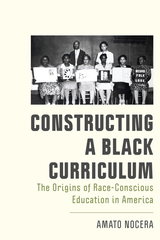
Constructing a Black Curriculum reframes how we understand Black Americans’ intellectual and political engagement with education during the first half of the twentieth century. It traces the powerful, diffuse movement created by Black Americans to build what Nocera calls a “Black Curriculum:" a communal effort to represent Black identity, guide racial consciousness, and rebut claims of inferiority. This curriculum first developed as a public educational project in Black learned societies and during the Harlem Renaissance before making its way into schools. The struggle for a Black curriculum was not only a fight against white supremacy, but also an internal debate among Black advocates over the very nature of how race should be represented and taught. This book illuminates this struggle through the work of Black intellectuals (Alexander Crummell, Carter G. Woodson, Hubert Harrison, and Alain Locke) and the intellectual contributions of African American educators (Nannie Burroughs, Jane Dabney Shackelford, and Julia Davis). This essential history provides vital context for contemporary debates over curriculum reform, racial knowledge, and the enduring quest for educational equity.
In Contesting Medical Confidentiality, Andreas-Holger Maehle travels back to the origins of this increasingly relevant issue. He offers the first comparative analysis of professional and public debates on medical confidentiality in the United States, Britain, and Germany during the late nineteenth and early twentieth centuries, when traditional medical secrecy first came under pressure from demands of disclosure in the name of public health. Maehle structures his study around three representative questions of the time that remain salient today: Do physicians have a privilege to refuse court orders to reveal confidential patient details? Is there a medical duty to report illegal procedures to the authorities? Should doctors breach confidentiality in order to prevent the spread of disease? Considering these debates through a unique historical perspective, Contesting Medical Confidentiality illuminates the ethical issues and potentially grave consequences that continue to stir up public debate.
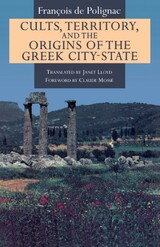
Combining archaeological and textual evidence, de Polignac argues that the eighth-century settlements that would become the city-states of classical Greece were defined as much by the boundaries of "civilized" space as by its urban centers. The city took shape through what de Polignac calls a "religious bipolarity," the cults operating both to organize social space and to articulate social relationships being not only at the heart of the inhabited area, but on the edges of the territory. Together with the urban cults, these sanctuaries "in the wild" identified the polis and its sphere of influence, giving rise to the concept of the state as a territorial unit distinct from its neighbors. Frontier sanctuaries were therefore often the focus of disputes between emerging communities. But in other instances, in particular in Greece's colonizing expeditions, these outer sanctuaries may have facilitated the relations between the indigenous populations and the settlers of the newly founded cities.
Featuring extensive revisions from the original French publication and an updated bibliography, this book is essential for anyone interested in the history and culture of ancient Greece.

Limited to neither a single discipline nor a particular intellectual figure, this book comprehensively views British cultural Marxism in terms of the dialogue between historians and the originators of cultural studies and in its relationship to the new left and feminist movements. From the contributions of Eric Hobsbawm, Christopher Hill, Rodney Hilton, Sheila Rowbotham, Catherine Hall, and E. P. Thompson to those of Perry Anderson, Barbara Taylor, Raymond Williams, Dick Hebdige, and Stuart Hall, Dworkin examines the debates over issues of culture and society, structure and agency, experience and ideology, and theory and practice. The rise, demise, and reorganization of journals such as The Reasoner, The New Reasoner, Universities and Left Review, New Left Review, Past and Present, are also part of the history told in this volume. In every instance, the focus of Dworkin’s attention is the intellectual work seen in its political context. Cultural Marxism in Postwar Britain captures the excitement and commitment that more than one generation of historians, literary critics, art historians, philosophers, and cultural theorists have felt about an unorthodox and critical tradition of Marxist theory.
READERS
Browse our collection.
PUBLISHERS
See BiblioVault's publisher services.
STUDENT SERVICES
Files for college accessibility offices.
RECENTLY PUBLISHED






UChicago Accessibility Resources
home | accessibility | search | about | contact us
BiblioVault ® 2001 - 2026
The University of Chicago Press