
 A SCHOLARLY BOOK REPOSITORY
9 start with C start with C
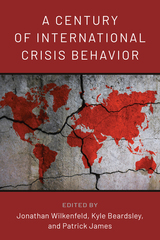
Perhaps more than ever, we need to invest in the study of the causes and consequences of crises. Since its founding in 1975, the International Crisis Behavior (ICB) Project has aimed to better equip academics, policymakers, and the next generation of engaged citizens to make sense of why crises arise and how they can be more effectively managed and prevented. The ICB Project’s data holdings consist of full-length qualitative case studies, along with an expanding range of quantitative datasets that include information regarding the characteristics of the states in crisis, crisis behavior, attempts at third-party crisis management, the role of nonstate actors, and the system-level context.
A Century of International Crisis Behavior summarizes the evolving patterns of international crisis behavior in the more than 500 cases cataloged since 1918, provides an accounting of the state of the scholarship to make sense of the patterns, and presents new findings that advance our understanding. Chapters are grouped according to their level of analysis: studies of systems, dyads, and states. The authors highlight what we have learned and what we have yet to learn regarding the prevention, escalation, and de-escalation of international crises.
Informed and up to date, Challenged Sovereignty explains the effects of today’s globalized problems on the contemporary Caribbean.
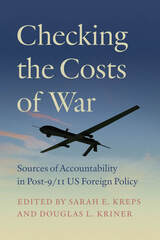
A thorough reassessment of how domestic factors do and do not constrain the use of American military force abroad in the early twenty-first century.
More than two decades have passed since the September 11th terrorist attacks resuscitated debates about the “imperial presidency” within the United States. During that same time, the United States has fought costly and inconclusive wars in Iraq and Afghanistan, pivoted to the Pacific to counter China, and pulled its gaze back to Europe and the Middle East in response to wars in Ukraine and Gaza. Moreover, new technologies and ways of funding and staffing wars have made the costs of war less visible to the public while polarization has increased and a new legal doctrine of presidential power has gained force.
Against this backdrop, Checking the Costs of War reassesses how domestic factors have both constrained and failed to constrain the use of military power across different contexts and over time. Richly empirical chapters explore the varying effects of different kinds of potential checks: legislative, public opinion, and bureaucratic. Collectively, chapters offer new insight into the prospects for war and peace today.
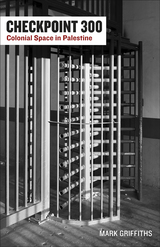
Tracing how a notorious checkpoint shapes power, resistance, and lives in Palestine
Checkpoint 300, the highly securitized border facility between occupied Bethlehem and Jerusalem, is a central feature of Israeli control of Palestinian land and life. An apparatus of turnstiles, overcrowded corridors, and invasive inspections, the checkpoint regulates the movement of hundreds of thousands of Palestinians, granting access to some while excluding most. Offering a nuanced exploration of space, Mark Griffiths reveals Checkpoint 300 as a stark symbol of Israeli colonialism that embodies larger systems of control and violence.
Griffiths’s sensitive and timely work highlights the myriad ways Palestinians are affected by Israel’s spatial control—whether they travel through the checkpoint or not—demonstrating how colonial infrastructures of inequity extend far beyond their physical boundaries to shape daily life. Drawing on nearly a decade of fieldwork, Griffiths examines how colonial power infiltrates family dynamics, enforces gendered mobility restrictions, shapes local economies, and extends into the global exchange of capital and security technologies. He also underscores how Palestinians endure and resist under oppressive conditions and how indigenous forms of life and living are sustained, illuminating how colonial space is contested and countered, unmade and remade.
Blending meticulous research with vivid human stories to show the lived realities of borders, power, and resistance in the West Bank, Checkpoint 300 portrays the checkpoint as an entry into the ways that colonial space is formed through security infrastructure that is both the product and producer of wider geographies of oppression, complicity, and control.
Retail e-book files for this title are screen-reader friendly with images accompanied by short alt text and/or extended descriptions.

As the costs of a preemptive foreign policy in Iraq have become clear, strategies such as containment and deterrence have been gaining currency among policy makers. This comprehensive book offers an agenda for the contemporary practice of deterrence—especially as it applies to nuclear weapons—in an increasingly heterogeneous global and political setting.
Moving beyond the precepts of traditional deterrence theory, this groundbreaking volume offers insights for the use of deterrence in the modern world, where policy makers may encounter irrational actors, failed states, religious zeal, ambiguous power relationships, and other situations where the traditional rules of statecraft do not apply. A distinguished group of contributors here examines issues such as deterrence among the Great Powers; the problems of regional and nonstate actors; and actors armed with chemical, biological, and nuclear weapons. Complex Deterrence will be a valuable resource for anyone facing the considerable challenge of fostering security and peace in the twenty-first century.
When does a reigning great power of the international system supplement military containment of a challenging power by restricting its economic exchanges with that state? Scholars of great power politics have traditionally focused on examining a reigning power’s military containment of a challenging power. In direct contrast, Compound Containment demonstrates that these conventional studies are flawed without a sound understanding of the multilayered aspects of containment strategy in great power politics. Since economic capacity and military power are intimately linked to one another, countering a challenging power requires addressing both economic and military dimensions. Nonetheless, this nexus of security and economy in a reigning power’s response to a challenging power cannot be explained by traditional theories that dominate research in international security. Author Dong Jung Kim fills a gap in the scholarship on great power competition by investigating when a reigning power will make its military containment of a challenging power “compound” by simultaneously employing restrictive economic measures. Its main theoretical claims are corroborated by an analysis of key historical cases of reigning power-challenging power competition. This book also offers policy prescriptions for the United States by examining whether the United States is in a position to complement military containment of China with restrictive economic measures.
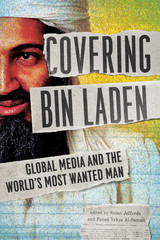
In Covering Bin Laden, editors Susan Jeffords and Fahed Yahya Al-Sumait collect perspectives from global scholars exploring a startling premise: that media depictions of Bin Laden not only diverge but often contradict each other, depending on the media provider and format, the place in which the depiction is presented, and the viewer's political and cultural background. The contributors analyze the representations of the many Bin Ladens, ranging from Al Jazeera broadcasts to video games. They examine the media's dominant role in shaping our understanding of terrorists and why/how they should be feared, and they engage with the ways the mosaic of Bin Laden images and narratives have influenced policies and actions around the world.
Contributors include Fahed Al-Sumait, Saranaz Barforoush, Aditi Bhatia, Purnima Bose, Ryan Croken, Simon Ferrari, Andrew Hill, Richard Jackson, Susan Jeffords, Joanna Margueritte-Giecewicz, Noha Mellor, Susan Moeller, Brigitte Nacos, Courtney C. Radsch, and Alexander Spencer.
READERS
Browse our collection.
PUBLISHERS
See BiblioVault's publisher services.
STUDENT SERVICES
Files for college accessibility offices.
RECENTLY PUBLISHED





UChicago Accessibility Resources
home | accessibility | search | about | contact us
BiblioVault ® 2001 - 2026
The University of Chicago Press