front cover of Darwin's Footprint
Darwin's Footprint
Cultural Perspectives on Evolution in Greece (1880–1930s)
Maria Zarimis
Central European University Press, 2015

Darwin’s Footprint examines the impact of Darwinism in Greece, investigating how it has shaped Greece in terms of its cultural and intellectual history, and in particular its literature.

The book demonstrates that in the late 19th to early 20th centuries Darwinism and associated science strongly influenced celebrated Greek literary writers and other influential intellectuals, which fueled debate in various areas such as ‘man’s place in nature’, eugenics, the nature-nurture controversy, religion, as well as class, race and gender.

In addition, the study reveals that many of these individuals were also considering alternative approaches to these issues based on Darwinian and associated biological post-Darwinian ideas. Their concerns included the Greek “race” or nation, its culture, language and identity; also politics and gender equality.

Zarimis’s monograph devotes considerable space to Xenopoulos (1867-1951), notable novelist, journalist and playwright.
[more]

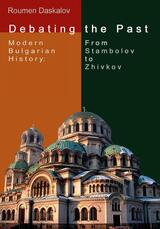
front cover of Debating the Past
Debating the Past
Modern Bulgarian Historiography—From Stambolov to Zhivkov
Roumen Daskalov
Central European University Press, 2011
The book is comprised of the four major debates on modern Bulgarian history from Independence in 1878 to the fall of communism in 1989. The debates are on the Bulgarian–Russian/Soviet relations, on the relations between Agrarians and Communists, on Bulgarian Fascism, and on Communism. They are associated with the rule of key political personalities in Bulgarian history: Stambolov (1887–1894), Stamboliiski (1919–1923), Tsar Boris III (1918–1943), and the communist leaders Georgi Dimitrov and Todor Zhivkov (1956–1989). The debates are traced through their various articulations and dramatic turns from their beginnings to the present day.
[more]

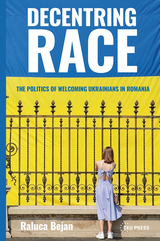
front cover of Decentring Race
Decentring Race
The Politics of Welcoming Ukrainians in Romania
Raluca Bejan
Central European University Press, 2026
When Russia invaded Ukraine in 2022 and people began to flee the country, the hospitality of neighbouring countries towards Ukrainians was set in stark contrast to their reluctance to accommodate refugees from Africa and the Middle East. Critics suggested that Europe was treating refugees from Ukraine better than those from the Global South, and attributed this difference to race. Using Romania as a case study, and drawing on fifty-one interviews with civil society stakeholders, community activists, and Romanian state officials, and twenty-five interviews with international students who were in Ukraine at the time of the invasion, Decentring Race complicates the story that singles out race as the primary factor in the categorization of refugees as either deserving or undeserving. Alongside nationality, ethnicity, religion, class, gender, and local racial politics, it brings to the fore geopolitical realities and the bipartite EU-Ukraine legislative framework as factors that shaped the granting of transnational mobility rights.
[more]

front cover of Deficit and Debt in Transition
Deficit and Debt in Transition
The Political Economy of Public Finances in Central and Eastern Europe
Istvan Benczes
Central European University Press, 2014
The adjustment problems of public finance in countries of Central and Eastern Europe (CEE) are often misunderstood and misinterpreted by western scholars. This book contributes to the bridging of the gap between what is being thought by external observers and what the actual public finance reality is, as described by competent local scholars. Popular political economy research has remained biased towards advanced countries and has neglected developing and transition economies. Publications on CEE countries' public finances seem to be reluctant to apply the conceptual framework of standard political economy to these countries because of the assumption that CEE economies are different from their Western peers. But is this really the case? Are CEE economies so much different that none of the well-known "Western" political economy concepts or models can be applied to the analysis of fiscal performance in the region? Benczes demonstrates that they can be safely applied in the context of CEE economies as well. He sees no need to develop a separate or unique theory designed for the study and understanding of (one-time) transition economies.
[more]

front cover of Defining Latvia
Defining Latvia
Recent Explorations in History, Culture, and Politics
Matthew Kott
Central European University Press, 2022

In just over a century, Latvia has transitioned from imperial periphery to nation-state, then Soviet republic, and finally following the collapse of the Soviet Union to an independent republic. Defining Latvia brings together the latest research on the multiple social, political, and cultural contexts of Latvia throughout this turbulent period. Its ten chapters are written by leading political scientists, historians, and area studies specialists from across Europe and North America.

The volume moves beyond an exclusively political context to incorporate a variety of social and cultural perspectives, ranging from the experiences of Latvian mapmakers in the Russian Empire, to the participation of Latvians in the Wehrmacht and Red Army during World War II, Latvian national communism, and the development of extremist politics following Latvia’s accession to the European Union. Other chapters address developing trends in the fields of history and political science, including the history of antisemitism, memory, language politics, photography, and political extremism.

Based on the book’s temporal span from the nineteenth century to the present, the authors and editors of Defining Latvia understand the construction of Latvian identity as a continuous and interconnected process across significant political and ideological ruptures.


[more]

front cover of The Demise of Yugoslavia
The Demise of Yugoslavia
A Political Memoir
Stipe Mesic
Central European University Press, 2004
Formed in the aftermath of WWI, Yugoslavia was founded as the Kingdom of Serbs, Croats and Slovenes ("three tribes of the same people"). But in the early 1990s, following a series of violent conflicts on Slovenian and Croatian soil, the two republics successfully succeeded from Yugoslavia, which would later be followed by Bosnia-Herzegovina and Macedonia. Mesic was member, later head of the Presidency of the Yugoslav Federation from August 1990. His memoir details an intricately woven storyline, which analyzes events, personalities and motivations inside Yugoslavia and its former nations, as well as in the international arena. The narrative is rich with excerpts from Mesic's personal diaries during times of heated conflict and bloodshed. Extensive notes and a short chronology assist the interested reader and scholar in disentangling the complicated plot. After years of relative political passivity, Mesic was elected independent Croatia's second president in 2000, following the death of former President Franjo Tudman.
[more]

front cover of Democracy Fatigue
Democracy Fatigue
An East European Epidemy
Carlos García-Rivero
Central European University Press, 2023

Over the early 21st century, democracy worldwide has deteriorated significantly. At the same time, new populist forces have appeared that challenge democracies through legal reforms. The stark contrast between Eastern and Western Europe in this respect is the focus of this collection of essays.

The authors consider the 2008-2012 economic crisis to be at the root of the success of the populist parties and the rise of cultural backlash against liberal values. In turn, European governments’ responses to the crisis—mainly austerity measures demanded by IMF and the EU— help explain desenchantment with the European Union. These policies made the wider public feel that they were being left out of politics, and populist parties promised to return power to them. 

The contributors argue that polarization of the electorate can set in motion a radicalization that strengthens authoritarians at the expense of democrats. They also demonstrate that Eastern and Western Europe differ in their attitudes to the decline in quality of democracy. The studies consider how satisfied people are with the political changes they witness, and argue that seemingly more authoritarian attitudes in the East explain why people feel more satisfied with a defective democracy that empowers the populist-authoritarian political actors that they support.

[more]

front cover of Democracy on a Tightrope
Democracy on a Tightrope
Politics and Bureaucracy in Brazil
Pedro Abramovay
Central European University Press, 2026
Democracy on a Tightrope explores the complex relationship between politics and bureaucracy in Brazil’s democratic development since the 1988 Constitution. Drawing from academic research and firsthand government experience, Pedro Abramovay and Gabriela Lotta examine how technocracy, meritocracy, and institutional power can both support and undermine democratic governance. Through vivid case studies—from drug policy to the Internet Bill of Rights—the book reveals how balancing political legitimacy with bureaucratic expertise is essential to building an inclusive, participatory democracy that resists authoritarian drift.
[more]

logo for Central European University Press
Democratic Purgatory
Failure of Consolidated Democracies in Latin America and East-Central Europe
Christopher M. Brown
Central European University Press, 2026
Why do democracies that appear consolidated unravel, not through coups, but through democratic means? Democratic Purgatory explores this paradox, introducing a powerful new concept to explain why liberal democracies in Latin America and East-Central Europe have faltered. Drawing on comparative case studies from Venezuela, Colombia, Nicaragua, Poland, Hungary, and Romania, the book argues that democratic purgatory is a regime type in which formal institutions endure while legitimacy erodes, representation fails, and elite-driven governance calcifies.
Rather than structural inevitability, these breakdowns stem from contingent choices: negotiated transitions, successor party dominance, and technocratic insulation created fertile ground for popularism, a top-down appropriation of populist rhetoric to dismantle liberal norms. From Orbán’s Hungary to Chávez’s Venezuela, the analysis reveals how democratic procedures can hollow out democracy itself.
In an era of global democratic backsliding, this book offers a timely framework for understanding the fragility of liberal democracy and the decisive role of political agency in preventing breakdown or enabling renewal.
[more]

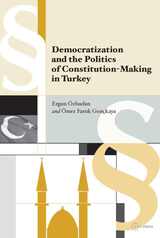
front cover of Democratization and the Politics of Constitution-Making in Turkey
Democratization and the Politics of Constitution-Making in Turkey
Ömer Faruk Gençkaya
Central European University Press, 2009
Explores and illustrates how domestic and international factors shape the direction of democratization process with special reference to constitution making process in Turkey. Describes how all five Turkish constitutions were, by and large, the products of indigenous effort, although borrowing could be felt in certain limited areas. Argues that the constitutional reforms in the post-1983 period were the outco me of broad inter-party negotiations and agree ments as a response to the society's demands for a more democratic and liberal political system. Finally, the constitutional revisions adopted since 1995 were strongly conditioned by Turkey's hope of accession to the European Union. With these reforms, Turkey was successful in meeting the political criteria and started accession negotiations with the EU.
[more]

front cover of Demographic Avant-Garde
Demographic Avant-Garde
Jews in Bohemia between the Enlightenment and the Shoah
Jana Vobecká
Central European University Press, 2013
This book studies the unique demographic behavior of Jews in Bohemia (the historic part of the Czech Republic), starting from a moment in history when industrialization in Central Europe was still far away in the future, and when Jews were still living legally restricted lives in ghettos. Very early on, however, from the 18th century onwards, Jews developed patterns of decreasing mortality and fertility that was not observed among the gentile majority in Bohemia; patterns which established them as a demographic avant-garde population in all of Europe.
[more]

front cover of Demography and Nation
Demography and Nation
Social Legislation and Population Policy in Bulgaria
Svetla Baloutzova
Central European University Press, 2011
The monograph investigates the origins of state policy toward population and the family in Bulgaria. Reconstructs the evolution of state legislation in the field of social policy toward the family between the two World Wars, colored by concerns about the national good and demographic considerations. It sets the laws regarding family welfare in their framework of a distinctively cultural, historical and political discourse to follow the motives behind the legislative initiatives.
[more]

front cover of Denial and Repression of Anti-Semitism
Denial and Repression of Anti-Semitism
Post-Communist Rehabilitation of the Serbian Bishop Nikolaj Velimirovic
Jovan Byford
Central European University Press, 2008
Bishop Nikolaj Velimirovic (1881–1956) is arguably one the most controversial figures in contemporary Serbian national culture. Having been vilified by the former Yugoslav Communist authorities as a fascist and an antisemite, this Orthodox Christian thinker has over the past two decades come to be regarded in Serbian society as the most important religious person since medieval times and an embodiment of the authentic Serbian national spirit. Velimirovic was formally canonised by the Serbian Orthodox Church in 2003. In this book, Jovan Byford charts the posthumous transformation of Velimirovic from 'traitor' to 'saint' and examines the dynamics of repression and denial that were used to divert public attention from the controversies surrounding the bishop's life, the most important of which is his antisemitism. Byford offers the first detailed examination of the way in which an Eastern Orthodox Church manages controversy surrounding the presence of antisemitism within its ranks and he considers the implications of the continuing reverence of Nikolaj Velimirovic for the persistence of antisemitism in Serbian Orthodox culture and in Serbian society as a whole. This book is based on a detailed examination of the changing representation of Bishop Nikolaj Velimirovic in the Serbian media and in commemorative discourse devoted to him. The book also makes extensive use of exclusive interviews with a number of Serbian public figures who have been actively involved in the bishop’s rehabilitation over the past two decades.
[more]

front cover of The Dilemmas of Dissidence in East-Central Europe
The Dilemmas of Dissidence in East-Central Europe
Citizen Intellectuals and Philosopher Kings
Barbara J. Falk
Central European University Press, 2003
Discusses one of the major currents leading to the fall of communism. Falk examines the intellectual dissident movements in Poland, Czechoslovakia and Hungary from the late 1960s through to 1989. In spite of its historic significance, no other comprehensive survey has appeared on the subject. In addition to the huge list of written sources from samizdat works to recent essays, Falks sources include interviews with many personalities of those events as well as videos and films (including Oscar winners).
[more]

front cover of Discussing Hitler
Discussing Hitler
Advisers of U.S. Diplomacy in Central Europe, 1934-41
Tibor Frank
Central European University Press, 2003
This book promises to illuminate the foreign policy of the Roosevelt administration during the rise of Hitler's Germany. It is based on the heretofore unpublished notes of J. F. Montgomery (1878-1954), U.S. ambassador ("Minister") to Hungary before World War II. In Budapest, Montgomery quickly made friends with nearly everyone who mattered in the critical years of Hitler's takeover and preparation for World War II. His circle included Admiral Horthy, the Regent of Hungary, subsequent prime ministers, foreign ministers, members of both houses of parliament, as well as fellow diplomats from all over Europe. In addition, as an avid player of golf and bridge, he had an active social life that was interconnected with a large circle of influential friends in the United States.
[more]

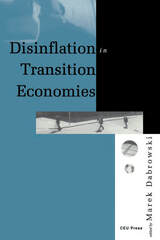
front cover of Disinflation in Transition Economies
Disinflation in Transition Economies
Marek Dabrowski
Central European University Press, 2003
The authors of this outstanding scholarly work analyze the dynamics of disinflation in transition economies in Central and Eastern Europe. The volume covers all the key factors of this process: changes in money supply and money demand; exchange rate policy; currency crisis; fiscal policy; legal status of central banks; monetary policy strategy; changes in relative prices and changes in nominal and real wages. The book contains 13 chapters related to various aspects of disinflation and covering different sets of transition countries depending on their relevance to the analyzed topic and data availability.
[more]

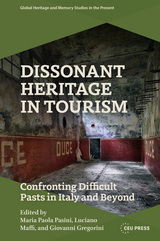
front cover of Dissonant Heritage in Tourism
Dissonant Heritage in Tourism
Confronting Difficult Pasts in Italy and Beyond
Maria Paola Pasini
Central European University Press, 2026
Interest in dissonant heritage has grown significantly in recent years. Difficult legacies, such as monuments and urban and artistic works, as well as intangible personal and communal experiences are linked to dictatorships, regimes, wars, slavery, and exploitation. In some places, a dissonant heritage creates tension. In other places, difficult histories are cancelled or ignored. But forgetting is not the solution. Critical analysis can help us ‘face the past’ and process it in order to move forward. This applies to tourism as well: ‘Difficult’ places, monuments and experiences become opportunities for gaining and creating knowledge for a public interested in historical issues. At the same time, tourist presence is an incentive for communities to better comprehend their contested past(s). This volume contains contributions by scholars from various countries and different backgrounds, such as historians, architects, and anthropologists, who deal with this topic from different angles. The volume is divided into two parts: the first part concentrates on Italy, while the second part covers other countries in the world.
[more]

logo for Central European University Press
Diversity
The History of a Wandering Value
Lorraine Daston
Central European University Press, 2026
It is startling to realize how quickly and thoroughly the value of diversity, until a few decades ago a value largely confined to the aesthetic and organic realms, has acquired deep political and moral significance. Universities, corporations, and governments are now judged by the degree to which they achieve diversity among their leaders and recognize diversity among their publics. Older values of the liberal polity, for example that of honoring merit without regard to creed, race, sex, or ethnicity, have been increasingly eclipsed by values that closely attend to these and other differentiating traits (which traits matter is contentious). How did this sea change in value come about, and come about so swiftly? And what kind of value is diversity? The long history of diversity as an aesthetic and economic value helps explain the recent rapid rise of diversity as a moral and political value.
[more]

front cover of Divide and Pacify
Divide and Pacify
Strategic Social Policies and Political Protests in Post-Communist Democracies
Pieter Vanhuysse
Central European University Press, 2006

Despite dramatic increases in poverty, unemployment, and social inequalities, the Central and Eastern European transitions from communism to market democracy in the 1990s have been remarkably peaceful. This book proposes a new explanation for this unexpected political quiescence. It shows how reforming governments in Poland, Hungary and the Czech Republic have been able to prevent massive waves of strikes and protests by the strategic use of welfare state programs such as pensions and unemployment benefits.

Divide and Pacify explains how social policies were used to prevent massive job losses with softening labor market policies, or to split up highly aggrieved groups of workers in precarious jobs by sending some of them onto unemployment benefits and many others onto early retirement and disability pensions. From a narrow economic viewpoint, these policies often appeared to be immensely costly or irresponsibly populist. Yet a more inclusive social-scientific perspective can shed new light on these seemingly irrational policies by pointing to deeper political motives and wider sociological consequences.

[more]

front cover of Divide, Provide and Rule
Divide, Provide and Rule
An Integrative History of Poverty Policy, Social Reform, and Social Policy in Hungary under the Habsburg Monarchy
Susan Zimmermann
Central European University Press, 2011
A concise and comprehensive account of the transformation of social policy from traditional poor relief towards social insurance systems in a European state before World War One. Brings together the analysis of older, mostly local welfare policies with the history of social policy developed by the state and operated at a national level. Explores also the interaction of various layers of and actors in welfare policy, i.e. of poor relief, social reform policies and the unfolding welfare state over time, including often neglected elements of these policies such as e.g. protective policies at the work place, housing policy, child protection, and prostitution policies.
[more]

front cover of Divine Presence in Spain and Western Europe 1500–1960
Divine Presence in Spain and Western Europe 1500–1960
Visions, Religious Images and Photographs
William A. Christian Jr.
Central European University Press, 2012
This study addresses the relation of people to divine beings in contemporary and historical communities, as exemplified in three strands. One is a long tradition of visions of mysterious wayfarers in rural Spain who bring otherworldly news and help, including recent examples. Another treats the seeming vivification of religious images—statues, paintings, engravings, and photographs apparently exuding blood, sweat and tears in Spanish homes and churches  in the early modern period and the revival of the phenomenon throughout Europe in the twentieth century.  Of special interest is the third strand of the book: the transposition of medieval and early modern representations of the relations between humans and the divine into the modern art of photography. Christian presents a pictorial examination of the phenomenon with a large number of religious images, commercial postcards and family photographs from the first half of past century Europe.
[more]

logo for Central European University Press
The Doll
Boleslaw Prus
Central European University Press, 1997

The city of Warsaw, under Russian rule in the late 1870s, is the setting for this story. The middle-aged hero, Wokulski, bold and successful in business, is being destroyed by his obsessive love for the frigid, aristocratic society ‘doll’ Izabela. The embattled aristocracy, the new men of finance, Dickensian tradesmen and the urban poor all come vividly to life on the vast, superbly detailed canvas.

[more]

front cover of Duty to Respond
Duty to Respond
Mass Crime, Denial, and Collective Responsibility
Nenad Dimitrijevic
Central European University Press, 2011
The subject of the book is responsibility for collective crime. Collective crime is an act committed by a significant number of the members of a group, in the name of all members of that group, with the support of the majority of group members, and against individuals targeted on the basis of their belonging to a different group.The central claim is that all members of the group in whose name collective crime is committed share responsibility for it. This book's special interest is with analytical and normative defense of arguments that purport to explain reasons for, and the character of, responsibility of decent people. Those who did not intend, support, or committed wrong, are still accountable in a non-vicarious manner. The basis of their responsibility is the crime-specific relationship between group identity and personal identity.
[more]

front cover of Dynamics of an Authoritarian System
Dynamics of an Authoritarian System
Hungary, 2010–2021
Mária Csanádi
Central European University Press, 2022

This conceptually synthetic and empirically rich book demonstrates the vulnerability of democratic settings to authoritarianism and populism. Six scholars from various professional fields explore here the metamorphosis of a political party into a centralized authoritarian system. Viktor Orbán and his Fidesz party needed less than ten years to accomplish this transformation in Hungary. In 2010, after winning a majority that could make changes in the constitution – two-thirds of the parliamentary seats, they evolved and stabilized the system, which produced again the two-thirds majority in 2014 and 2018.

The authors reveal how a democratic setting can be used as a device for political capture. They show how a political entity managed to penetrate almost all sub-fields of the economy to arrive at institutionalized corruption, and how the centralized power structure reproduces itself. With the help of a powerful empirical apparatus—among others analyses of more than 220,000 public tenders, redistributions of state subsidies, and the interconnectedness of those privileged with the political elite — the authors detail the functioning of a crony system and the network aspects of political connections in the rapid enrichment of politically-linked businesses. Their studies demonstrate the role of political capture in this redistribution and how this capture leads to a new social stratification.

[more]

front cover of Dynamics of Class and Stratification in Poland
Dynamics of Class and Stratification in Poland
1945–2015
Irina Tomescu-Dubrow
Central European University Press, 2018
This book is about long-term changes to class and inequality in Poland. Drawing upon major social surveys, the team of authors from the Polish Academy of Sciences offer the rare comprehensive study of important changes to the social structure from the communist era to the present. The core argument is that, even during extreme societal transformations, key features of social life have long-lasting, stratifying effects. The authors analyse the core issues of inequality research that best explain “who gets what and why:” social mobility, status attainment and their mechanisms, with a focus on education, occupation, and income. The transition from communist political economy to liberal democracy and market capitalism offers a unique opportunity for scholars to understand how people move from one stratifi cation regime to the next. There are valuable lessons to be learned from linking past to present. Classic issues of class, stratification, mobility, and attainment have endured decades of radical social change. These concepts remain valid even when society tries to eradicate them.
[more]

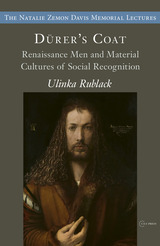
front cover of Dürer's Coats
Dürer's Coats
Renaissance Men and Material Cultures of Social Recognition
Ulinka Rublack
Central European University Press, 2025
During the Renaissance, clothing became more and more elaborately decorated and expensive. It often emphasised the privilege of the male elite. Yet clothing could also subvert or reshape conventional cultural norms. Ulinka Rublack argues that cloaks and gowns gained in importance during this period and were among the things that mediated social relationships for centuries to come. An investigation into outerwear opens a new window into how people and things were connected in the Renaissance and how important clothing was in shaping subjectivities in everyday life. Using the example of Dürer and his wife as emerging social types, the study follows the artist and the men and women of his time through the streets of Venice, Nuremberg, Augsburg and Antwerp.
[more]


Send via email Share on Facebook Share on Twitter