
 A SCHOLARLY BOOK REPOSITORY
16 start with D start with D
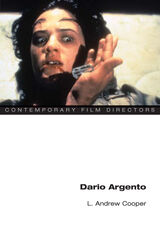
Commanding a cult following among horror fans, Italian film director Dario Argento is best known for his work in two closely related genres, the crime thriller and supernatural horror, as well as his influence on modern horror and slasher movies. In his four decades of filmmaking, Argento has displayed a commitment to innovation, from his directorial debut with 1970's suspense thriller The Bird with the Crystal Plumage to 2009's Giallo. His films, like the lurid yellow-covered murder-mystery novels they are inspired by, follow the suspense tradition of hard-boiled American detective fiction while incorporating baroque scenes of violence and excess.
While considerations of Argento's films often describe them as irrational nightmares, L. Andrew Cooper uses controversies and theories about the films' reflections on sadism, gender, sexuality, psychoanalysis, aestheticism, and genre to declare the anti-rational logic of Argento's oeuvre. Approaching the films as rhetorical statements made through extremes of sound and vision, Cooper places Argento in a tradition of aestheticized horror that includes De Sade, De Quincey, Poe, and Hitchcock. Analyzing individual images and sequences as well as larger narrative structures, he reveals how the director's stylistic excesses, often condemned for glorifying misogyny and other forms of violence, offer productive resistance to the cinema's visual, narrative, and political norms.
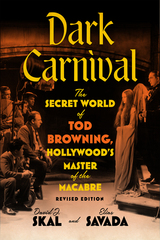
The definitive biography of Hollywood horror legend Tod Browning—now revised and expanded with new material
One of the most original and unsettling filmmakers of all time, Tod Browning (1880–1962) began his career buried alive in a carnival sideshow and saw his Hollywood reputation crash with the box office disaster–turned–cult classic Freaks. Penetrating the secret world of “the Edgar Allan Poe of the cinema,” Dark Carnival excavates the story of this complicated, fiercely private man. In this newly revised and expanded edition of their biography first published in 1995, David J. Skal and Elias Savada researched Browning’s recently unearthed scrapbooks and photography archives to add further nuance and depth to their previous portrait of this enigmatic artist.
Skal and Savada chronicle Browning’s turn-of-the-century flight from an eccentric Louisville family into the realm of carnivals and vaudeville, his disastrous first marriage, his rapid climb to riches in the burgeoning silent film industry, and the alcoholism that would plague him throughout his life. They offer a close look at Browning’s legendary collaborations with Lon Chaney and Bela Lugosi as well as the studio politics that brought his remarkable run to an inglorious conclusion. With a revised prologue, epilogue, filmography, and new text and illustrations throughout, Dark Carnival is an unparalleled account of a singular filmmaker and an illuminating depiction of the evolution of horror and the early film industry.
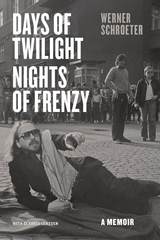
Written in the last years of his life, Days of Twilight, Nights of Frenzy sees Schroeter looking back at his life with the help of film critic and friend Claudia Lenssen. Born in 1945, Schroeter grew up near Heidelberg and spent just a few weeks in film school before leaving to create his earliest works. Over the years, he would work with acclaimed artists, including Marianne Hopps, Isabelle Huppert, Candy Darling, and Christine Kaufmann. In the 1970s, Schroeter also embarked on prolific parallel careers in theater and opera, where he worked in close collaboration with the legendary diva Maria Callas. His childhood; his travels in Italy, France, and Latin America; his coming out and subsequent life as an gay man in Europe; and his run-ins with Hollywood are but a few of the subjects Schroeter recalls with insights and characteristic understated humor.
A sharp, lively, even funny memoir, Days of Twilight, Nights of Frenzy captures Schroeter’s extravagant life vividly over a vast prolific career, including many stories that might have been lost were it not for this book. It is sure to fascinate cinephiles and anyone interested in the culture around film and the arts.
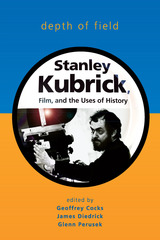
Director of some of the most controversial films of the twentieth century, Stanley Kubrick created a reputation as a Hollywood outsider as well as a cinematic genius. His diverse yet relatively small oeuvre—he directed only thirteen films during a career that spanned more than four decades—covers a broad range of the themes that shaped his century and continues to shape the twenty-first: war and crime, gender relations and class conflict, racism, and the fate of individual agency in a world of increasing social surveillance and control.
In Depth of Field, leading screenwriters and scholars analyze Kubrick's films from a variety of perspectives. They examine such groundbreaking classics as Dr. Strangelove and 2001: A Space Odyssey and later films whose critical reputations are still in flux. Depth of Field ends with three viewpoints on Kubrick's final film, Eyes Wide Shut, placing it in the contexts of film history, the history and theory of psychoanalysis, and the sociology of sex and power. Probing Kubrick's whole body of work, Depth of Field is the first truly multidisciplinary study of one of the most innovative and controversial filmmakers of the twentieth century.
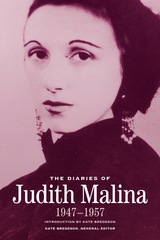
Judith Malina’s newly restored diaries from a critical early decade in her personal, artistic, and political development
Judith Malina’s diaries from 1947 to 1957 are brought back into print in this volume, which charts her cofounding of The Living Theatre with husband and lifelong artistic partner Julian Beck. In these diaries, she narrates her developing political commitments and her expansive collaborations and personal relationships, as well as a moving account of her time in prison with activist Dorothy Day. This new edition features Kate Bredeson’s comprehensive introduction, which offers a detailed examination of Malina’s life and work in this period, along with additional historical context of these years and never-before-published photographs from Malina’s personal archives.
The Diaries of Judith Malina is a four-volume set that publishes for the first time together the edited diaries of radical theater director, actor, and activist Judith Malina from 1947 to 1971, the most influential period of her remarkable and storied career. A committed anarchist and pacifist, Malina made theater as a way to stoke revolutionary action. Her diaries showcase her political and social observations, cultural commentary, self-reflection, and wit. This expertly prepared set invites us to recognize Malina for her accomplishments not only as an artist and an activist but as one of the great literary diarists.
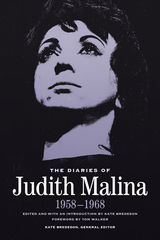
A previously unpublished volume of diaries recording Judith Malina’s extraordinary life and career in a moment of cultural revolution
Judith Malina’s diaries from the pivotal years of 1958 to 1968 are presented here in print for the first time. Meticulously edited and with an essential introduction by Kate Bredeson that offers a detailed discussion of Malina’s life and works during this period, the volume includes additional historical context and never-before-published photographs from Malina’s personal archives, as well as an illuminating foreword by Living Theatre archivist and longtime company member Tom Walker. This decade covers some of the most important years of Malina’s life and in the history of The Living Theatre, from career-defining productions of The Connection and The Brig to the company’s self-imposed European exile, when they created their signature works, including Paradise Now, Antigone, and Frankenstein.
The Diaries of Judith Malina is a four-volume set that publishes for the first time together the edited diaries of radical theater director, actor, and activist Judith Malina from 1947 to 1971, the most influential period of her remarkable and storied career. A committed anarchist and pacifist, Malina made theater as a way to engage in revolutionary action. Her diaries showcase her political and social observations, cultural commentary, self-reflection, and wit. This expertly prepared set invites us to recognize Malina for her accomplishments not only as an artist and an activist but as one of the great literary diarists.
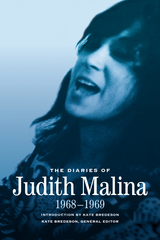
A newly restored edition of Judith Malina’s legendary diaries narrating a key moment of social, political, and cultural upheaval
Originally published by Judith Malina as The Enormous Despair, this slim, gripping collection of diaries from a pivotal period between 1968 and 1969 follows The Living Theatre’s return to the United States after their years of self-exile in Europe, their increasing notoriety and frequent arrests, and their cross-country touring. In these pages, Malina wrestles with the company’s artistic and political efforts during a moment of societal crisis and grapples with their future. Kate Bredeson’s introduction contextualizes Malina’s life and work in this period, while additional historical context and never-before-published photographs add new detail and depth to a stirring account of American social and political history.
The Diaries of Judith Malina is a four-volume set that publishes for the first time together the edited diaries of radical theater director, actor, and activist Judith Malina from 1947 to 1971, the most influential period of her remarkable and storied career. A committed anarchist and pacifist, Malina made theater as a way to engage in revolutionary action. Her diaries showcase her political and social observations, her cultural commentary, her self-reflection, and her wit. This expertly prepared set invites us to recognize Malina for her accomplishments not only as an artist and an activist but as one of the great literary diarists.
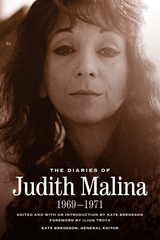
Judith Malina’s never-before-published diaries describing a period of profound personal and professional transformation
The years 1969 to 1971 saw The Living Theatre’s greatest rupture, reckoning with its desire to leave its defining productions from the 1960s behind and move forward with new artistic works and practices. In these previously unpublished diaries, Judith Malina recounts these pivotal years, describing her transformative time in Brazil, including her experiences of daily life in jail while awaiting trial with her company members. This meticulously edited volume includes Kate Bredeson’s introduction, examining Malina’s life and work in this period, as well as additional historical context and never-before-published photographs. Living Theatre member Ilion Troya offers a foreword that provides new context for understanding the volume’s historical significance.
The Diaries of Judith Malina is a four-volume set that publishes for the first time together the edited diaries of radical theater director, actor, and activist Judith Malina from 1947 to 1971, the most influential period of her remarkable and storied career. A committed anarchist and pacifist, Malina made theater as a way to engage in revolutionary action. Her diaries showcase her political and social observations, cultural commentary, self-reflection, and wit. This expertly prepared set invites us to recognize Malina for her accomplishments not only as an artist and an activist but as one of the great literary diarists.
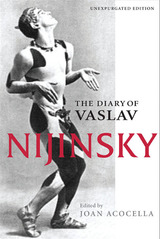
A uniquely personal record of a great artist’s experience of mental illness
In his prime, Vaslav Nijinsky (1889-1950) was the most celebrated man in Western ballet--a virtuoso and a dramatic dancer such as European and American audiences had never seen before. After his triumphs in such works as The Specter of the Rose and Petrouchka, he set out to make ballets of his own, and with his Afternoon of a Faun and The Rite of Spring, created within a year of each other, he became ballet’s first modernist choreographer.
For six weeks in early 1919, as his tie to reality was giving way, Nijinsky kept a diary--the only sustained daily record we have, by a major artist, of the experience of entering psychosis. In some entries he is filled with hope. He is God; he will save the world. In other entries, he falls into a black despair. He is dogged by sexual obsessions and grief over World War I. Furthermore, he is afraid that he is going insane.
The diary was first published in 1936, in a version heavily bowdlerized by Nijinsky’s wife. The new edition, translated by Kyril FitzLyon, is the first complete and accurate English rendering of this searing document. In her introduction, noted dance critic Joan Acocella tells Nijinsky’s story and places it in the context of early European modernism.
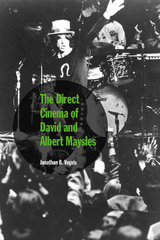
Boldly signifying the cultural issues of the 1960s and 1970s in groundbreaking pieces such as Grey Gardens, Gimme Shelter, and Showman, filmmakers and brothers David and Albert Maysles used an approach to documentary film that involved spontaneous observation of naturally occurring events. With no rehearsed footage and no preconceived plots, their revolutionary work eschewed the authoritative voice-over narrator, didactic scripts, and the traditional problem-and-solution format used by the majority of their predecessors in the genre and duly influenced subsequent directors in both fiction and nonfiction film. Their collaboration from 1962 until David’s death in 1987 wrought thirteen major works in which the brothers critiqued the concept of celebrity with unglamorous footage of iconic figures, explored how commercialism hinders communication, and questioned the possibility of seeing anything clearly in a world abounding with both real and constructed images.
Jonathan B. Vogels outlines how the Maysles brothers blended a unique amalgam of direct cinema characteristics, a modern humanist aesthetic, and a collaborative working process that included other directors and editors. Looking at the films as both shapers and reflections of American culture, he points out that the works offer insights into a wide range of contemporary topics including materialism, celebrity, modern art, and the American family. In addition to describing the changes in technology that made direct cinema possible, Vogels provides careful, scene-by-scene analyses that allow for a consideration of the Maysles brothers’ films as films, a tactic not frequently employed in nonfiction film studies.
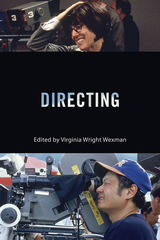
The latest volume in the Behind the Silver Screen series, this collection provides the first comprehensive overview of how directing, as both an art and profession, has evolved in tandem with changing film industry practices. Each chapter is written by an expert on a different period of Hollywood, from the silent film era to today’s digital filmmaking, providing in-depth examinations of key trends like the emergence of independent production after World War II and the rise of auteurism in the 1970s. Challenging the myth of the lone director, these studies demonstrate how directors work with a multitude of other talented creative professionals, including actors, writers, producers, editors, and cinematographers.
Directing examines a diverse range of classic and contemporary directors, including Orson Welles, Tim Burton, Cecil B. DeMille, Steven Soderbergh, Spike Lee, and Ida Lupino, offering a rich composite picture of how they have negotiated industry constraints, utilized new technologies, and harnessed the creative contributions of their many collaborators throughout a century of Hollywood filmmaking.
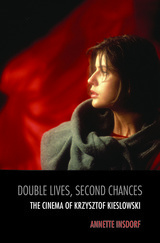
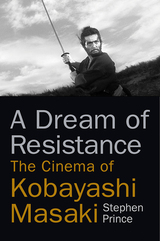
A Dream of Resistance is the first book in English to explore Kobayashi’s entire career, from the early films he made at Shochiku studio, to internationally-acclaimed masterpieces like The Human Condition, Harakiri, and Samurai Rebellion, and on to his final work for NHK Television. Closely examining how Kobayashi’s upbringing and intellectual history shaped the values of his work, Stephen Prince illuminates the political and religious dimensions of Kobayashi’s films, interpreting them as a prayer for peace in troubled times. Prince draws from a wealth of rare archives, including previously untranslated interviews, material that Kobayashi wrote about his films, and even the young director’s wartime diary. The result is an unprecedented portrait of this singular filmmaker.
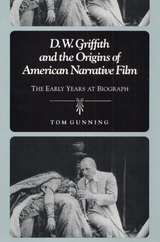
In this comprehensive historical investigation, drawing on films preserved by the Library of Congress and the Museum of Modern Art, Tom Gunning reveals that the remarkable cinematic changes between 1900 and 1915 were a response to the radical reorganization within the film industry and the evolving role of film in American society. The Motion Picture Patents Company, the newly formed Film Trust, had major economic aspirations. The newly emerging industry's quest for a middle-class audience triggered Griffith's early experiments in film editing and imagery. His unique solutions permanently shaped American narrative film.
READERS
Browse our collection.
PUBLISHERS
See BiblioVault's publisher services.
STUDENT SERVICES
Files for college accessibility offices.
RECENTLY PUBLISHED




UChicago Accessibility Resources
home | accessibility | search | about | contact us
BiblioVault ® 2001 - 2025
The University of Chicago Press