
 A SCHOLARLY BOOK REPOSITORY
20 start with D start with D

The narrow Darién Gap, the only land bridge connecting South and Central America, encompasses a spectacularly hostile jungle, covered in steep mountains, dense rainforests, and flood-prone marshes. Known in Spanish as el infierno verde, or “the green hell,” it is one of the most inhospitable places in the world. Its terrain is too treacherous for roads, yet hundreds of thousands of refuge seekers contend with its horrors every year in the hopes of reaching the United States, still some three thousand miles away. And of the countless who set out for the border, an untold number never arrive.
In this book, journalist Belén Fernández travels through the Darién Gap to report on the dehumanizing and deadly stretch of land that has become a mass graveyard for migrants. Fernández’s journey brings her into contact with refuge seekers, people smugglers, law enforcement officials, and many more whose stories bring life to a place overwhelmingly associated with death. Combining history, on-the-ground reporting, travelogue, memoir, and searing politico-economic analysis, she shines light on a largely made-in-the-USA crisis that has come to define our modern era.
Engrossing and heartrending, The Darién Gap is a poignant and compassionate indictment of structural inequality and institutionalized inhumanity in a world where the have-nots must risk death for a chance at a better life—or any life at all.
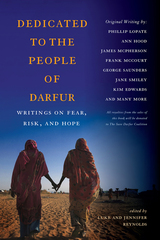
Nobel and Pulitzer Prize winners, a gallery of O.Henry award recipients, and many best-selling authors come together to share personal and compelling challenges and experiences. From contemplations on past drug use to reflections on gun control, social justice, passion and its sacrifices, and adventures such as skydiving, mountain climbing, and golfing, the topics vary greatly. This kaleidoscopic anthology is a commentary on the lives of prominent literary artists and ordinary citizens who have made simple, yet powerful choices that provoked change in one's self and for humanityùmuch the same way that Luke and Jennifer Reynolds do by building this invaluable collection for readers and the world of human rights.
Not too long ago, as struggling graduate students, Luke and Jennifer Reynolds conceived this uniquely themed volume as a way to raise funds to support ending the genocide in Darfur. Some people carry signs, others make speeches, many take action. What is most special about this book is that it extends beyond words and ideas, into a tangible effort to effect change. To this end, all royalties from the sales of Dedicated to the People of Darfur:Writings on Fear, Risk, and Hope will benefit The Save Darfur Coalition, an organization that seeks to end the genocide in Darfur, Sudan.

A Rwandan proverb says “Defeat is the only bad news.” For Rwandans living under colonial rule, winning called not only for armed confrontation, but also for a battle of wits—and not only with foreigners, but also with each other. In Defeat Is the Only Bad News Alison Des Forges recounts the ambitions, strategies, and intrigues of an African royal court under Yuhi Musinga, the Rwandan ruler from 1896 to 1931. These were turbulent years for Rwanda, when first Germany and then Belgium pursued an aggressive plan of colonization there. At the time of the Europeans’ arrival, Rwanda was also engaged in a succession dispute after the death of one of its most famous kings. Against this backdrop, the Rwandan court became the stage for a drama of Shakespearean proportions, filled with deceit, shrewd calculation, ruthless betrayal, and sometimes murder.
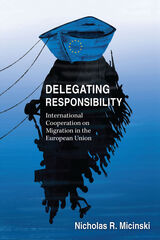
Delegating Responsibility explores the politics of migration in the European Union and explains how the EU responded to the 2015–17 refugee crisis. Based on 86 interviews and fieldwork in Greece and Italy, Nicholas R. Micinski proposes a new theory of international cooperation on international migration. States approach migration policies in many ways—such as coordination, collaboration, subcontracting, and unilateralism—but which policy they choose is based on capacity and on credible partners on the ground. Micinski traces the fifty-year evolution of EU migration management, like border security and asylum policies, and shows how EU officials used “crises” as political leverage to further Europeanize migration governance. In two in-depth case studies, he explains how Italy and Greece responded to the most recent refugee crisis. He concludes with a discussion of policy recommendations regarding contemporary as well as long-term aspirations for migration management in the EU.
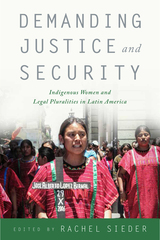
Featuring chapters on Bolivia, Colombia, Ecuador, Guatemala, and Mexico, the contributors to Demanding Justice and Security include both leading researchers and community activists. From Kichwa women in Ecuador lobbying for the inclusion of specific clauses in the national constitution that guarantee their rights to equality and protection within indigenous community law, to Me’phaa women from Guerrero, Mexico, battling to secure justice within the Inter-American Court of Human Rights for violations committed in the context of militarizing their home state, this book is a must-have for anyone who wants to understand the struggle of indigenous women in Latin America.

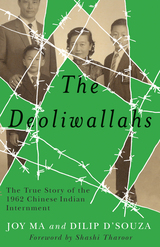
The Deoliwallahs sheds light on a lesser-known chapter of Indian history—the internment of Chinese Indians following the 1962 Sino-Indian War. During the war, around 3,000 Indians of Chinese descent were detained in a camp in Deoli, Rajasthan, under suspicion of espionage. Many of these individuals had deep roots in India, with families that had lived there for generations. The book recounts their harrowing experiences, including abrupt arrests, harsh conditions in the camp, and the emotional toll of being ostracized by their own country.
Alternating between historical context and the personal stories of survivors, authors Joy Ma and Dilip D'Souza weave together a compelling and emotional account of a nearly forgotten community of people interned against their will. The book draws parallels with other instances of internment, such as the Japanese American experience during World War II, highlighting the universal themes of identity, citizenship, and the consequences of fear-driven policies.
A documentary, Voices of Deoli (2025), directed by Lulu Men with author Joy Ma serving as executive producer, along with Michael Cheng and Neela D’Souza, also shares the stories of survivors and, like the book, serves as a powerful reminder of the fragility of rights and the impact of prejudice.
Whether investigating the power that individual and corporate sponsors have over the fate of foreign laborers in Bahrain, the implications of Germany’s temporary suspension of deportation orders for pregnant and ill migrants, or the significance of the detention camp, the contributors reveal how deportation reflects and reproduces notions about public health, racial purity, and class privilege. They also provide insight into how deportation and deportability are experienced by individuals, including Arabs, South Asians, and Muslims in the United States. One contributor looks at asylum claims in light of an unusual anti-deportation campaign mounted by Algerian refugees in Montreal; others analyze the European Union as an entity specifically dedicated to governing mobility inside and across its official borders. The Deportation Regime addresses urgent issues related to human rights, international migration, and the extensive security measures implemented by nation-states since September 11, 2001.
Contributors: Rutvica Andrijasevic, Aashti Bhartia, Heide Castañeda , Galina Cornelisse , Susan Bibler Coutin, Nicholas De Genova, Andrew M. Gardner, Josiah Heyman, Serhat Karakayali, Sunaina Marr Maira, Guillermina Gina Nuñez, Peter Nyers, Nathalie Peutz, Enrica Rigo, Victor Talavera, William Walters, Hans-Rudolf Wicker, Sarah S. Willen

Dignity and Health examines the processes and structures of dignity violation and promotion, traces their consequences for individual and collective health, and uses the model developed to imagine how we might reform our systems of health and social care.
With its focus on the dignity experiences of those often excluded from the mainstream--people who are poor, or homeless, or dealing with mental health problems--as well as on vulnerabilities like age or sickness or unemployment that threaten to make us all feel "less than," Dignity and Health recognizes dignity as a moral matter embedded in the choices we make every day.

Dignity and Health examines the processes and structures of dignity violation and promotion, traces their consequences for individual and collective health, and uses the model developed to imagine how we might reform our systems of health and social care.
With its focus on the dignity experiences of those often excluded from the mainstream--people who are poor, or homeless, or dealing with mental health problems--as well as on vulnerabilities like age or sickness or unemployment that threaten to make us all feel "less than," Dignity and Health recognizes dignity as a moral matter embedded in the choices we make every day.

Dominic Ongwen was abducted by Joseph Kony's Lord's Resistance Army while walking to school at the age of nine. He later rose through its ranks committing, and ultimately being convicted by the International Criminal Court (ICC) of, many of the same crimes of which he was once a victim. The Dilemma of Dominic Ongwen tells this extraordinary story through the voices of those who knew him best: family members, fighters, commanders, “wives,” victims, and trial participants. Their testimonies, gathered in Uganda and The Hague, form the backbone of a narrative that interlaces survivor accounts with legal analysis and vivid excerpts from the ICC trial. The book offers a rare, human-centered lens on international justice, illuminating the dilemmas of prosecuting a former child soldier for mass atrocities. It provides indispensable insights for scholars of international criminal law, transitional justice, political violence, trauma, and human rights.
Following on the heels of other Civil Rights movements, disability rights laws emerged in the late 1960s and early 1970s. Often these laws were more symbolic than precise in terms of objectives and strategies to guide the implementation of antidiscrimination policies. Policy refinement, the process of translating legislative mandates into strategies and procedures to govern administrative action, is both dynamic and controversial.
The premise of Disability, Civil Rights, and Public Policy is that implementation policies in these areas evolved through protracted political struggles among a variety of persons and groups affected by disability rights laws. Efforts to influence policies extended far beyond the process of legislative enactment and resulted in struggles that were played out in the courts and in the executive branch. Included within this examination of federal disability rights laws are the role of symbolic politics, the strengths and weaknesses of contemporary models used for the study of policy implementation, and the politics of administrative policymaking.
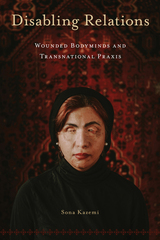
Kazemi focuses on the disabled dissidents who were incarcerated and tortured by the Islamic regime in the aftermath of the 1979 revolution in Iran, the disabled veterans and civilians wounded during and after the Iran–Iraq War, the disabled survivors of state-sanctioned punitive limb amputation, and the disabled women survivors of acid attacks as a form of gender-based violence. Disabling Relations explains how disabled bodyminds are produced and sustained through the violence of patriarchal, capitalist-imperialist, nationalist, and theocratic social relations. Kazemi uses the theoretical concept of “wounding” as a historical process of becoming and remaining disabled mediated by unequal power relations and “disability consciousness” to show how these survivors come to terms with their disability.
Thinking about critical disability theory in a new way, Kazemi investigates how disability is produced transnationally and the impact that this new theorization can make globally.
In the series Dis/color

When millions of Syrians fled civil war after 2011, international donors and humanitarian organizations mobilized to provide assistance to neighboring countries. Focusing on Jordan—one of the world’s largest refugee hosting states—Disease and Diplomacy investigates how medical aid to refugees operates as an instrument of diplomacy and control within the global refugee system. It argues that health, far from being an apolitical humanitarian good, is a bargaining tool that states commodify to extract resources and concessions.
Drawing on years of field research, interviews, and policy analysis, the book shows how the Jordanian government, international donors, and humanitarian agencies turned healthcare for refugees into a tool for negotiating power, resources, and responsibility. In these cases, refugees, caught within these negotiations, often found their access to care determined not by medical need, but by political calculation. Developing the concept of the weaponization of medical aid, the book extends theories of migration diplomacy and refugee rentierism to show how global power dynamics shape who receives healthcare. The analysis identifies a self-reinforcing “crisis loop” that privileges short-term, highly visible responses while neglecting chronic and long-term needs. Disease and Diplomacy advances an interdisciplinary framework for understanding how humanitarian practices reinforce global inequalities and argues for more equitable approaches to refugee health and responsibility-sharing in the international system.
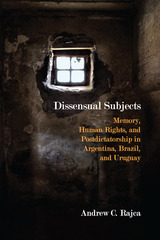
Through an engaging exploration of the concept of “never again” (nunca más/nunca mais) and close analysis of photography exhibits, audiovisual installations, and other art forms in spaces of cultural memory, the book explores how aesthetic interventions can suggest alternative ways of framing human rights subjectivity beyond the rhetoric of liberal humanitarianism. The book visits sites of memory, two of which functioned as detention and torture centers during dictatorships, to highlight the tensions between the testimonial tenor of permanent exhibits and the aesthetic interventions of temporary installations there. Rajca thus introduces perspectives that both undo common understandings of authoritarian violence and its effects as well as reconfigure who or what are made visible as subjects of memory and human rights in postdictatorship countries.
Dissensual Subjects offers much to those concerned with numerous interlocking fields: memory, human rights, political subjectivity, aesthetics, cultural studies, visual culture, Southern Cone studies, postdictatorship studies, and sites of memory.
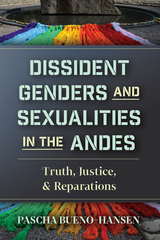
Dissident Genders and Sexualities in the Andes: Truth, Justice, and Reparations reveals how people of non-normative genders and sexualities fight for truth, justice, and reparations in the aftermath of armed conflict and authoritarian regimes in Peru, Ecuador and Colombia. A focus on body politics flips the transitional justice model that focuses on nation-states to investigate massive human rights violations. How and why are harms against people of non-normative genders and sexualities included or excluded in Peruvian, Ecuadorian and Colombian transitional justice efforts? What strategies do activists use in the ongoing struggle for the recognition of their humanity through truth, justice and reparations? To answer these questions, Dissident Genders and Sexualities in the Andes focuses on activists and their embodied knowledge.
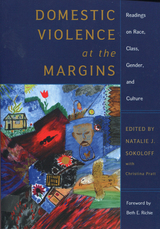
"An exciting and powerful collection that eloquently critiques some of the current thinking in domestic violence and raises key concerns for advocates and scholars working in the area."—Sujata Warrier, president, board of directors, Manavi: An organization for South Asian women
"Sokoloff has assembled an impressive array of authors who challenge us to ‘think outside of our contemporary domestic violence box.’"—Angela M. Moore Parmley, chief, violence and victimization research division, National Institute of Justice
This groundbreaking anthology reorients the field of domestic violence research by bringing long-overdue attention to the structural forms of oppression in communities marginalized by race, ethnicity, religion, sexuality, or social class.
Reprints of the most influential recent work in the field as well as more than a dozen newly commissioned essays explore theoretical issues, current research, service provision, and activism among Latinos, African Americans, Asian Americans, Jewish Americans, and lesbians. The volume rejects simplistic analyses of the role of culture in domestic violence by elucidating the support systems available to battered women within different cultures, while at the same time addressing the distinct problems generated by that culture. Together, the essays pose a compelling challenge to stereotypical images of battered women that are racist, homophobic, and xenophobic.
The most up-to-date and comprehensive picture of domestic violence available, this anthology is an essential text for courses in sociology, criminology, social work, and women’s studies. Beyond the classroom, it provides critical information and resources for professionals working in domestic violence services, advocacy, social work, and law enforcement.
READERS
Browse our collection.
PUBLISHERS
See BiblioVault's publisher services.
STUDENT SERVICES
Files for college accessibility offices.
RECENTLY PUBLISHED




UChicago Accessibility Resources
home | accessibility | search | about | contact us
BiblioVault ® 2001 - 2026
The University of Chicago Press