
 A SCHOLARLY BOOK REPOSITORY
14 start with D start with D

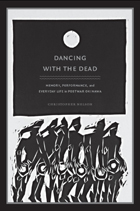
Nelson analyzes the practices of specific performers, showing how memories are recalled, bodies remade, and actions rethought as Okinawans work through fragments of the past in order to reconstruct the fabric of everyday life. Artists such as the popular Okinawan actor and storyteller Fujiki Hayato weave together genres including Japanese stand-up comedy, Okinawan celebratory rituals, and ethnographic studies of war memory, encouraging their audiences to imagine other ways to live in the modern world. Nelson looks at the efforts of performers and activists to wrest the Okinawan past from romantic representations of idyllic rural life in the Japanese media and reactionary appropriations of traditional values by conservative politicians. In his consideration of eisā, the traditional dance for the dead, Nelson finds a practice that reaches beyond the expected boundaries of mourning and commemoration, as the living and the dead come together to create a moment in which a new world might be built from the ruins of the old.
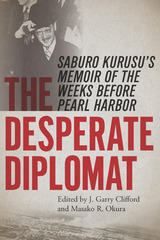

From the revered classics of Akira Kurosawa to the modern marvels of Takeshi Kitano, the films that have emerged from Japan represent a national cinema that has gained worldwide admiration and appreciation. The Directory of World Cinema: Japan provides an insight into the cinema of Japan through reviews of significant titles and case studies of leading directors, alongside explorations of the cultural and industrial origins of key genres.
As the inaugural volume of an ambitious new series from Intellect documenting world cinema, the directory aims to play a part in moving intelligent, scholarly criticism beyond the academy by building a forum for the study of film that relies on a disciplined theoretical base. It takes the form of an A–Z collection of reviews, longer essays, and research resources, accompanied by fifty full-color film stills highlighting significant films and players. The cinematic lineage of samurai warriors, yakuza enforcers, and atomic monsters take their place alongside the politically charged works of the Japanese New Wave, making this a truly comprehensive volume.
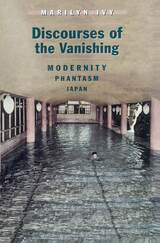
Ivy shows how a fascination with cultural margins accompanied the emergence of Japan as a modern nation-state. This fascination culminated in the early twentieth-century establishment of Japanese folklore studies and its attempts to record the spectral, sometimes violent, narratives of those margins. She then traces the obsession with the vanishing through a range of contemporary reconfigurations: efforts by remote communities to promote themselves as nostalgic sites of authenticity, storytelling practices as signs of premodern presence, mass travel campaigns, recallings of the dead by blind mediums, and itinerant, kabuki-inspired populist theater.
In this book, J. Mark Ramseyer, a noted authority on Japan looks at discrimination against groups in Japanese society, focusing on the Korean, Okinawan, and Burakumin groups. Ramseyer asks why they experience discrimination in Japan, an unusually homogeneous society. Is it because of some prejudice on the part of the majority that prevents their integration into mainstream Japanese society? Or is it because some of the dynamics within the group create incentives for the group to stay together and to be on the fringes of society?
Ramseyer argues that the real explanation is the latter, and each of these three groups has been victimized by its own leadership. Precisely because the groups are dysfunctional, members of the group cannot control members who would appoint themselves group leaders. The result has been the capture of leadership positions by people who manipulate the group to their own private advantage and to the detriment of the group as a whole.
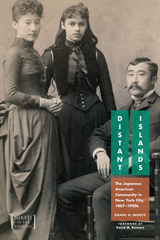
The New York Japanese American community was a composite of several micro communities divided along status, class, geographic, and religious lines. Using a wealth of primary sources—oral histories, memoirs, newspapers, government documents, photographs, and more—Daniel H. Inouye tells the stories of the business and professional elites, mid-sized merchants, small business owners, working-class families, menial laborers, and students that made up these communities. The book presents new knowledge about the history of Japanese immigrants in the United States and makes a novel and persuasive argument about the primacy of class and status stratification and relatively weak ethnic cohesion and solidarity in New York City, compared to the pervading understanding of nikkei on the West Coast. While a few prior studies have identified social stratification in other nikkei communities, this book presents the first full exploration of the subject and additionally draws parallels to divisions in German American communities.
Distant Islands is a unique and nuanced historical account of an American ethnic community that reveals the common humanity of pioneering Japanese New Yorkers despite diverse socioeconomic backgrounds and life stories. It will be of interest to general readers, students, and scholars interested in Asian American studies, immigration and ethnic studies, sociology, and history.
Winner- Honorable Mention, 2018 Immigration and Ethnic History Society First Book Award

The 1905 Portsmouth Conference, mediated by President Theodore Roosevelt, for which he received the Nobel Peace Prize, brought to an end a war in which Japan won spectacular victories on land and sea. Although the peace settlement fell far short of public expectations in Japan, she gained supremacy in Korea and a sphere of influence in South Manchuria as a consequence of the treaty. Nevertheless, the treaty reflected the military stalemate in Manchuria. Roosevelt wanted a balance of power to emerge from the war, and his hope was realized in the peace process.
Raymond Esthus, drawing on the records of six nations, provides a detailed and panoramic account of the 1905 conference from the perspectives of both the Russians and the Japanese participants, depicting the powerful personalities of Roosevelt and the Russian Sergei Witte, as well as Tsar Nicholas II and the Foreign Minister Komura Jutaro. It is a story of verbal duels, tests of will, and moments of high personal courage. If there was no clear-cut victor at the conference, Roosevelt emerged as a worldwide hero of the cause of peace.

A fresh take on the dopplegänger and its place in Japanese film and literature—past and present
Since its earliest known use in German Romanticism in the late 1700s, the word Doppelgänger (double-walker) can be found throughout a vast array of literature, culture, and media. This motif of doubling can also be seen traversing historical and cultural boundaries. Double Visions, Double Fictions analyzes the myriad manifestations of the doppelgänger in Japanese literary and cinematic texts at two historical junctures: the interwar period of the 1920s and 1930s and the present day.
According to author Baryon Tensor Posadas, the doppelgänger marks the intersection of the historical impact of psychoanalytic theory, the genre of detective fiction in Japan, early Japanese cinema, and the cultural production of Japanese colonialism. He examines the doppelgänger’s appearance in the works of Edogawa Rampo, Tanizaki Jun’ichiro, and Akutagawa Ryunosuke, as well as the films of Tsukamoto Shin’ya and Kurosawa Kiyoshi, not only as a recurrent motif but also as a critical practice of concepts. Following these explorations, Posadas asks: What were the social, political, and material conditions that mobilized the desire for the doppelgänger? And how does the dopplegänger capture social transformations taking place at these historical moments?
Double Visions, Double Fictions ultimately reveals how the doppelgänger motif provides a fascinating new backdrop for understanding the enmeshment of past and present.
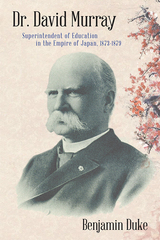
Benjamin Duke has compiled this comprehensive biography of David Murray to showcase Murray’s work, both in assisting around 100 samurai students in their studies at Rutgers, and in his unprecedented role in early Japanese-American relations. This fascinating story uncovers a little-known link between Rutgers University and Japan, and it is the only book to conclude that Rutgers made a greater contribution to the development of modern education in the early Meiji Era than any other non-Japanese college or university in the world.
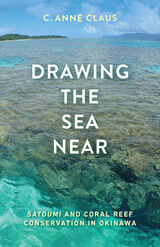
How Japanese coastal residents and transnational conservationists collaborated to foster relationships between humans and sea life
Drawing the Sea Near opens a new window to our understanding of transnational conservation by investigating projects in Okinawa shaped by a “conservation-near” approach—which draws on the senses, the body, and memory to collapse the distance between people and their surroundings and to foster collaboration and equity between coastal residents and transnational conservation organizations. This approach contrasts with the traditional Western “conservation-far” model premised on the separation of humans from the environment.
Based on twenty months of participant observation and interviews, this richly detailed, engagingly written ethnography focuses on Okinawa’s coral reefs to explore an unusually inclusive, experiential, and socially just approach to conservation. In doing so, C. Anne Claus challenges orthodox assumptions about nature, wilderness, and the future of environmentalism within transnational organizations. She provides a compelling look at how transnational conservation organizations—in this case a field office of the World Wide Fund for Nature in Okinawa—negotiate institutional expectations for conservation with localized approaches to caring for ocean life.
In pursuing how particular projects off the coast of Japan unfolded, Drawing the Sea Near illuminates the real challenges and possibilities of work within the multifaceted transnational structures of global conservation organizations. Uniquely, it focuses on the conservationists themselves: why and how has their approach to project work changed, and how have they themselves been transformed in the process?
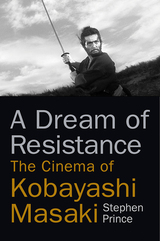
A Dream of Resistance is the first book in English to explore Kobayashi’s entire career, from the early films he made at Shochiku studio, to internationally-acclaimed masterpieces like The Human Condition, Harakiri, and Samurai Rebellion, and on to his final work for NHK Television. Closely examining how Kobayashi’s upbringing and intellectual history shaped the values of his work, Stephen Prince illuminates the political and religious dimensions of Kobayashi’s films, interpreting them as a prayer for peace in troubled times. Prince draws from a wealth of rare archives, including previously untranslated interviews, material that Kobayashi wrote about his films, and even the young director’s wartime diary. The result is an unprecedented portrait of this singular filmmaker.

READERS
Browse our collection.
PUBLISHERS
See BiblioVault's publisher services.
STUDENT SERVICES
Files for college accessibility offices.
RECENTLY PUBLISHED


UChicago Accessibility Resources
home | accessibility | search | about | contact us
BiblioVault ® 2001 - 2026
The University of Chicago Press