
 A SCHOLARLY BOOK REPOSITORY
12 start with D start with D
Since the 1980s and the “social turn” in composition studies and other disciplines, scholars in this field have conceived writing in college as explicitly embedded in socio-rhetorical situations beyond the classroom. From this conviction develops a commitment to teach writing with an emphasis on analyzing the social and political dimensions of rhetoric.
Ironically, though a leftist himself, Tony Scott’s analysis finds the academic left complicit with the forces in American culture that tend, in his view, to compromise education. By focusing on the structures of labor and of institutions that enforce those structures, Scott finds teachers and administrators are too easily swept along with the inertia of a hyper-commodified society in which students---especially working class students---are often positioned as commodities, themselves. Dangerous Writing, then, is a critique of the field as much as it is a critique of capitalism. Ultimately, Scott’s eye is on the institution and its structures, and it is these that he finds most in need of transformation.
A groundbreaking consideration of death from capitalism, from the seventeenth to the twenty-first century
From a 2013 Texas fertilizer plant explosion that killed fifteen people and injured 252 to a 2017 chemical disaster in the wake of Hurricane Harvey, we are confronted all too often with industrial accidents that reflect the underlying attitude of corporations toward the lives of laborers and others who live and work in their companies’ shadows. Dead Labor takes seriously the myriad ways in which bodies are commodified and profits derived from premature death. In doing so it provides a unique perspective on our understanding how life and death drive the twenty-first-century global economy.
James Tyner tracks a history from the 1600s through which premature death and mortality became something calculable, predictable, manageable, and even profitable. Drawing on a range of examples, including the criminalization of migrant labor, medical tourism, life insurance, and health care, he explores how today we can no longer presume that all bodies undergo the same processes of life, death, fertility, and mortality. He goes on to develop the concept of shared mortality among vulnerable populations and examines forms of capital exploitation that have emerged around death and the reproduction of labor.
Positioned at the intersection of two fields—the political economy of labor and the philosophy of mortality—Dead Labor builds on Marx’s notion that death (and truncated life) is a constant factor in the processes of labor. Considering premature death also as a biopolitical and bioeconomic concept, Tyner shows how racialized and gendered bodies are exposed to it in unbalanced ways within capitalism, and how bodies are then commodified, made surplus and redundant, and even disassembled in order to accumulate capital.
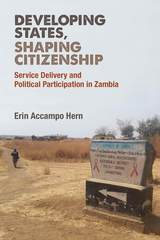
Erin Accampo Hern draws on original data from an original large-N survey, interviews, Afrobarometer data, and archival materials collected over 12 months in Zambia. The theory underlying this book’s framework is that of policy feedback, which argues that policies, once in place, influence the subsequent political participation of the affected population. This theory has predominantly been applied to advanced industrial democracies, and this book is the first explicit effort to adapt the theory to the developing country context.
Building on their previous research, Huber and Stephens show how high wages and generous welfare states are still possible in an age of globalization and trade competition.
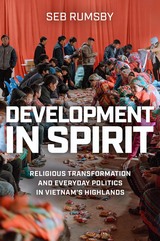
Following state-led market reforms in the 1980s, Vietnam experienced stunning economic transformation. But for the Hmong communities of the country’s north and central highlands, the benefits proved elusive. Instead, the Hmong people have pursued their own alternative paths to development. Rumsby shows how mass conversion to Christianity led to a case of “unplanned development” that put the Hmong on a trajectory of simultaneous integration into the market economy and resistance to state authority.
Many of the strategies community members employ are tied to the Christianization of everyday life. Religious actors play complex and often contradictory roles in facilitating networks of exchange, challenging or enforcing gender norms, promoting communalism and enforcing discipline, and shaping local ideas about progress. They are influenced by national and transnational religious networks, especially US-produced radio broadcasts by Hmong American Christians and local converts.
This compelling account provides fresh theoretical and empirical insights into the interplay of religion, neoliberal development, and marketization across the world.
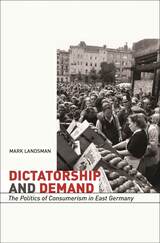
An investigation into the politics of consumerism in East Germany during the years between the Berlin Blockade of 1948-49 and the building of the Berlin Wall in 1961, Dictatorship and Demand shows how the issue of consumption constituted a crucial battleground in the larger Cold War struggle.
Based on research in recently opened East German state and party archives, this book depicts a regime caught between competing pressures. While East Germany's leaders followed a Soviet model, which fetishized productivity in heavy industry and prioritized the production of capital goods over consumer goods, they nevertheless had to contend with the growing allure of consumer abundance in West Germany. The usual difficulties associated with satisfying consumer demand in a socialist economy acquired a uniquely heightened political urgency, as millions of East Germans fled across the open border.
A new vision of the East-West conflict emerges, one fought as much with washing machines, televisions, and high fashion as with political propaganda, espionage, and nuclear weapons. Dictatorship and Demand deepens our understanding of the Cold War.

As this volume suggests, the distributional consequences of these proposals are substantially different and may disproportionately affect those groups who depend on social security to avoid poverty in old age. Together, these studies persuasively show that appropriately designed investment-based social security reforms can effectively reduce the long-term burden of an aging society on future taxpayers, increase the expected future income of retirees, and mitigate poverty rates among the elderly.

"[An] excellent, comprehensive, and illuminating book. Its analysis, deftly integrating considerations of economics, law, politics, and philosophy, brings the issues of 'balanced budgets,' national saving, and intergenerational equity out of the area of religious crusades and into an arena of reason. . . . A magnificent, judicious, and balanced treatment. It should be read and studied not just by specialists in fiscal policy but by all those in the economic and political community."—Robert Eisner, Journal of Economic Literature
"Shaviro's history, economics, and political analysis are right on the mark. For all readers."—Library Journal
READERS
Browse our collection.
PUBLISHERS
See BiblioVault's publisher services.
STUDENT SERVICES
Files for college accessibility offices.
RECENTLY PUBLISHED






UChicago Accessibility Resources
home | accessibility | search | about | contact us
BiblioVault ® 2001 - 2024
The University of Chicago Press