
 A SCHOLARLY BOOK REPOSITORY
127 start with E start with E
Is today’s left really new? How has the European radical left evolved?
Giorgos Charalambous answers these questions by looking at three moments of rapid political change - the late 1960s to late 1970s; the turn of the millennium; and post-2008. He challenges the conventional understanding of a ‘new left’, drawing out continuities with earlier movements and parties.
Charalambous examines the ‘Long ‘68’, symbolised by the May uprisings in France, which saw the rise of new left forces and the widespread criticism by younger radical activists of traditional communist and socialist parties. He puts this side by side with the turn of the millennium when the Global Justice Movement rose to prominence and changed the face of the international left, and also the period after the financial crash of 2008 and the rise of anti-austerity politics which initiated the most recent wave of new left parties such as Podemos in Spain and Syriza in Greece.
With a unique ‘two-level’ perspective, Charalambous approaches the left through both social movements and party politics, looking at identities, rhetoric and organization, and bringing a fresh new approach to radical history, as well as assessing challenges for both activists and scholars.
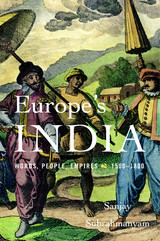
When Portuguese explorers first rounded the Cape of Good Hope and arrived in the subcontinent in the late fifteenth century, Europeans had little direct knowledge of India. The maritime passage opened new opportunities for exchange of goods as well as ideas. Traders were joined by ambassadors, missionaries, soldiers, and scholars from Portugal, England, Holland, France, Italy, and Germany, all hoping to learn about India for reasons as varied as their particular nationalities and professions. In the following centuries they produced a body of knowledge about India that significantly shaped European thought.
Europe’s India tracks Europeans’ changing ideas of India over the entire early modern period. Sanjay Subrahmanyam brings his expertise and erudition to bear in exploring the connection between European representations of India and the fascination with collecting Indian texts and objects that took root in the sixteenth century. European notions of India’s history, geography, politics, and religion were strongly shaped by the manuscripts, paintings, and artifacts—both precious and prosaic—that found their way into Western hands.
Subrahmanyam rejects the opposition between “true” knowledge of India and the self-serving fantasies of European Orientalists. Instead, he shows how knowledge must always be understood in relation to the concrete circumstances of its production. Europe’s India is as much about how the East came to be understood by the West as it is about how India shaped Europe’s ideas concerning art, language, religion, and commerce.


A touchstone of the Enlightenment dispute between rationality and religious belief, David Hume’s essay “Of Miracles” has elicited much commentary from proponents and critics ever since it was published over 250 years ago. Alexander George’s lucid and sustained interpretation of Hume’s essay provides fresh insights into this provocative, occasionally elusive, and always subtle text. The Everlasting Check will be read with interest by both students new to Hume and seasoned scholars.
George does justice to the letter and spirit of Hume’s essay, explaining the concepts and claims involved, making intelligible the essay’s structure, and clarifying remarks that have long puzzled readers. Properly interpreted, the essay’s central philosophical argument proves to be much hardier than Hume’s detractors suggest. George considers a range of objections to Hume—some recent, some perennial—and shows why most fail, either because they are based on misinterpretations or because the larger body of Hume’s philosophy answers them.
Beyond an analysis and defense of Hume’s essay, George also offers a critique of his own, appealing to Ludwig Wittgenstein’s thoughts on magic and ritual to demonstrate that Hume misconstrues the character of religious belief and its relationship to evidence and confirmation. Raising a host of important questions about the connection between religious and empirically verified beliefs, George discusses why Hume’s master argument can fail to engage with committed religious thought and why philosophical argumentation in general often proves ineffective in shaking people’s deeply held beliefs.
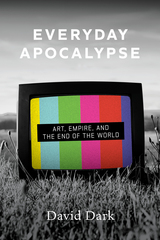
This revised edition of the book includes a foreword by Hanif Abdurraqib, an extensive afterword, updates in light of the passage of time since its publication, and new insights from the author, whose outspokenness has placed him outside of circles in which he was once supported and celebrated.
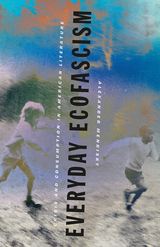
A timely look into how fascist ideas permeate contemporary culture well beyond the far right
As challenges posed by climate change have intensified in the twenty-first century, right-wing figures in the United States and abroad have increasingly framed anti-immigrant, anti-Indigenous, and white-supremacist sentiments in terms of environmental survival. Everyday Ecofascism explores the insidious nature of this tendency, revealing how permutations of these perspectives in fact resonate across the political spectrum. Drawing on comparative studies of fascism writ large, Alexander Menrisky demonstrates that ecofascism is best understood not as a uniquely right-wing ideology but as a political genre that reinforces white supremacy and other forms of domination.
Presenting a view of fascism as a complex power network that plays out on scales both large and small, Menrisky shows how extremist sentiments have crept into everyday language, stories, and ideas. Through a literary and cultural studies lens, he illuminates ecofascism’s narrative patterns and their easy permeation of environmentalist discourses, from back-to-the-land movements to the resurgence of psychedelic drugs, food localism, and pandemic politics. Opposite his analysis of ecofascism in action, Menrisky sheds important light on narrative resistances to dominant conceptions of race, nation, and territory by Native, queer, and women-of-color writers who have countered ethnonationalism for generations.
Bridging past and present, Menrisky powerfully nails down the emergent concept of ecofascism and forms a basis for understanding phenomena like Covid-19, ecological utopianism, and psychedelic environmentalism that detangles ecofascist tendencies from justice-oriented visions of place-based belonging.
Retail e-book files for this title are screen-reader friendly.
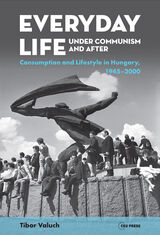
By providing a survey of consumption and lifestyle in Hungary during the second half of the twentieth century, this book shows how common people lived during and after tumultuous regime changes. After an introduction covering the late 1930s, the study centers on the communist era, and goes on to describe changes in the post-communist period with its legacy of state socialism.
Tibor Valuch poses a series of questions. Who could be called rich or poor and how did they live in the various periods? How did living, furnishings, clothing, income, and consumption mirror the structure of the society and its transformations? How could people accommodate their lifestyles to the political and social system? How specific to the regime was consumption after the communist takeover, and how did consumption habits change after the demise of state socialism? The answers, based on micro-histories, statistical data, population censuses and surveys help to understand the complexities of daily life, not only in Hungary, but also in other communist regimes in east-central Europe, with insights on their antecedents and afterlives.
A fascinating analysis of anonymous publication centuries before the digital age
Everywhere and Nowhere considers the ubiquity of anonymity and mediation in the publication and circulation of eighteenth-century British literature—before the Romantic creation of the “author”—and what this means for literary criticism. Anonymous authorship was typical of the time, yet literary scholars and historians have been generally unable to account for it as anything more than a footnote or curiosity.
Mark Vareschi shows the entangled relationship between mediation and anonymity, revealing the nonhuman agency of the printed text. Drawing richly on quantitative analysis and robust archival work, Vareschi brings together philosophy, literary theory, and media theory in a trenchant analysis, uncovering a history of textual engagement and interpretation that does not hinge on the known authorial subject.
In discussing anonymous poetry, drama, and the novel along with anonymously published writers such as Daniel Defoe, Frances Burney, and Walter Scott, he unveils a theory of mediation that renews broader questions about agency and intention. Vareschi argues that textual intentionality is a property of nonhuman, material media rather than human subjects alone, allowing the anonymous literature of the eighteenth century to speak to contemporary questions of meaning in the philosophy of language. Vareschi closes by exploring dubious claims about the death of anonymity and the reexplosion of anonymity with the coming of the digital. Ultimately, Everywhere and Nowhere reveals the long history of print anonymity so central to the risks and benefits of the digital culture.
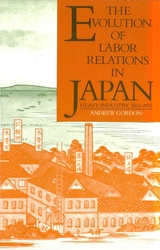
The century-long process by which a distinct pattern of Japanese labor relations evolved is traced through the often turbulent interactions of workers, managers, and, at times, government bureaucrats and politicians. The author argues that, although by the 1920s labor relations had reached a stage that foreshadowed postwar development, it was not until the 1940s and 1950s that something closely akin to the contemporary pattern emerged.
The central theme is that the ideas and actions of the workers, whether unionized or not, played a vital role in the shaping of the system. This is the only study in the West that demonstrates how Japanese workers sought to change and to some extent succeeded in changing the structure of factory life. Managerial innovations and the efforts of state bureaucrats to control social change are also examined.
The book is based on extensive archival research and interviewing in Japan, including the use of numerous labor-union publications and the holdings of the prewar elite’s principal organization for the study of social issues, the Kyochokai (“Association for Harmonious Cooperation”)—both collections having only recently been catalogued and opened to scholars. This is an intensive look at past developments that underlie labor relations in today’s Japanese industrial plants.
Life in a provincial capital is the subject of this study of Exeter during the Elizabethan and early Stuart ages. The author offers new insight into the way the English middle-class lived and the way in which Tudor policy achieved its aims in the provinces. During this period, Exeter was characterized by its self-sufficiency and by an oligarchical control over every aspect of its civic life. Wallace MacCaffrey describes a semi-autonomous world in itself, in which a small interlocked group of merchant families, related by marriage, kept tight control over the economy, politics, religion, education and social activities.
Taking the inclinations and actions of the local figures as his points of departure, the author discusses such great issues of the age as the Reformation, the war with Spain, and the monarchy, and examines how often they were pushed aside or subordinated to local affairs. Although the local citizen body had no part in national policy making, it was called upon to participate in carrying out the directives which came from London; it did carry out these policies, sometimes successfully, sometimes unsuccessfully.
In writing this detailed study, MacCaffrey has drawn on hitherto unused files from the records of the city.

Today, nearly any group or nation with violence in its past has constructed or is planning a memorial museum as a mechanism for confronting past trauma, often together with truth commissions, trials, and/or other symbolic or material reparations. Exhibiting Atrocity documents the emergence of the memorial museum as a new cultural form of commemoration, and analyzes its use in efforts to come to terms with past political violence and to promote democracy and human rights.
Through a global comparative approach, Amy Sodaro uses in-depth case studies of five exemplary memorial museums that commemorate a range of violent pasts and allow for a chronological and global examination of the trend: the U.S. Holocaust Memorial Museum in Washington, DC; the House of Terror in Budapest, Hungary; the Kigali Genocide Memorial Centre in Rwanda; the Museum of Memory and Human Rights in Santiago, Chile; and the National September 11 Memorial Museum in New York. Together, these case studies illustrate the historical emergence and global spread of the memorial museum and show how this new cultural form of commemoration is intended to be used in contemporary societies around the world.
Download open access ebook.
This new edition, with additional interviews and a new introduction, illuminates the dangers of the rise of right-wing nationalist revisionism by using Spain as a case study for how nations face, or don't face, difficult questions about their past.

Back by popular demand and new in paperback, this spirited collection of nearly twenty papers celebrates the 450th anniversary of Hernando de Soto’s epic expedition across the Southeast and West.
Originally presented at two symposia conducted by the University Museum at the University of Arkansas, the collection offers an array of viewpoints and diverse approaches to de Soto scholarship. Archaeologists, anthropologists, historians, museum curators, and folklorists all contribute to this lively debate on the Spanish explorer and his travels.
The book focuses on research that challenges traditional interpretation of de Soto’s entrada and travel route, particularly after the expedition crossed the Mississippi River. David H. Dye hypothesizes a route across the river and the alluvial plain by linking the narrative accounts with geography and archaeological knowledge. Phyllis A. Morse asserts that the Parkin site is the location of the capital of Casqui, one of the polities visited by de Soto. Charles M. Hudson repostulates his version of the expedition route, which in 1988 severely challenged the De Soto Commission theory of 1939. Ann M. Early redraws the trail in the uplands of the Ouachita Mountains And Frank E. Schambach tests the possibility that the expedition wandered through Caddoan territory in east Texas after de Soto’s death.
Several chapters examine the Native Americans whom de Soto and his expedition encountered in their journey; other contributions provide a fresh look at the chronicles of the expedition that have survived. What emerges is a redrawn map of de Soto’s exploration—and a deeper understanding of the impact of European contact on the New World.

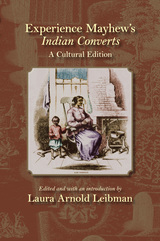
First published in 1727 under the title Indian Converts, or Some account of the lives and dying speeches of a considerable number of the Christianized Indians of Martha's Vineyard, in New-England, Experience Mayhew's history of the Wampanoag Indians on Martha's Vineyard provides a rare look at the lives and culture of four generations of Native Americans in colonial America. Dividing his treatment into four sections—Indian Ministers, Good Men, Religious Women, and Pious Children—Mayhew details the books that different age groups were reading, provides insights into early New England pedagogy and childrearing practices, and describes each individual in terms of genealogy, religious practice, way of life, and place of residence.
In addition to drawing on his own firsthand knowledge of the community and transcriptions of oral testimony he and others collected, Mayhew inserts translations of Wampanoag texts that have since been lost. Although the book has been out of print since the early nineteenth century, scholars have long recognized its importance for understanding the history of New England's Native communities. In an extensive introduction to this new scholarly edition, Laura Arnold Leibman places Indian Converts in a broader cultural context and explores its significance. She shows how Mayhew's biographies illuminate the theological upheavals that rocked early eighteenth-century New England on the eve of the Great Awakening, shifts that altered not only the character of Puritanism but also the landscape of Wampanoag religious and cultural life. An accompanying online archive that includes over 600 images and documents further contextualizes Mayhew's work and provide suggestions for students' investigations of the text.
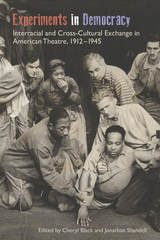
In Experiments in Democracy, edited by Cheryl Black and Jonathan Shandell, theatre historians examine a wide range of performances—from Broadway, folk plays and dance productions to scripted political rallies and radio dramas. Contributors look at such diverse groups as the Theatre Union, La Unión Martí-Maceo, and the American Negro Theatre, as well as individual playwrights and their works, including Theodore Browne’s folk opera Natural Man, Josefina Niggli’s Soldadera, and playwright Lynn Riggs’s Cherokee Night and Green Grow the Lilacs (the basis for the musical Oklahoma!). Exploring the ways progressive artists sought to connect isolated racial and cultural groups in pursuit of a more just and democratic society, contributors take into account the blind spots, compromised methods, and unacknowledged biases at play in their practices and strategies. Essays demonstrate how the gap between the ideal of American democracy and its practice—mired in entrenched systems of white privilege, economic inequality, and social prejudice—complicated the work of these artists.
Focusing on questions of race, ethnicity, gender, and sexuality on the stage in the decades preceding the Civil Rights era, Experiments in Democracy fills an important gap in our understanding of the history of the American stage—and sheds light on these still-relevant questions in contemporary American society.
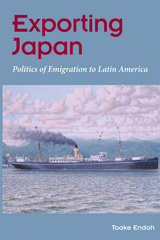
Exporting Japan examines the domestic origins of the Japanese government's policies to promote the emigration of approximately three hundred thousand native Japanese citizens to Latin America between the 1890s and the 1960s. This imperialist policy, spanning two world wars and encompassing both the pre-World War II authoritarian government and the postwar conservative regime, reveals strategic efforts by the Japanese state to control its populace while building an expansive nation beyond its territorial borders.
Toake Endoh compellingly argues that Japan's emigration policy embodied the state's anxieties over domestic political stability and its intention to remove marginalized and radicalized social groups by relocating them abroad. Documenting the disproportionate focus of the southwest region of Japan as a source of emigrants, Endoh considers the state's motivations in formulating emigration policies that selected certain elements of the Japanese population for "export." She also recounts the situations migrants encountered once they reached Latin America, where they were often met with distrust and violence in the "yellow scare" of the pre-World War II period.


The Critique of Judgment—the third and final work in Kant’s critical system—laid the groundwork of modern aesthetics when it appeared in 1790. Eli Friedlander’s reappraisal of this seminal accomplishment reformulates and elucidates Kant’s thought in order to reveal the inner unity of the Third Critique.
Expressions of Judgment emphasizes the internal connection of judgment and meaning in Kant’s aesthetics, showing how the pleasure in judging is intimately related to our capacity to draw meaning from our encounter with beauty. Although the meaningfulness of aesthetic judgment is most evident in the response to art, the appreciation of nature’s beauty has an equal share in the significant experience of our world. Friedlander’s attention to fundamental dualities underlying the Third Critique—such as that of art and nature—underscores how its themes are subordinated systematically to the central task Kant sets himself: that of devising a philosophical blueprint for the mediation between the realms of nature and freedom.
This understanding of the mediating function of judgment guides Friedlander in articulating the dimensions of the field of the aesthetic that opens between art and nature, the subject and the object, knowledge and the will, as well as between the individual and the communal. Expressions of Judgment illuminates the distinctness as well as the continuity of this important late phase in Kant’s critical enterprise, providing insights for experienced scholars as well as new students of philosophy.

Though contributors write from a variety of methodological positions and address themselves to a range of archives, they share the primary conviction that the impact of Web 2.0 on literary practice is far-reaching, far from self-evident, and far more variegated and unpredictable than easy summations of social media’s influence suggest. Expressive Networks asks after poetry’s present and future by examining what poems themselves express about the social make-up of networked platforms.
Edited by Matthew Kilbane with contributions from Cameron Awkward-Rich, Micah Bateman, Andrew Campana, Sumita Chakraborty, Scott Challener, C.R. Grimmer, Tess McNulty, Michael Nardone, Seth Perlow, Anna Preus, Susanna Sacks, Carly Schnitzler, Melanie Walsh, and Samuel Caleb Wee.
The borders of Russian history, whether chronological, geographical, political or intellectual, have always been patrolled, have sometimes been evaded, but have never been invisible. This volume attempts to extend those borders in several ways. The articles stress continuity rather than ruptures and their organization emphasizes persistent factors over time, particularly across the 1917 divide. Geographical dimensions are explored not through conquest but through regional responses to the center: local variants of eighteenth- and nineteenth-century colonial policies in the Caucasus and Turkestan are complemented by Central Asian petitions for citizenship in the 1930s and Siberian healing in the 1990s. Ukrainian aspirations take a special focus, from Kyivan Rus’ to Ruthenian dreams.
Politically, of course, Marxist–Leninist ideology attempted to extend its own frontiers of Russian history. Several studies here attempt to assess the meaning of the Soviet period in terms of ideology, practices, processes and memory. It is fitting too that the now accepted boundaries of the Soviet era—the revolutionary decade and the first decade of transition—are subject to detailed attention and analysis. The intellectual borders of Russian and Soviet history, long policed from within and without, have been breached by the creative and wide-ranging use of newly accessible archival sources that form the basis for these articles. The sense of community exhibited by this collection, however, is not artificial nor is it wholly imagined. It derives from the honoree, whose scholarly life has exhibited the blurring of traditional boundaries, whether disciplinary, generational, or national, that is represented by the contributors to this volume.
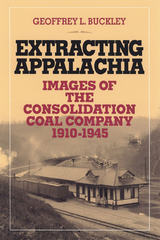
As a function of its corporate duties, the Consolidation Coal Company, one of the largest coal-mining operations in the United States during the first half of the twentieth century, had photographers take hundreds of pictures of nearly every facet of its operations. Whether for publicity images, safety procedures, or archival information, these photographs create a record that goes far beyond the purpose the company intended.
In Extracting Appalachia, geographer Geoffrey L. Buckley examines the company’s photograph collection housed at the Smithsonian Institution’s National Museum of American History. Included in the collection are images of mine openings, mining equipment, and mine accidents, as well as scenes of the company towns, including schools, churches, recreational facilities, holiday celebrations, and company stores.
Although the photographs in the collection provide us with valuable insights, they tell only part of the story. Using company records, state and federal government documents, contemporary newspaper accounts, and other archival materials, Professor Buckley shows that these photographs reveal much more than meets the eye.
Extracting Appalachia places these historic mining images in their social, cultural, and historical context, uncovering the true value and meaning of this rare documentary record.
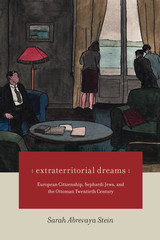
Sarah Abrevaya Stein traces the experiences of Mediterranean Jewish women, men, and families who lived through a tumultuous series of wars, border changes, genocides, and mass migrations, all in the shadow of the collapse of the Ottoman Empire and the ascendance of the modern passport regime. Moving across vast stretches of Europe, the Middle East, Asia, and the Americas, she tells the intimate stories of people struggling to find a legal place in a world ever more divided by political boundaries and competing nationalist sentiments. From a poor youth who reached France as a stowaway only to be hunted by the Parisian police as a spy to a wealthy Baghdadi-born man in Shanghai who willed his fortune to his Eurasian Buddhist wife, Stein tells stories that illuminate the intertwined nature of minority histories and global politics through the turbulence of the modern era.
READERS
Browse our collection.
PUBLISHERS
See BiblioVault's publisher services.
STUDENT SERVICES
Files for college accessibility offices.
RECENTLY PUBLISHED



UChicago Accessibility Resources
home | accessibility | search | about | contact us
BiblioVault ® 2001 - 2026
The University of Chicago Press