
 A SCHOLARLY BOOK REPOSITORY
7 start with E start with E
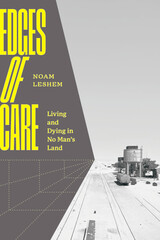
“No man’s land” invokes stretches of barren landscape, twisted barbed wire, desolation, and the devastation of war. But this is not always the reality. According to Noam Leshem in Edges of Care, the term also reveals radical abandonment by the state. From the Northern Sahara to the Amazon rainforests, people around the world find themselves in places that have been stripped of sovereign care. Leshem is committed to defining these spaces and providing a more intimate understanding of this urgent political reality.
Based on nearly a decade of research in some of the world’s most challenging conflict zones, Edges of Care offers a profound account of abandoned lives and lands, and how they endure and sometimes thrive once left to fend for themselves. Leshem interrogates no man’s land as a site of radical uncaring: abandoned by a sovereign power in a relinquishment of responsibility for the space or anyone inside it. To understand the ramifications of such uncaring, Leshem takes readers through a diverse series of abandoned places, including areas in Palestine, Syria, Colombia, Sudan, and Cyprus. He shows that no man’s land is not empty of life, but almost always inhabited and, in fact, often generative of new modes of being. Beautifully written and evocative, Edges of Care reveals the unexamined complexities and political dynamics hidden within and around places governed by callous indifference.
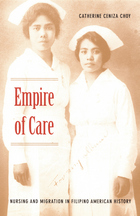
Choy conducted extensive interviews with Filipino nurses in New York City and spoke with leading Filipino nurses across the United States. She combines their perspectives with various others—including those of Philippine and American government and health officials—to demonstrate how the desire of Filipino nurses to migrate abroad cannot be reduced to economic logic, but must instead be understood as a fundamentally transnational process. She argues that the origins of Filipino nurse migrations do not lie in the Philippines' independence in 1946 or the relaxation of U.S. immigration rules in 1965, but rather in the creation of an Americanized hospital training system during the period of early-twentieth-century colonial rule. Choy challenges celebratory narratives regarding professional migrants’ mobility by analyzing the scapegoating of Filipino nurses during difficult political times, the absence of professional solidarity between Filipino and American nurses, and the exploitation of foreign-trained nurses through temporary work visas. She shows how the culture of American imperialism persists today, continuing to shape the reception of Filipino nurses in the United States.
Boyer and Shapiro provide Nevada-specific information\--medical, legal, and financial\--on the wide range of problems that arise during the elder years. Case studies show how a typical family copes with troubles such as failing health or financial cares and what options they have. This guide will help any Nevada resident plan for their own senior years and take care of aging parents, spouses, and other loved ones.
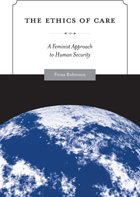
In The Ethics of Care, Fiona Robinson demonstrates how the responsibilities of sustaining life are central to the struggle for basic human security. She takes a unique approach, using a feminist lens to challenge gender biases in rights-based, individualist approaches.Robinson's thorough and impassioned consideration of care in both ethical and practical terms provides a starting point for understanding and addressing the material, emotional and psychological conditions that create insecurity for people. The Ethics of Careexamines “care ethics” and “security” at the theoretical level and explores the practical implications of care relations for security in a variety of contexts: women's labor in the global economy, humanitarian intervention and peace building, healthcare, and childcare.
Theoretically-innovative and policy-relevant, this critical analysis demonstrates the need to understand the obstacles and inequalities that obstruct the equitable and adequate delivery of care around the world.
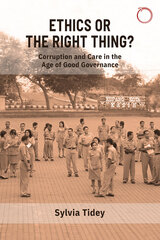
Combining ethnographic fieldwork in the city of Kupang with an acute historical sensibility, Sylvia Tidey shows how good governance initiatives paradoxically perpetuate civil service corruption while also facilitating the emergence of new forms of it. Importing critical insights from the anthropology of ethics to the burgeoning anthropology of corruption, Tidey exposes enduring developmentalist fallacies that treat corruption as endemic to non-Western subjects. In practice, it is often indistinguishable from the ethics of care and exchange, as Indonesian civil servants make worthwhile lives for themselves and their families. This book will be a vital text for anthropologists and other social scientists, particularly scholars of global studies, development studies, and Southeast Asia.
READERS
Browse our collection.
PUBLISHERS
See BiblioVault's publisher services.
STUDENT SERVICES
Files for college accessibility offices.
RECENTLY PUBLISHED




UChicago Accessibility Resources
home | accessibility | search | about | contact us
BiblioVault ® 2001 - 2025
The University of Chicago Press