
 A SCHOLARLY BOOK REPOSITORY
108 books about Comparative Religion and 4
start with E
108 books about Comparative Religion and 4
108 books about Comparative Religion
4 start with E start with E
4 start with E start with E
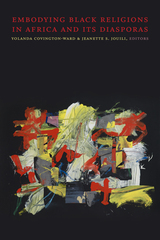
Embodying Black Religions in Africa and Its Diasporas
Yolanda Covington-Ward and Jeanette S. Jouili, editors
Duke University Press, 2021
The contributors to Embodying Black Religions in Africa and Its Diasporas investigate the complex intersections between the body, religious expression, and the construction and transformation of social relationships and political and economic power. Among other topics, the essays examine the dynamics of religious and racial identity among Brazilian Neo-Pentecostals; the significance of cloth coverings in Islamic practice in northern Nigeria; the ethics of socially engaged hip-hop lyrics by Black Muslim artists in Britain; ritual dance performances among Mama Tchamba devotees in Togo; and how Ifá practitioners from Mexico, Colombia, Venezuela, Trinidad, and the United States join together in a shared spiritual ethnicity. From possession and spirit-induced trembling to dance, the contributors outline how embodied religious practices are central to expressing and shaping interiority and spiritual lives, national and ethnic belonging, ways of knowing and techniques of healing, and sexual and gender politics. In this way, the body is a crucial site of religiously motivated social action for people of African descent.
Contributors. Rachel Cantave, Youssef Carter, N. Fadeke Castor, Yolanda Covington-Ward, Casey Golomski, Elyan Jeanine Hill, Nathanael J. Homewood, Jeanette S. Jouili, Bertin M. Louis Jr., Camee Maddox-Wingfield, Aaron Montoya, Jacob K. Olupona, Elisha P. Renne
Contributors. Rachel Cantave, Youssef Carter, N. Fadeke Castor, Yolanda Covington-Ward, Casey Golomski, Elyan Jeanine Hill, Nathanael J. Homewood, Jeanette S. Jouili, Bertin M. Louis Jr., Camee Maddox-Wingfield, Aaron Montoya, Jacob K. Olupona, Elisha P. Renne
[more]
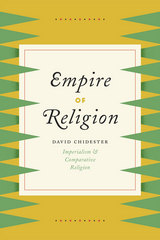
Empire of Religion
Imperialism and Comparative Religion
David Chidester
University of Chicago Press, 2014
How is knowledge about religion and religions produced, and how is that knowledge authenticated and circulated? David Chidester seeks to answer these questions in Empire of Religion, documenting and analyzing the emergence of a science of comparative religion in Great Britain during the second half of the nineteenth century and its complex relations to the colonial situation in southern Africa. In the process, Chidester provides a counterhistory of the academic study of religion, an alternative to standard accounts that have failed to link the field of comparative religion with either the power relations or the historical contingencies of the imperial project.
In developing a material history of the study of religion, Chidester documents the importance of African religion, the persistence of the divide between savagery and civilization, and the salience of mediations—imperial, colonial, and indigenous—in which knowledge about religions was produced. He then identifies the recurrence of these mediations in a number of case studies, including Friedrich Max Müller’s dependence on colonial experts, H. Rider Haggard and John Buchan’s fictional accounts of African religion, and W. E. B. Du Bois’s studies of African religion. By reclaiming these theorists for this history, Chidester shows that race, rather than theology, was formative in the emerging study of religion in Europe and North America. Sure to be controversial, Empire of Religion is a major contribution to the field of comparative religious studies.
In developing a material history of the study of religion, Chidester documents the importance of African religion, the persistence of the divide between savagery and civilization, and the salience of mediations—imperial, colonial, and indigenous—in which knowledge about religions was produced. He then identifies the recurrence of these mediations in a number of case studies, including Friedrich Max Müller’s dependence on colonial experts, H. Rider Haggard and John Buchan’s fictional accounts of African religion, and W. E. B. Du Bois’s studies of African religion. By reclaiming these theorists for this history, Chidester shows that race, rather than theology, was formative in the emerging study of religion in Europe and North America. Sure to be controversial, Empire of Religion is a major contribution to the field of comparative religious studies.
[more]

Erasmus and the Jews
Shimon Markish
University of Chicago Press, 1986
Erasmus of Rotterdam was the greatest Christian humanist scholar of the Northern European Renaissance, a correspondent of Sir Thomas More and many other learned men of his time, known to his contemporaries and to posterity for subtlety of his thought and the depth of his learning. He was also, according to some modern writers, an anti-Semite. In this complete analysis of all of Erasmus' writings on Jews and Judaism, Shimon Markish asserts that the accusation cannot be sustained. For Markish, to ask whether Erasmus was a friend or enemy of the Jews is to ask a modern question of a sixteenth-century man, whose attitude can best be called "asemitism." Erasmus' chief preoccupation was with the future of "the true philosophy of Christ"; he had little interest in the Jewish community of his own time.
Erasmus and the Jews discusses Erasmus' critique of Mosaic law and his view of the conflict between "Judaism" as legalistic morality and Jesus' teaching; his judgment on the Pharisees of Jesus' time; his emphasis on the importance of the study of Hebrew; and his opinions of sixteenth-century Jews. This meticulous analysis reveals an Erasmus who defended his vision of true piety by rejecting "Judaizing" Christians more than Jews and who saw the Old Testament as integral to the Christian worldview. As a Christian, he regretted nonbelief and pitied unbelievers, without vicious hostility toward any single people. His theological opposition to a form of religious thought which he identified with Judaism was not translated into crude prejudice against actual Jews. In general, his calm consideration of the strange and the foreign and his willingness to restrict his judgments to the philosophical realm were, Markish argues, early and significant steps toward enlightened toleration.
Markish's discussion of Erasmus is supplemented with an Afterword by theologian and philosopher Arthur A. Cohen, who offers a variant interpretation of Erasmus' writings and attitudes. The juxtaposed arguments of the two scholars make this an especially illuminating work for any student of Erasmus and his influence. Erasmus and the Jews also gives a necessary clarity to our understanding of the meaning of anti-Semitism and the history of religious toleration. Markish's profound knowledge of Erasmus allows him to demonstrate the fundamental importance of putting arguments and terminology in the context of a thinker's work and his own time.
Erasmus and the Jews discusses Erasmus' critique of Mosaic law and his view of the conflict between "Judaism" as legalistic morality and Jesus' teaching; his judgment on the Pharisees of Jesus' time; his emphasis on the importance of the study of Hebrew; and his opinions of sixteenth-century Jews. This meticulous analysis reveals an Erasmus who defended his vision of true piety by rejecting "Judaizing" Christians more than Jews and who saw the Old Testament as integral to the Christian worldview. As a Christian, he regretted nonbelief and pitied unbelievers, without vicious hostility toward any single people. His theological opposition to a form of religious thought which he identified with Judaism was not translated into crude prejudice against actual Jews. In general, his calm consideration of the strange and the foreign and his willingness to restrict his judgments to the philosophical realm were, Markish argues, early and significant steps toward enlightened toleration.
Markish's discussion of Erasmus is supplemented with an Afterword by theologian and philosopher Arthur A. Cohen, who offers a variant interpretation of Erasmus' writings and attitudes. The juxtaposed arguments of the two scholars make this an especially illuminating work for any student of Erasmus and his influence. Erasmus and the Jews also gives a necessary clarity to our understanding of the meaning of anti-Semitism and the history of religious toleration. Markish's profound knowledge of Erasmus allows him to demonstrate the fundamental importance of putting arguments and terminology in the context of a thinker's work and his own time.
[more]
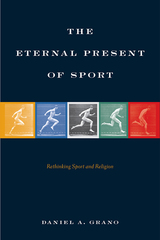
The Eternal Present of Sport
Rethinking Sport and Religion
Daniel A. Grano
Temple University Press, 2017
In his persuasive study The Eternal Present of Sport, Daniel Grano rethinks the sport-religion relationship by positioning sport as a source of theological trouble. Focusing on bodies, time, movement, and memory, he demonstrates how negative theology can be practically and theoretically useful as a critique of elite televised sport.
Grano asserts that it is precisely through sport’s highest religious ideals that controversies are taking shape and constituting points of political and social rupture. He examines issues of transcendence, “legacy”—e.g., “greatest ever,” or “all-time”—and “witnessing” through instant replay, which undermine institutional authority. Grano also reflects on elite athletes representing especially powerful embodiments of religious and social conflict, including around issues related to gender, sexuality, ability doping, traumatic brain injury, and institutional greed.
Elite sport is in a period of profound crisis. It is through the ideals Grano analyzes that we can imagine a radically alternative future for elite sport.
Grano asserts that it is precisely through sport’s highest religious ideals that controversies are taking shape and constituting points of political and social rupture. He examines issues of transcendence, “legacy”—e.g., “greatest ever,” or “all-time”—and “witnessing” through instant replay, which undermine institutional authority. Grano also reflects on elite athletes representing especially powerful embodiments of religious and social conflict, including around issues related to gender, sexuality, ability doping, traumatic brain injury, and institutional greed.
Elite sport is in a period of profound crisis. It is through the ideals Grano analyzes that we can imagine a radically alternative future for elite sport.
[more]
READERS
Browse our collection.
PUBLISHERS
See BiblioVault's publisher services.
STUDENT SERVICES
Files for college accessibility offices.
RECENTLY PUBLISHED



UChicago Accessibility Resources
home | accessibility | search | about | contact us
BiblioVault ® 2001 - 2026
The University of Chicago Press