logo for Harvard University Press
Epidemiology of Neurologic and Sense Organ Disorders
Leonard T. Kurland, John F. Kurtzke, and Irving D. Goldberg
Harvard University Press, 1973
This is the first book-length treatment of the frequency and distribution of neurologic and sense disorders. It is based primarily on special tabulations of mortality data for 1959–1961 applied to the U.S. census of 1960. Information on incidence, prevalence, and survivorship is provided for each major disorder and a summary chapter considers the frequency and geographic distribution of neurologic disorders in terms of age, sex, color, and demographic characteristics.
[more]

front cover of Epilepsy and the Family
Epilepsy and the Family
A New Guide
Richard Lechtenberg M.D.
Harvard University Press, 2002

Epilepsy and the Family: A New Guide updates Richard Lechtenberg’s classic handbook for people with seizure disorders and those closest to them. It offers coping strategies for the wide range of practical and emotional challenges that epilepsy can introduce into the family: marital and sexual difficulties, concerns about pregnancy and inheritance, drug compliance and abuse among teenagers, personality changes and suicide. This new guide addresses the personal questions that adults with epilepsy may be reluctant to ask their physician, and it offers chapters tailored to the special stresses of spouses, parents, and siblings who, like the patient, must live with a seizure disorder.

As many as two and a half million Americans have epilepsy. Thirty percent of them are children under the age of 18. And there are 125,000 newly diagnosed cases each year. A practicing neurologist with decades of clinical experience, Lechtenberg clearly and concisely explains the biology behind this complex and relatively widespread class of diseases. He discusses the various medical conditions that can cause seizures in children and adults and points out that the cause of many seizure disorders is never discovered. Patients and those who care about them will find authoritative but accessible advice on various medications and surgical approaches and the information they need to ask informed questions of their doctors. For the medical professional, this book offers important information on how to better treat the patient with epilepsy by recognizing the needs of the entire family.

This revised edition addresses:

— New drugs and surgical techniques that have been developed in the past 15 years
— Pharmaceutical and non-pharmaceutical treatment strategies
— New clinical data on drug combinations and side effects
— Up-to-date statistics for mortality, reproduction, violent behavior, divorce, and suicide


[more]

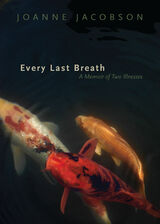
front cover of Every Last Breath
Every Last Breath
A Memoir of Two Illnesses
Joanne Jacobson
University of Utah Press, 2020
When Joanne Jacobson’s writing about her mother’s respiratory illness was interrupted by her own diagnosis with a rare blood disorder, she found her perspective profoundly altered. Every Last Breath follows these two chronic illnesses as they grow unexpectedly intertwined. Rejecting a fixed, retrospective point of view and the forward-moving trajectory of conventional memoir, Jacobson brings the reader to the emotionally raw present—where potentially fatal illness and “end of life” both remain, emphatically, life. As chronic illness blurs the distinction between illness and wellness, she discovers how a lifetime of relapse and remission can invite transformation. Written at the fluid, unsettling boundary between prose and poetry, these essays offer a narrative diagnosis of ongoing revision.
[more]

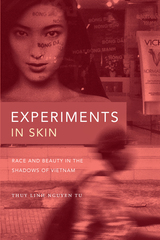
front cover of Experiments in Skin
Experiments in Skin
Race and Beauty in the Shadows of Vietnam
Thuy Linh Nguyen Tu
Duke University Press, 2021
In Experiments in Skin Thuy Linh Nguyen Tu examines the ongoing influence of the Vietnam War on contemporary ideas about race and beauty. Framing skin as the site around which these ideas have been formed, Tu foregrounds the histories of militarism in the production of US biomedical knowledge and commercial cosmetics. She uncovers the efforts of wartime scientists in the US Military Dermatology Research Program to alleviate the environmental and chemical risks to soldiers' skin. These dermatologists sought relief for white soldiers while denying that African American soldiers and Vietnamese civilians were also vulnerable to harm. Their experiments led to the development of pharmaceutical cosmetics, now used by women in Ho Chi Minh City to tend to their skin, and to grapple with the damage caused by the war's lingering toxicity. In showing how the US military laid the foundations for contemporary Vietnamese consumption of cosmetics and practices of beauty, Tu shows how the intersecting histories of militarism, biomedicine, race, and aesthetics become materially and metaphorically visible on skin.
[more]


Send via email Share on Facebook Share on Twitter