
 A SCHOLARLY BOOK REPOSITORY
14 start with E start with E
Focuses on contemporary art and media to examine the role of visuals in environmental violence and war in Northern Kurdistan.
Extractivism—exploiting the earth for resources—has long driven racial capitalism and colonialism. And yet, how does extractivism operate in a world where ecological and humanitarian sensibilities are unprecedentedly widespread? Eray Çaylı argues it does so by mobilizing these sensibilities in new ways. Extractivism is no longer only about moving the earth—displacing peoples, fossils, minerals, and waters—but also leaving those who witness this violent displacement sentimentally moved.
Earthmoving conceptualizes this duality. Derived from Çaylı’s years-long work in Northern Kurdistan, home to the world’s largest stateless nation—rendered stateless by colonial policies since the nineteenth century—Earthmoving focuses on the 2010s, a decade that began with peace talks between Turkey and the Kurdish liberation movement but ended with war. The decade saw extractivism intensify in the region and images of its harm proliferate across art and media. Together with contemporary artists, Çaylı shows that images challenge extractivism both by making its harm visible and by fostering self-reflexive and reciprocal collaboration that breaks with its valuation of the colonized and the racialized only in quantifiable and marketable terms.
A natural division between the eastern and western slopes of the San Juans is the north-south line that runs approximately through Lake City, south of the crossing of the Piedra River by US Highway 160. In this super guidebook, twenty-seven contributors--all experts in their fields--artfully bring the geology, hydrology, animal and plant life, human histories, and travel routes of these eastern slopes to life. Designed to inform researchers, educators, and students about the region's complex systems, The Eastern San Juan Mountains also serves as an informative guidebook to accompany visitors along their travels on the Silver Thread National Scenic Byway, which stretches between South Fork and Lake City.
The Eastern San Juan Mountains deserves a place next to The Western San Juan Mountains on the bookshelf of every naturalist, researcher, resident, educator, student, and tourist seeking a greater understanding of this marvelous place and its history.
Inhabiting the rainforest of the southwest Maracaibo Basin, split by the border between Colombia and Venezuela, the Barí have survived centuries of incursions. Anthropologist Roberto Lizarralde began studying the Barí in 1960, when he made the first modern peaceful contact with this previously unreceptive people; he was joined by anthropologist Stephen Beckerman in 1970. The Ecology of the Barí showcases the findings of their singular long-term study.
Detailing the Barí’s relations with natural and social environments, this work presents quantitative subsistence data unmatched elsewhere in anthropological publications. The authors’ lengthy longitudinal fieldwork provided the rare opportunity to study a tribal people before, during, and after their aboriginal patterns of subsistence and reproduction were eroded by the modern world. Of particular interest is the book’s exploration of partible paternity—the widespread belief in lowland South America that a child can have more than one biological father. The study illustrates its quantitative findings with an in-depth biographical sketch of the remarkable life of an individual Barí woman and a history of Barí relations with outsiders, as well as a description of the rainforest environment that has informed all aspects of Barí history for the past five hundred years. Focusing on subsistence, defense, and reproduction, the chapters beautifully capture the Barí’s traditional culture and the loss represented by its substantial transformation over the past half-century.
While debates over the consequences of climate change are often pessimistic, historical data from the past two centuries indicate many viable opportunities for responding to potential changes. This volume takes a close look at the ways in which economies—particularly that of the United States—have adjusted to the challenges climate change poses, including institutional features that help insulate the economy from shocks, new crop varieties, irrigation, flood control, and ways of extending cultivation to new geographic areas. These innovations indicate that people and economies have considerable capacity to acclimate, especially when private gains complement public benefits. Options for adjusting to climate change abound, and with improved communication and the emergence of new information and technologies, the potential for adaptation will be even greater in the future.
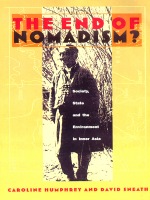
Using extensive and detailed case studies comparing pastoralism in Siberian Russia, Mongolia, and Northwest China, Humphrey and Sneath explore the different paths taken by nomads in these countries in reaction to a changing world. In examining how each culture is facing not only different prospects for sustainability but also different environmental problems, the authors come to the surprising conclusion that mobility can, in fact, be compatible with a modern and urbanized world. While placing emphasis on the social and cultural traditions of Inner Asia and their fate in the post-Socialist economies of the present, The End of Nomadism? investigates the changing nature of pastoralism by focusing on key areas under environmental threat and relating the ongoing problems to distinctive socioeconomic policies and practices in Russia and China. It also provides lively contemporary commentary on current economic dilemmas by revealing in telling detail, for instance, the struggle of one extended family to make a living.
This book will interest Central Asian, Russian, and Chinese specialists, as well as those studying the environment, anthropology, sociology, peasant studies, and ecology.
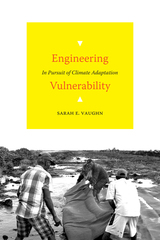
Duke University Press Scholars of Color First Book Award recipient
Where did the first Americans come from and when did they get here? That basic question of American archaeology, long thought to have been solved, is re-emerging as a critical issue as the number of well-excavated sites dating to pre-Clovis times increases. It now seems possible that small populations of human foragers entered the Americas prior to the creation of the continental glacial barrier. While the archaeological and paleoecological aspects of a post-glacial entry have been well studied, there is little work available on the possibility of a pre-glacial entry.
Entering America seeks to fill that void by providing the most up-to-date information on the nature of environmental and cultural conditions in northeast Asia and Beringia (the Bering land bridge) immediately prior to the Last Glacial Maximum. Because the peopling of the New World is a question of international archaeological interest, this volume will be important to specialists and nonspecialists alike.
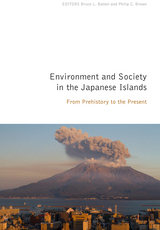
Environment and Society in the Japanese Islands attempts to answer these questions through a series of case studies by leading Japanese and Western historians, geographers, archaeologists, and climatologists. These essays, on diverse topics from all periods of Japanese history and prehistory, are unified by their focus on the key concepts of “resilience” and “risk mitigation.” Taken as a whole, they place Japan’s experience in global context and call into question the commonly presumed division between pre-modern and modern environmental history.
Primarily intended for scholars and students in fields related to Japan or environmental history, these accessibly-written essays will be valuable to anyone wishing to learn about the historical roots of today’s environmental issues or the complex relationship between human society and the natural environment.
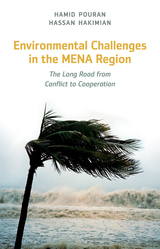
Although the region’s fragile environmental state has increasingly preoccupied policymakers in individual countries, there is currently insufficient attention paid to coordinating collaborative action to recognise and address problems relating to its environmental sustainability and climatic change. In the absence of a positive agenda for tackling these issues, recurrent environmental setbacks and rapid depletion of the region’s natural resources continue to pose a major threat to the long-term economic, political, and social stability of the region.
Despite the urgency of these challenges, there is little research dedicated to studying MENA’s environmental sustainability. Environmental Challenges in the MENA Region: The Long Road from Conflict to Cooperation draws from the proceedings of a seminal international conference on the subject at SOAS in October 2016, which was held as a celebration of the SOAS Centenary. This led to a collective contribution by experts and policy-makers concerned with the state of the MENA region’s environmental predicament with the aim of addressing these problems in a constructive and forward-looking approach.
The chapters in this book are predicated upon two critical premises. First, expertise and awareness from a wide range of disciplines is required to understand and address environmental challenges. And, second, to have a real chance of success, MENA countries need to confront these problems as their common threats and to see them as an opportunity for regional cooperation and policy coordination. This book provides the results of an interdisciplinary effort to address the various dimensions of the region’s environmental challenges from across the region and disciplines.

For over a century, scientific research and management efforts have aimed to mitigate the impacts of logging, mining, pollution, and invasive species while balancing urban development, tourism, and ecological preservation on the Lake. The book explores these challenges through a multidisciplinary lens, integrating environmental science, policy analysis, and case studies of both successful and failed management strategies. Written by experts who have played direct roles in key scientific discoveries and policy decisions, the book also examines the influence of environmental organizations and litigation in shaping conservation efforts.
At its core, the authors argue that the Tahoe Basin serves as a model for science-driven land and water stewardship. The book evaluates long-term monitoring programs, offering actionable recommendations for improving environmental oversight and resource management. Combining scientific analysis with accessible language, Environmental Change in the Lake Tahoe Basin serves as an up-to-date review of the region’s environmental challenges, providing an essential guide for scientists, resource managers, and policymakers.
The authors will donate all royalties from the sale of this volume to the Union of Concerned Scientist, www.ucs.org.
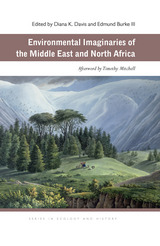
The landscapes of the Middle East have captured our imaginations throughout history. Images of endless golden dunes, camel caravans, isolated desert oases, and rivers lined with palm trees have often framed written and visual representations of the region. Embedded in these portrayals is the common belief that the environment, in most places, has been deforested and desertified by centuries of misuse. It is precisely such orientalist environmental imaginaries, increasingly undermined by contemporary ecological data, that the eleven authors in this volume question. This is the first volume to critically examine culturally constructed views of the environmental history of the Middle East and suggest that they have often benefitted elites at the expense of the ecologies and the peoples of the region. The contributors expose many of the questionable policies and practices born of these environmental imaginaries and related histories that have been utilized in the region since the colonial period. They further reveal how power, in the form of development programs, notions of nationalism, and hydrological maps, for instance, relates to environmental knowledge production.
Contributors: Samer Alatout, Edmund Burke III, Shaul Cohen, Diana K. Davis, Jennifer L. Derr, Leila M. Harris, Alan Mikhail, Timothy Mitchell, Priya Satia, Jeannie Sowers, and George R. Trumbull IV


• What are the different rhetorical strategies employed by writers, artists, filmmakers, and activists to react to the degradation of life and climate change?
• How are urban movements using environmental issues to resist corporate privatization of the commons?
• What is the shape of Spanish debates on reproductive rights and biotechnology?
• What is the symbolic significance of the bullfighting debate and other human/animal issues in today's political turmoil in Spain?
Hispanic Issues Series
Nicholas Spadaccini, Editor-in-Chief
Hispanic Issues Online
hispanicissues.umn.edu/online_main.html

How explosions across history reveal the violence embedded in San Francisco’s landscape
Offering a novel approach to contemporary landscape studies, Explosivity unearths the hidden legacies of violence that have shaped the physical and cultural environment of the San Francisco Bay area. As he sifts through the historical debris of previous centuries, Javier Arbona-Homar analyzes a series of explosions that took place between 1866 and 2011 to call attention to the scattered remnants of militarism and racialized capitalism embedded in the region’s geography.
From incidents involving nineteenth-century explosives manufacturing and World War II munitions loading to radical activism and contemporary television productions, Arbona-Homar locates a pattern of historical violence that refocuses the broader racial and colonial context. Citing the material, social, and political conditions that gave rise to these disparate episodes, he reviews the historic erasure of those driving forces and puts forth alternative possibilities for how such disasters might be memorialized.
Synthesizing a diverse set of field research methods, including oral histories and site visits, and supplemented by specially commissioned landscape photographs by Andrea Gaffney, Explosivity presents a radical exercise in the exposition of public memory.
Retail e-book files for this title are screen-reader friendly with images accompanied by short alt text and/or extended descriptions.
READERS
Browse our collection.
PUBLISHERS
See BiblioVault's publisher services.
STUDENT SERVICES
Files for college accessibility offices.
RECENTLY PUBLISHED




UChicago Accessibility Resources
home | accessibility | search | about | contact us
BiblioVault ® 2001 - 2026
The University of Chicago Press