logo for Harvard University Press
An Ecclesiastical Barony of the Middle Ages
The Bishopric Of Bayeux, 1066-1204
Sarell Everett Gleason
Harvard University Press
By concentrating on a small unit—the bishopric of Bayeux—this study brings into sharper focus some of the main features and developments of Norman institutions in the twelfth century. It illustrates specifically the dual status of the mediaeval bishop and the inevitability of a conflict between Church and State in the Middle Ages.
[more]

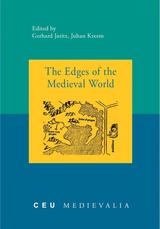
front cover of The Edges of the Medieval World
The Edges of the Medieval World
Gerhard Jaritz
Central European University Press, 2009
In the Middles Ages, the edges of one's world could represent different meanings. On the one hand, they might have been situated in far-away regions, mainly in the east and north, that one most often only knew from hearsay and which were inhabited by strange beings: humans with their faces on their chest, without a mouth, or with dog heads. On the other hand, the edges of one's world could just mean the borders of the community where one lived and that one sometimes might not have had the possibility to cross during one's whole life.In this volume specialists from eight European countries offer their ideas about different edges of the medieval world and contribute to a discussion that has been increasing greatly in Medieval Studies in recent times.
[more]

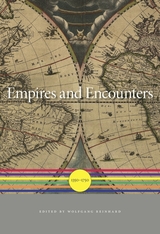
front cover of Empires and Encounters
Empires and Encounters
1350–1750
Wolfgang Reinhard
Harvard University Press, 2015

Between 1350 and 1750—a time of empires, exploration, and exposure to radically different lands and cultures—the world reached a tipping point of global connectedness. In this volume of the acclaimed series A History of the World, noted international scholars examine five critical geographical areas during this pivotal period: Eurasia between Russia and Japan; the Muslim world of the Ottoman and Persian empires; Mughal India and the Indian Ocean trading world; maritime Southeast Asia and Oceania; and a newly configured transatlantic rim. While people in many places remained unaware of anything beyond their own village, an intense period of empire building led to expanding political, economic, and cultural interaction on every continent—early signals of a shrinking globe.

By the early fourteenth century Eurasia’s Mongol empires were disintegrating. Concurrently, followers of both Islam and Christianity increased exponentially, with Islam exerting a powerful cultural influence in the spreading Ottoman and Safavid empires. India came under Mughal rule, experiencing a significant growth in trade along the Indian Ocean and East African coastlines. In Southeast Asia, Muslims engaged in expansion on the Malay Peninsula, Sumatra, Java, and the Philippines. And both sides of the Atlantic responded to the pressure of European commerce, which sowed the seeds of a world economy based on the resources of the Americas but made possible by the subjugation of Native Americans and the enslavement of Africans.


[more]

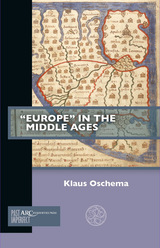
front cover of “Europe” in the Middle Ages
“Europe” in the Middle Ages
Klaus Oschema
Arc Humanities Press, 2023

From the nineteenth century onwards, historians described the Middle Ages as the "cradle" of the nation state—then, after World War II, they increasingly identified the period as the "cradle" of Europe. A close look at the sources demonstrates that both interpretations are misleading: while "Europe" was not a rare word, its use simply does not follow modern expectations. This volume contrasts modern historians' constructions of "Europe in the Middle Ages" with a fresh analysis of the medieval sources and discourses. The results force us to recognize that medieval ideas of ordering the world differ from modern expectations, thereby inviting us to reflect upon the use and limits of history in contemporary political discourse.

[more]


Send via email Share on Facebook Share on Twitter