
 A SCHOLARLY BOOK REPOSITORY
14 start with E start with E
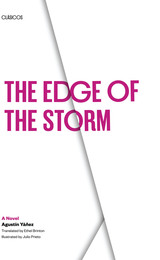
This tale of a repressive priest and his small Mexican village during the eighteen months preceding the Revolution of 1910 is a great novel, one that exposes the struggle between human desire and paralyzing fear—fear of humanity, fear of nature, fear of the wrath of God. Agustín Yáñez probes the actions of people caught in life’s currents, enthralling his readers with mounting dramatic tension as he shows that no power can forge saints from the human masses, that any attempt to do so, in fact, often has exactly the opposite result.
Yáñez brings to his work a deep understanding of people—his people—and he illuminates a great truth—that no one, anywhere, seems very strange when we understand the environment that has produced him or her.
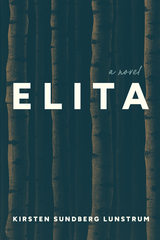
An American literary take on the Nordic noir genre
Unfolding during the moody Pacific Northwest winter of 1951, we follow Bernadette Baston, scholar of child development and language acquisition, as she travels to a penitentiary on the remote island Elita in the Puget Sound to consult on a curious case: two guards have discovered an animal-like adolescent girl living alone in the cold woods beyond the prison’s walls. There are few answers, but many people who know more than they are saying. According to official reports, the girl, dubbed Atalanta, does not speak. Is her silence protecting someone? The prison warden, court-appointed guardian, and police detective embroil Bernadette in resolving a secret that the tight-knit island community has long held, and her investment in the girl’s case soon becomes more personal than professional. As a mother, wife, and woman bound by mid-twentieth-century expectations, Bernadette strategizes to retain the fragile control she has over her own freedom, identity, and future, which becomes inextricably tied to solving Atalanta’s case.

But it’s the quiet, captivating dockworker and blues singer Hard Times (H.T.) who truly upends her life. As Eve grows closer to H.T., she finds herself drawn into his world, one filled with music, longing, and the ever-present shadows of prejudice. Their connection forces Eve to confront realities she’d never imagined, challenging the boundaries of her own perceptions and the risks of crossing societal lines. When Eve becomes a witness to a violent crime at a blues club, her life takes a dangerous turn. As she navigates the escalating threats, she leans on the strength of her newfound friends and the fragile, complex bond she shares with H.T.
Set against the vibrant yet turbulent backdrop of World War II–era California, Emerald City Blues is a heartfelt coming-of-age story. It explores the complexities of love, the power of friendship, and the courage it takes to forge your own path in an uncertain world. Eve’s journey is one of discovery—not just of the world beyond her hometown, but of the resilience and strength she never knew she possessed.

Set in a semi-fictional, post-industrial American warzone, this novel explores multiple facets related to the recent nonfictional decades of constant civil unrest, with a particular focus on the complicated nature of holding a personal creative life amidst a time of constant violence and change. Despite its heavy themes, the narrative is threaded throughout with veins of absurdist humor that invite and welcome us into the familial warmth of the narrator’s memories of friendship.
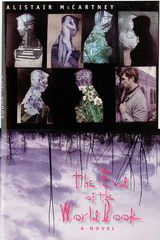
This is no ordinary novel. An encyclopedia of memory—from A to Z—The End of the World Book deftly intertwines fiction, memoir, and cultural history, reimagining the story of the world and one man’s life as they both hurtle toward a frightening future. Alistair McCartney’s alphabetical guide to the apocalypse layers images like a prose poem, building from Aristotle to da Vinci, hip-hop to lederhosen, plagues to zippers, while barreling from antiquity to the present.
In this profound book about mortality, McCartney composes an irreverent archive of philosophical obsessions and homoerotic fixations, demonstrating the difficulty of separating what is real from what is imagined.
Finalist, Edmund White Award for Debut Fiction, The Publishing Triangle
Finalist, PEN USA Literary Award for Fiction
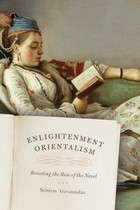
Srinivas Aravamudan here reveals how Oriental tales, pseudo-ethnographies, sexual fantasies, and political satires took Europe by storm during the eighteenth century. Naming this body of fiction Enlightenment Orientalism, he poses a range of urgent questions that uncovers the interdependence of Oriental tales and domestic fiction, thereby challenging standard scholarly narratives about the rise of the novel.
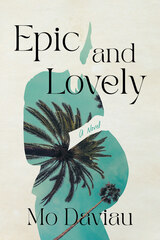
Written as a deathbed letter to the UCLA physician who has tracked Nina and the other Good Thumbs throughout their lives, Nina recounts her final days with the group and with Cole, the charismatic, sadistic fellow A12er with whom she has fallen madly in love, who charms and harms her in equal measures. An unlikely alliance with a tech billionaire, the return of her estranged mother, and the birth of the baby she never thought she’d have force Nina to reckon with the triumphs and mistakes of her life and to fight to leave her child in good hands.
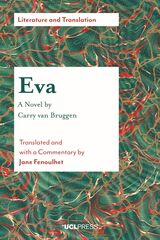
For the first time, Jane Fenoulhet has made this important, modernist novel accessible to English-language readers, her deft translation capturing the rich expressiveness of van Bruggen’s original Dutch. In insightful accompanying commentary, Fenoulhet describes how, just as the novel depicts the becoming of both Eva and her creator, so too can the translation be seen as the translator’s own becoming. Fenoulhet also describes the challenges of translating van Bruggen’s dynamic, intense narrative, which necessitated deep personal engagement with the novel.
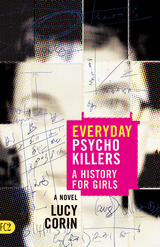
In Everyday Psychokillers spectacular violence is the idiom of everyday life, a lurid extravaganza in which all those around the narrator seem vicarious participants. And at its center are the interchangeable young girls, thrilling to know themselves the object of so much desire and terror.
The narrative interweaves history, myth, rumor, and news with the experiences of a young girl living in the flatness of South Florida. Like Grace Paley's narrators, she is pensive and eager, hungry for experience but restrained. Into the sphere of her regard come a Ted Bundy reject, the God Osiris, a Caribbean slave turned pirate, a circus performer living in a box, broken horses, a Seminole chief in a swamp, and a murderous babysitter. What these preposterously commonplace figures all know is that murder is identity: "Of course what matters really is the psychokiller, what he's done, what he threatens to do. Of course to be the lucky one you have to be abducted in the first place. Without him, you wouldn't exist."
Everyday Psychokillers reaches to the edge of the psychoanalytical and jolts the reader back to daily life. The reader becomes the killer, the watcher, the person on the verge, hiding behind an everyday face.

After a decade of miscarriages, Brooke Jensen is finally pregnant—with quadruplets. When she goes into labor after twenty-three weeks, Brooke and her husband rush to the hospital in the small town of Hanover, Wisconsin. For the 203 days that follow, they’re plunged into the terrifying and mysterious netherworld of the neonatal intensive care unit.
As the babies grow and struggle, fall turns to stark upper-Midwest winter. Brooke bonds with Dash, a senior nurse whose son, Landon, had been a patient in the NICU years earlier and is now straining his parents’ abilities to care for him. Both families bend and edge closer to breaking, and the questions mount: What does love look like? What does it mean to save a life?
A fiercely honest portrait of American parenthood, the American healthcare system, and Rust Belt communities, Everything We Could Do lays bare the ways that families are formed and remade in times of crisis.

READERS
Browse our collection.
PUBLISHERS
See BiblioVault's publisher services.
STUDENT SERVICES
Files for college accessibility offices.
RECENTLY PUBLISHED




UChicago Accessibility Resources
home | accessibility | search | about | contact us
BiblioVault ® 2001 - 2025
The University of Chicago Press